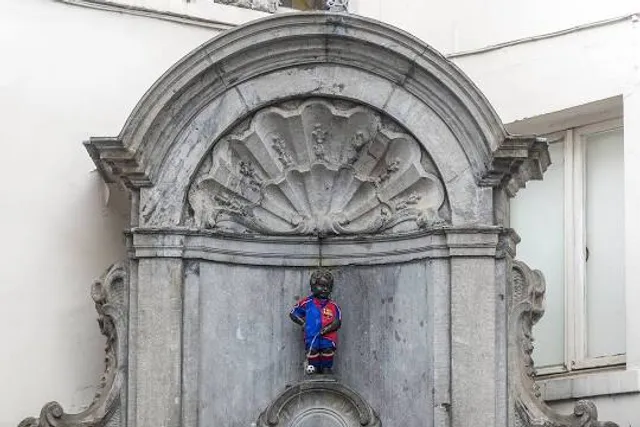
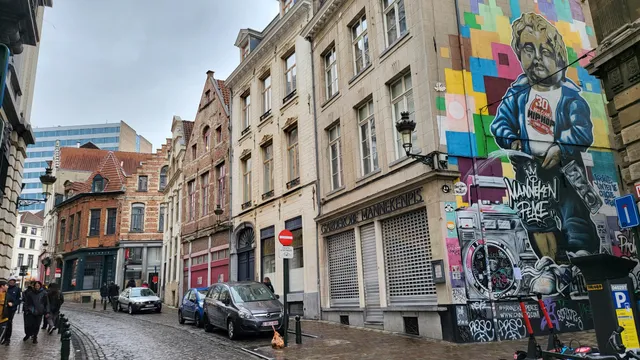
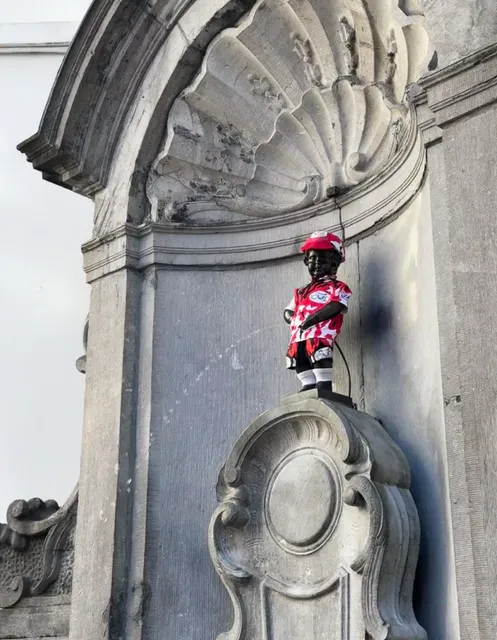
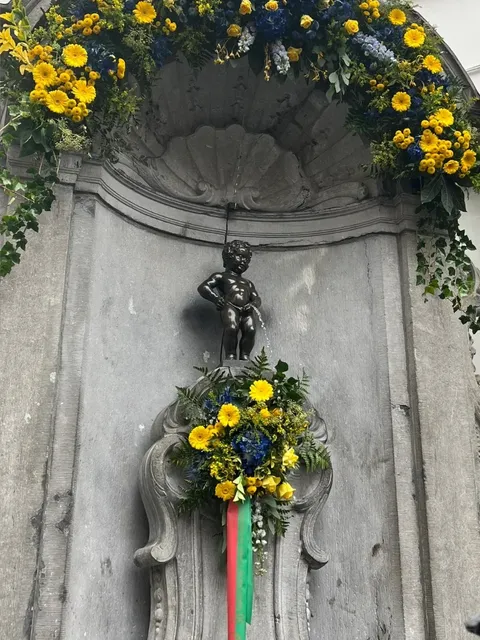
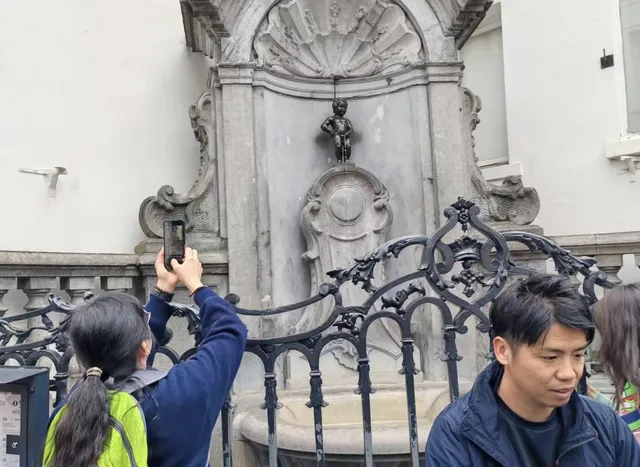
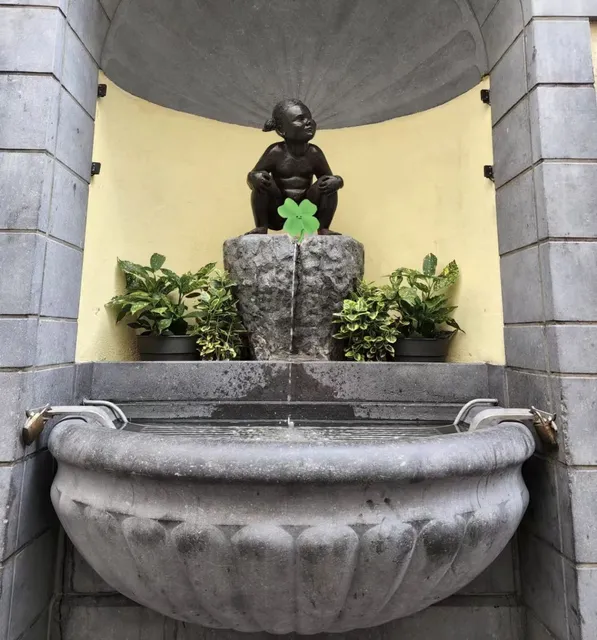
Manneken Pis is a statue of a boy urinating in the center of Brussels. The 55.5 cm tall little guy on a plinth is placed at the corner of Stoofstraat and Eikstraat, not far from the Grote Markt.
It has become one of the most famous Belgian and Brussels monuments and a symbol / mascot of the city of Brussels . Besides the Manneken Pis of Brussels, there are similar statues in Geraardsbergen , Westmeerbeek , Broksele and Koksijde, but that of Brussels is the best known worldwide. It is a bronze creation by Hieronymus Duquesnoy from 1619.
There are many legends behind it:
A first tells how Brussels was attacked by enemies, who at one point pretended to surrender. In reality, however, they put gunpowder under the ramparts and wanted to blow up the city. A little boy named Juliaan would have seen the fuse in time and peed it out. In this way he saved the city from destruction.
A second legend tells that a little man relieved himself against a witch's door. The witch was furious and cursed the boy: to punish him, the boy would continue his indecent peeing forever and ever. A good man who had seen everything happen quickly replaced the boy with a statuette to free him from the eternal urination.
In a third story, the party was in Brussels. Parents lost their son in the large group of people. They searched for him for days, and after two days the father finally saw the boy again: the son was urinating. The father was so happy that he found his son that he had a fountain made in gratitude. On the fountain he placed the image of a boy urinating.
According to yet another saga, the young duke Godfrey III of Brabant fled his paternal palace when he was only six years old. He was strolling around Brussels with a few children of about the same age. Servants, looking for him, found him where the fountain now stands. As it stood then, it still stands today as a statue.
However, some believe that the statue was made in response to the Battle of Ransbeek near Vilvoorde. When Duke Godfrey III of Brabant was two years old, his father died and he came under guardianship. Two vassals and high knights at court, Walter van Mechelen and Gerard van Grimbergen of the Berthout family , then declared war on the young duke. The guardians of the young duke requested military assistance from the count of Flanders. He lent his aid, but his soldiers wanted to know who they were fighting for. Therefore, the little one was shown to the soldiers and then taken to the battlefield. There, the cradle was hung from a tree branch during the three-day battle. In the end, the insurgents were defeated. The young duke also had his part in the whole. Several times a day, he would stand up in his crib and then force his jet to fly over the side. In order not to forget this happy fact, the oak from which the cradle had hung was moved to Brussels and planted in a street in the center that was named Eikstraat. Right next to the tree, a statue of a child peeing has been erected.
A more likely story is that Manneken Pis was made as a tribute to the many tanneries that were located in the vicinity of the Stoofstraat, where urine was used to process the leather. The ammonia in the urine was a raw material for tailors and tanners in the Middle Ages, and is said to make the leather...
Read moreManneken Pis, located near the Grand Place in Brussels, Belgium, is one of the city's most iconic landmarks. This small bronze statue, created by sculptor Jérôme Duquesnoy the Elder in 1619, depicts a young boy urinating into a fountain. Despite its modest size, standing at just 61 centimeters (24 inches) tall, Manneken Pis holds significant historical and cultural importance.
The statue's origins are shrouded in legend. One popular tale suggests that it commemorates a boy who saved Brussels by urinating on a fuse meant to ignite explosives during a siege. Another story tells of a wealthy merchant who, after losing his son in the city, found him urinating in a garden. In gratitude for the city’s help in finding his son, the merchant commissioned the statue.
Manneken Pis is celebrated for its humorous and irreverent character, reflecting the spirit of the people of Brussels. A unique tradition involves dressing the statue in various costumes, a practice that began in the late 17th century. Today, Manneken Pis has an extensive wardrobe of over 1,000 outfits, including costumes that represent different cultures, professions, and events. These costume changes are often accompanied by small ceremonies, delighting both locals and tourists.
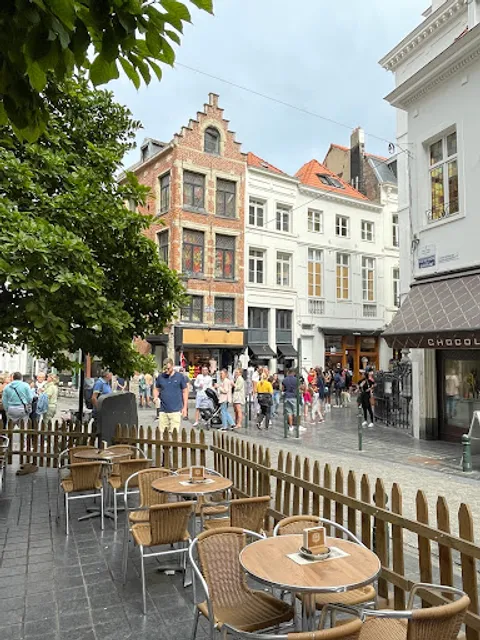
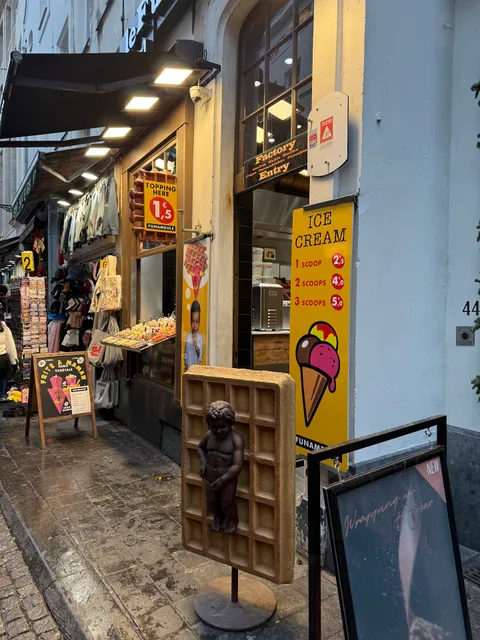
As one of Brussels' top tourist attractions, Manneken Pis is easily accessible and centrally located, just a short walk from the Grand Place. The area surrounding the statue is vibrant, with numerous shops, cafes, and restaurants that cater to visitors. Tourists often enjoy taking photos with the statue and learning about its rich history and the various legends associated with it.
Manneken Pis is not only an amusing and endearing figure but also a symbol of Brussels' resilience and unique cultural identity. Its ability to blend humor, history, and tradition makes it a must-see for anyone visiting the city. Despite its small stature, Manneken Pis leaves a big impression on all who encounter it, embodying the playful and welcoming spirit...
Read more"The Manneken Pis in Brussels is truly an iconic landmark and a must-visit for anyone exploring the city! I've been a passionate fan of this charming statue for years and can't say enough good things about it.
First and foremost, the location of the Manneken Pis is simply unbeatable. Situated in the heart of Brussels, it's easy to find and serves as a perfect starting point for exploring the surrounding attractions. The atmosphere around the statue is lively and full of energy, adding a special touch to every visit.
As for the statue itself, it's every bit as delightful and charming as you'd imagine. The small bronze statue exudes irresistible charm and draws visitors from all over the world. It's definitely a fun and unique experience that shouldn't be missed.
Moreover, the Manneken Pis holds historical significance and has a fascinating history dating back to the 17th century. It's fascinating to learn more about the background and cultural significance of this monument, and I appreciate the efforts made to preserve and share its history.
Another reason why I love the Manneken Pis is the variety of events and celebrations that regularly take place around the statue. From traditional festivals to special occasions, there's always something interesting to experience and discover.
In summary, I can't recommend the Manneken Pis in Brussels enough. It's a fascinating landmark that blends history, culture, and fun seamlessly. Whether you're visiting for the first time or are a regular visitor, it's always...
Read more