The Bombay High Court was one of the three High Courts in India established at the Presidency Towns by Letters patent granted by Queen Victoria, bearing date June 26, 1862. It was inaugurated on August 14, 1862 under the High Courts Act, 1861.
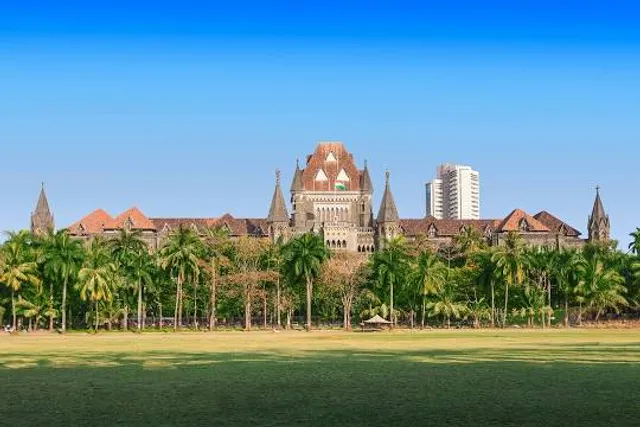
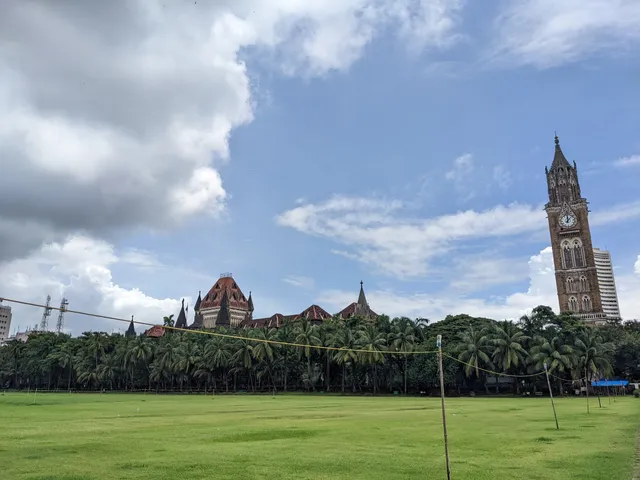
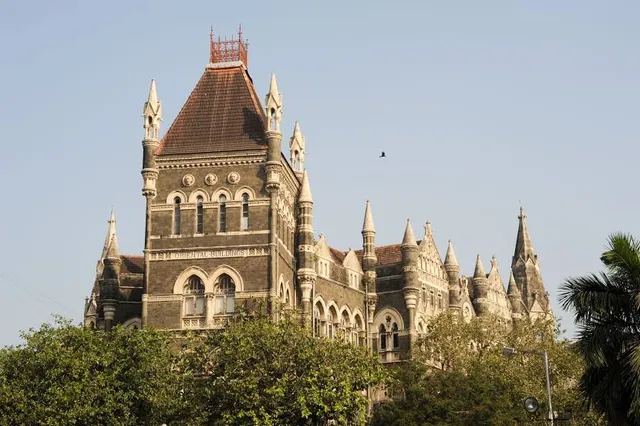
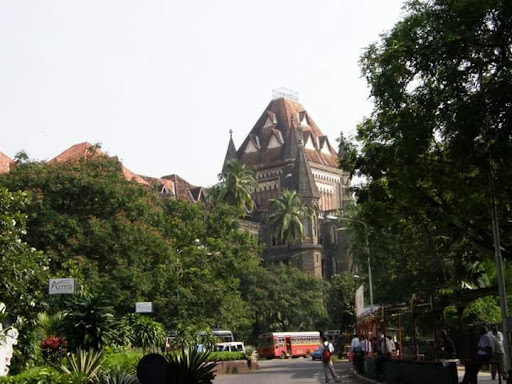
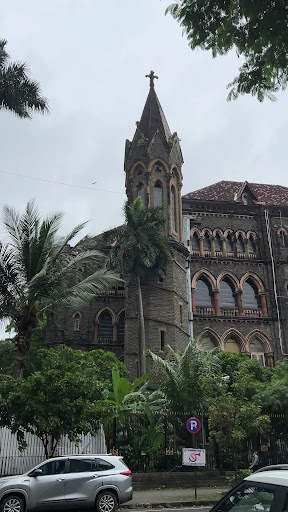
Bombay High Court, Fort, Mumbai The work on the present building of the High Court was commenced in April 1871 and completed in November 1878. It was designed by British engineer Col. James A. Fuller. The first sitting in this building was on 10 January 1879. Justice M. C. Chagla was the first Indian permanent Chief Justice of Bombay High Court after independence 1948 - 1958 Architecture: Gothic revival in the Early English style. It is 562 feet (171 m) long and 187 feet (57 m) wide. To the west of the central tower are two octagonal towers. The statues of Justice and Mercy are atop this building.
In 2016, it was announced that the premises of the Bombay High Court would be shifting to Bandra Kurla Complex.
The 125th anniversary of the building was marked by the release of a book, commissioned by the Bar Association, called "The Bombay High Court: The Story of the Building - 1878–2003" by local historians Rahul Mehrotra and Sharada Dwivedi.
Although the name of the city was changed from Bombay to Mumbai in 1995, the Court as an institution did not follow suit and retained the name Bombay High Court. Although, a bill to rename it as Mumbai High Court was approved by the Cabinet on July 5, 2016 along with the change of name of the Calcutta High Court and Madras High Court as Kolkata High Court and Chennai High Court respectively, the same is pending approval before the Parliament of India.[5] In 2010, the High Court organized several functions to mark the completion of 150 years of establishment of the High Court. A special postal cover was released by Milind Deora, the then Minister of State for Communications and Information Technology at the historical Central Court Hall of the High Court on 14 August 2012.
An exhibition displaying important artifacts, royal charters, stamps, old maps and other documents of historical importance was inaugurated by the then Chief Minister of Maharashtra, Prithviraj Chavan, in the Central Court Hall on 15 August 2012. The then Prime Minister of India, Dr. Manmohan Singh was the Chief Guest at the concluding ceremony of the year-long Sesquicentennial celebrations on 18 August 2012.[6]
A book titled A Heritage of Judging: The Bombay High Court through one hundred and fifty years, edited by Dhananjaya Y. Chandrachud, Anoop V. Mohta and Roshan S. Dalvi was published by the Maharashtra Judicial Academy. The court has a Sanctioned strength of 94 (Permanent:71, Additional:23) judges. The court has a judge to people ratio of 1 to 1.61 million. The total pending cases in High Court are about 4,64,074. The Judge to case ratio is 1:6630.
The strength of judges in Maharashtra as on 01.01.2018 was 70 High Court Judges, 399 District Judges, 484 Senior Civil Judges and 1267 Junior Civil Judges against the sanctioned strength of 2642 judges. Thus the judge to people ratio of Maharashtra is approximately 1:55000. The Law Commission in its 120th report has recommended a ratio of 1:20000. As on 01.03.2018 the number of practicing Advocates in Maharashtra is 95,378. As per National Judicial Data Grid, the total pending cases in District and Taluka Courts in Maharashtra are 33,57,582. On an average 1,31,000 cases are filed every month and 1,21,000 cases are...
Read moreBombay High Court (IAST: Bombay Uchca Nyāyālaya) is one of the oldest High Courts of India. It is located in Mumbai, Maharashtra. Its jurisdiction covers the states of Maharashtra and Goa, and the Union Territories of Daman and Diu and Dadra and Nagar Haveli. The High Court has regional branches at Nagpur and Aurangabad in Maharashtra and Panaji, the capital of Goa. The first Chief Justice, the Attorney Generaland Solicitor General of Independent Indiawere from this court. Since India's Independence, 22 judges from this court have been elevated to the Supreme Court and 8 of them have been Chief Justice of India.
The court has Original Jurisdiction in addition to its Appellate. The decisions of this court can be appealed only to the Supreme Court of India. The Mumbai High Court has a sanctioned strength of 94 judges (71 permanent, 23 additional).
The building is part of The Victorian and Art Deco Ensemble of Mumbai, which was added to the list of World Heritage Sites in 2018.
The Bombay High Court was one of the three High Courts in India established at the Presidency Towns by Letters patent granted by Queen Victoria, bearing date June 26, 1862. It was inaugurated on August 14, 1862 under the High Courts Act, 1861.
In 2010, the High Court organized several functions to mark the completion of 150 years of establishment of the High Court. A special postal cover was released by Milind Deora, the then Minister of State for Communications and Information Technology at the historical Central Court Hall of the High Court on 14 August 2012.
An exhibition displaying important artifacts, royal charters, stamps, old maps and other documents of historical importance was inaugurated by the then Chief Minister of Maharashtra, Prithviraj Chavan, in the Central Court Hall on 15 August 2012. The then Prime Minister of India, Dr. Manmohan Singh was the Chief Guest at the concluding ceremony of the year-long Sesquicentennial celebrations on 18 August 2012.
A book titled A Heritage of Judging: The Bombay High Court through one hundred and fifty years, edited by Dhananjaya Y. Chandrachud, Anoop V. Mohta and Roshan S. Dalvi was published by the Maharashtra Judicial Academy.
Famous cases :In its illustrious history, the Bombay High Court has been the site for numerous noteworthy trials and court cases. Bal Gangadhar Tilak was tried a number of times in the Bombay high Court, but the most famous was his trial for sedition in the 1916 case Emperor v. Bal Gangadhar Tilak.
The Bombay High Court also saw the last case in the Indian Judicial System to use a jury in the famous K. M. Nanavati v. State of Maharashtra case of 1959.
Controversies :Bar Council had boycotted some judges of the High Court in 1991 under the leadership of Senior Counsel Iqbal Chagla.In 2011, a couple of petitions came to be filed challenging housing societies built by judges upon plots of land reserved for...
Read moreThe High Court of Bombay is the high court of the states of Maharashtra and Goa in India, and the union territory of Dadra and Nagar Haveli and Daman and Diu. It is seated primarily at Mumbai (also known as Bombay), and is one of the oldest high courts in India.The High Court has circuit benches at Nagpur, Aurangabad and Kolhapur in Maharashtra and at Porvorim in Goa The Bombay High Court was inaugurated on 14 August 1862 by letters patent issued by Queen Victoria, dated 26 June 1862, under powers granted by the Indian High Courts Act 1861. It was of the three High Courts in India established at the Presidency Towns, the others being Calcutta (capital of the Bengal Presidency) and Madras.
The work on the present building of the High Court was commenced in April 1871 and completed in November 1878. It was designed by British engineer Col. James A. Fuller. It is a Gothic Revival building in the Early English style. It is 562 feet (171 m) long and 187 feet (57 m) wide. To the west of the central tower are two octagonal towers. Statues of Justice and Mercy are atop this building. The first sitting in this building was on 10 January 1879.
Justice M. C. Chagla was the first Indian permanent Chief Justice of Bombay High Court after independence (1948–1958).
In 2016, it was announced that the premises of the Bombay High Court would be shifting to Bandra Kurla Complex.
The 125th anniversary of the building was marked by the release of a book, commissioned by the Bar Association, called The Bombay High Court: The Story of the Building – 1878–2003 by local historians Rahul Mehrotra and...
Read more