HTML SitemapExplore
logo
Find Things to DoFind The Best Restaurants

Chester History & Heritage — Attraction in City of Chester

Name
Chester History & Heritage
Description
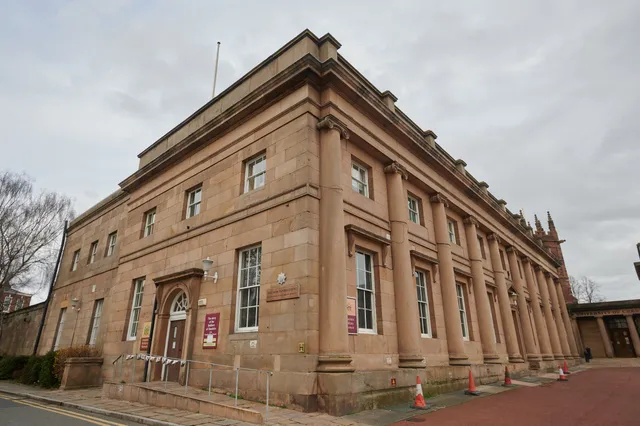
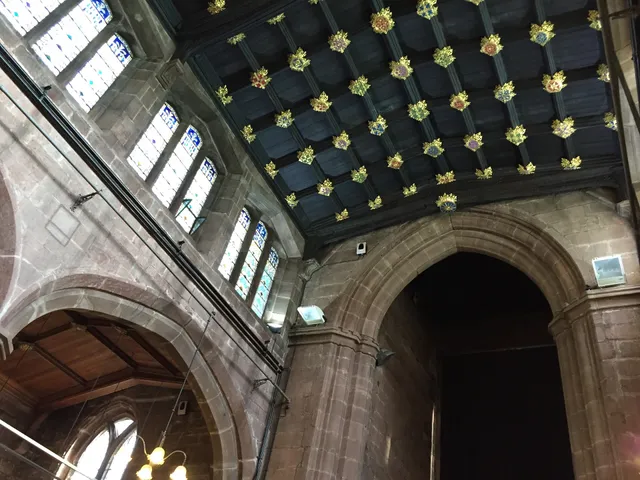
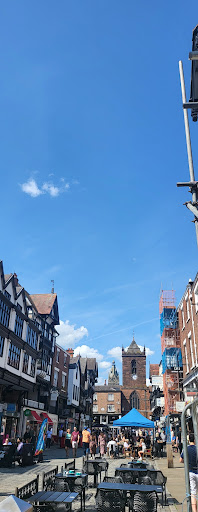
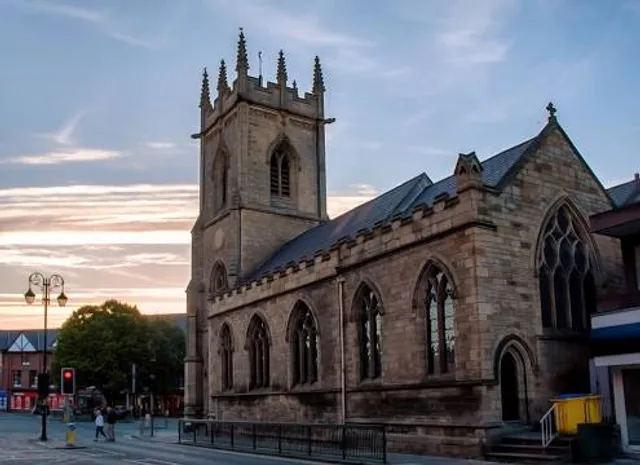
St Michael's Church is a redundant church standing on the corner of Bridge Street and Pepper Street in the city of Chester, Cheshire, England. It is recorded in the National Heritage List for England as a designated Grade II listed building.
Nearby attractions
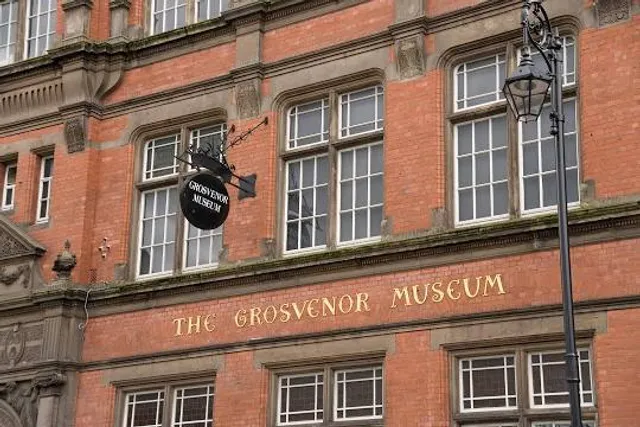
The Grosvenor Museum
Grosvenor Museum, 27 Grosvenor St, Cheshire, Chester CH1 2DD, United Kingdom
Cheshire Military Museum
Colvin House, Grosvenor St, Chester CH1 2DN, United Kingdom
Sick To Death
East, Bridge Street Bridge Saint Row, Chester CH1 1NW, United Kingdom
Deva Roman Experience
1-2, off Pierpoint Ct, Chester CH1 1NL, United Kingdom
Chester Castle: Agricola Tower and Castle Walls
Grosvenor St, Chester CH1 2DN, United Kingdom
Chester Cross
46 Watergate St, Chester CH1 2LA, United Kingdom
Chester Roman Gardens
Pepper St, Chester CH1 1DQ, United Kingdom
Chester Roman Amphitheatre
Roman Amphitheatre, Little St John St, Chester CH1 1RE, United Kingdom
Chester Cathedral
St Werburgh St, Chester CH1 2DY, United Kingdom
Alison Bradley Gallery
42 Watergate St, Chester CH1 2LA, United Kingdom
Nearby restaurants
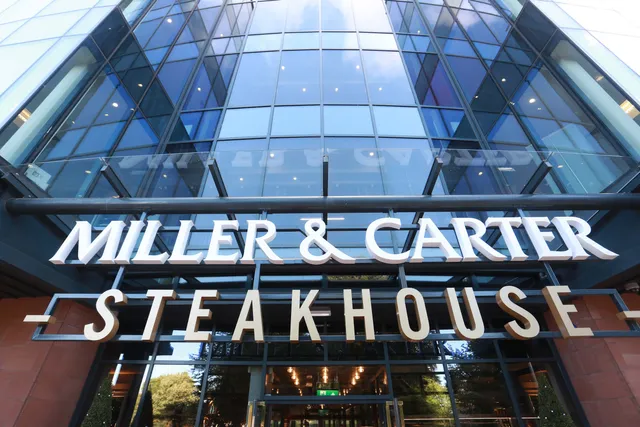
Miller & Carter Chester
Grosvenor Rd, Chester CH1 2DJ, United Kingdom
Moules a Go-Go Bar & Bistro
6-12 Cuppin St, Chester CH1 2BN, United Kingdom
Kings Head Chester
48 Lower Bridge St, Chester CH1 1RS, United Kingdom
Slug & Lettuce - Chester
44 Bridge St, Chester CH1 1NQ, United Kingdom
La Fattoria
25 Lower Bridge St, Chester CH1 1RS, United Kingdom
Ruan Orchid
14 Lower Bridge St, Chester CH1 1RS, United Kingdom
The Secret Garden Restaurant
Oddfellows Restaurant, 20 Lower Bridge St, Chester CH1 1RS, United Kingdom
ABode Chester
Grosvenor Rd, Chester CH1 2DJ, United Kingdom
Jaunty Goat Coffee
57 Bridge St, Chester CH1 1NG, United Kingdom
Bear & Billet
94 Lower Bridge St, Chester CH1 1RU, United Kingdom
Related posts
Keywords
Chester History & Heritage tourism.Chester History & Heritage hotels.Chester History & Heritage bed and breakfast. flights to Chester History & Heritage.Chester History & Heritage attractions.Chester History & Heritage restaurants.Chester History & Heritage travel.Chester History & Heritage travel guide.Chester History & Heritage travel blog.Chester History & Heritage pictures.Chester History & Heritage photos.Chester History & Heritage travel tips.Chester History & Heritage maps.Chester History & Heritage things to do.
Chester History & Heritage things to do, attractions, restaurants, events info and trip planning
Chester History & Heritage
United KingdomEnglandCity of ChesterChester History & Heritage

Basic Info

Chester History & Heritage

Grosvenor Museum, 27 Grosvenor St, Cheshire, Chester CH1 2DD, United Kingdom
4.4(21)
Closed
Save
spot

Ratings & Description

Info

St Michael's Church is a redundant church standing on the corner of Bridge Street and Pepper Street in the city of Chester, Cheshire, England. It is recorded in the National Heritage List for England as a designated Grade II listed building.

Cultural
Family friendly
Accessibility
attractions: The Grosvenor Museum, Cheshire Military Museum, Sick To Death, Deva Roman Experience, Chester Castle: Agricola Tower and Castle Walls, Chester Cross, Chester Roman Gardens, Chester Roman Amphitheatre, Chester Cathedral, Alison Bradley Gallery, restaurants: Miller & Carter Chester, Moules a Go-Go Bar & Bistro, Kings Head Chester, Slug & Lettuce - Chester, La Fattoria, Ruan Orchid, The Secret Garden Restaurant, ABode Chester, Jaunty Goat Coffee, Bear & Billet
logoLearn more insights from Wanderboat AI.
Website
westcheshiremuseums.co.uk
Open hoursSee all hours
Fri10:30 AM - 5 PMClosed

Plan your stay

hotel
Pet-friendly Hotels in City of Chester
Find a cozy hotel nearby and make it a full experience.
hotel
Affordable Hotels in City of Chester
Find a cozy hotel nearby and make it a full experience.
hotel
The Coolest Hotels You Haven't Heard Of (Yet)
Find a cozy hotel nearby and make it a full experience.
hotel
Trending Stays Worth the Hype in City of Chester
Find a cozy hotel nearby and make it a full experience.

Reviews

Nearby attractions of Chester History & Heritage

The Grosvenor Museum

Cheshire Military Museum

Sick To Death

Deva Roman Experience

Chester Castle: Agricola Tower and Castle Walls

Chester Cross

Chester Roman Gardens

Chester Roman Amphitheatre

Chester Cathedral

Alison Bradley Gallery

The Grosvenor Museum

The Grosvenor Museum

4.3

(560)

Closed
Click for details
Cheshire Military Museum

Cheshire Military Museum

4.7

(253)

Closed
Click for details
Sick To Death

Sick To Death

4.4

(449)

Closed
Click for details
Deva Roman Experience

Deva Roman Experience

4.3

(239)

Closed
Click for details

Things to do nearby

Walk through Liverpools history
Fri, Dec 5 • 1:00 PM
Merseyside, L3 1HU, United Kingdom
View details
Dark Chester: a walk through haunted history
Sat, Dec 6 • 5:30 PM
Cheshire West and Chester, CH1 2HJ, United Kingdom
View details
Moonshine Saloon Liverpool: Immersive Wild West Cocktail Experience
Fri, Dec 5 • 7:05 PM
40 Seel Street, Liverpool, L1 4BE, L1 4BE
View details

Nearby restaurants of Chester History & Heritage

Miller & Carter Chester

Moules a Go-Go Bar & Bistro

Kings Head Chester

Slug & Lettuce - Chester

La Fattoria

Ruan Orchid

The Secret Garden Restaurant

ABode Chester

Jaunty Goat Coffee

Bear & Billet

Miller & Carter Chester

Miller & Carter Chester

4.7

(1.9K)

$$

Click for details
Moules a Go-Go Bar & Bistro

Moules a Go-Go Bar & Bistro

4.6

(503)

Click for details
Kings Head Chester

Kings Head Chester

4.5

(496)

$$

Click for details
Slug & Lettuce - Chester

Slug & Lettuce - Chester

4.2

(1.4K)

Click for details
Get the Appoverlay
Get the AppOne tap to find yournext favorite spots!
Wanderboat LogoWanderboat

Your everyday Al companion for getaway ideas

CompanyAbout Us
InformationAI Trip PlannerSitemap
SocialXInstagramTiktokLinkedin
LegalTerms of ServicePrivacy Policy

Get the app

© 2025 Wanderboat. All rights reserved.
logo

Posts

Lou LouLou Lou
Beautiful city The history of Chester extends back nearly two millennia, covering all periods of British history in between then and the present day. The city of Chester was founded as a fort, known as Deva Vitrix, by the Romans in AD 70s, as early as AD 74 based on discovered lead pipes. The city was the scene of battles between warring Welsh and Saxon kingdoms throughout the post-Roman years until the Saxons strengthened the fort against raiding Danes. Following the Norman Conquest in 1066, Chester came under the Earl of Chester. It became a centre of the defence against Welsh raiders and a launch point for raids on Ireland. The city grew as a trading port until the power of the Port of Liverpool overtook it. However the city did not decline and during the Georgian and Victorian periods was seen as a place of escape from the more industrial cities of Manchester and Liverpool.In 1643 Sir Richard Grosvenor petitioned the Assembly to enclose the Row which ran through the front of his town house on Lower Bridge Street, and his request was granted. At the time he was employed in the Royalist army as a Commander. Some speculate that perhaps the room was being used to organise the Royalist Resistance in Chester. In the years after the war, people further down the street also asked for the Row to be enclosed. Eventually Lower Bridge Street lost its rows. The only trace can now be found at number 11. Most of Chester was rebuilt after the Civil War. There are many fine half-timbered houses dating from this time still standing today. Chester port declined with most of the ships going from the colonies now going to Liverpool, although it was still the major port of passenger embarkation for Ireland until the early 19th century. A new port was established on the Wirral called Parkgate, but this also fell out of use. The road to the port of Chester was called the 'Great Irish Road' and ran from Bristol to Chester.
ann-marie dubkaann-marie dubka
lovely city to walk round. plenty to see and do
Your browser does not support the video tag.
Lou LouLou Lou
Beautiful city The history of Chester extends back nearly two millennia, covering all periods of British history in between then and the present day. The city of Chester was founded as a fort, known as Deva Vitrix, by the Romans in AD 70s, as early as AD 74 based on discovered lead pipes. The city was the scene of battles between warring Welsh and Saxon kingdoms throughout the post-Roman years until the Saxons strengthened the fort against raiding Danes. Following the Norman Conquest in 1066, Chester came under the Earl of Chester. It became a centre of the defence against Welsh raiders and a launch point for raids on Ireland. The city grew as a trading port until the power of the Port of Liverpool overtook it. However the city did not decline and during the Georgian and Victorian periods was seen as a place of escape from the more industrial cities of Manchester and Liverpool.In 1643 Sir Richard Grosvenor petitioned the Assembly to enclose the Row which ran through the front of his town house on Lower Bridge Street, and his request was granted. At the time he was employed in the Royalist army as a Commander. Some speculate that perhaps the room was being used to organise the Royalist Resistance in Chester. In the years after the war, people further down the street also asked for the Row to be enclosed. Eventually Lower Bridge Street lost its rows. The only trace can now be found at number 11. Most of Chester was rebuilt after the Civil War. There are many fine half-timbered houses dating from this time still standing today. Chester port declined with most of the ships going from the colonies now going to Liverpool, although it was still the major port of passenger embarkation for Ireland until the early 19th century. A new port was established on the Wirral called Parkgate, but this also fell out of use. The road to the port of Chester was called the 'Great Irish Road' and ran from Bristol to Chester.
hotel
Find your stay

Pet-friendly Hotels in City of Chester

Find a cozy hotel nearby and make it a full experience.

Beautiful city The history of Chester extends back nearly two millennia, covering all periods of British history in between then and the present day. The city of Chester was founded as a fort, known as Deva Vitrix, by the Romans in AD 70s, as early as AD 74 based on discovered lead pipes. The city was the scene of battles between warring Welsh and Saxon kingdoms throughout the post-Roman years until the Saxons strengthened the fort against raiding Danes. Following the Norman Conquest in 1066, Chester came under the Earl of Chester. It became a centre of the defence against Welsh raiders and a launch point for raids on Ireland. The city grew as a trading port until the power of the Port of Liverpool overtook it. However the city did not decline and during the Georgian and Victorian periods was seen as a place of escape from the more industrial cities of Manchester and Liverpool.In 1643 Sir Richard Grosvenor petitioned the Assembly to enclose the Row which ran through the front of his town house on Lower Bridge Street, and his request was granted. At the time he was employed in the Royalist army as a Commander. Some speculate that perhaps the room was being used to organise the Royalist Resistance in Chester. In the years after the war, people further down the street also asked for the Row to be enclosed. Eventually Lower Bridge Street lost its rows. The only trace can now be found at number 11. Most of Chester was rebuilt after the Civil War. There are many fine half-timbered houses dating from this time still standing today. Chester port declined with most of the ships going from the colonies now going to Liverpool, although it was still the major port of passenger embarkation for Ireland until the early 19th century. A new port was established on the Wirral called Parkgate, but this also fell out of use. The road to the port of Chester was called the 'Great Irish Road' and ran from Bristol to Chester.
Lou Lou

Lou Lou

hotel
Find your stay

Affordable Hotels in City of Chester

Find a cozy hotel nearby and make it a full experience.

Get the Appoverlay
Get the AppOne tap to find yournext favorite spots!
lovely city to walk round. plenty to see and do
ann-marie dubka

ann-marie dubka

hotel
Find your stay

The Coolest Hotels You Haven't Heard Of (Yet)

Find a cozy hotel nearby and make it a full experience.

hotel
Find your stay

Trending Stays Worth the Hype in City of Chester

Find a cozy hotel nearby and make it a full experience.

Beautiful city The history of Chester extends back nearly two millennia, covering all periods of British history in between then and the present day. The city of Chester was founded as a fort, known as Deva Vitrix, by the Romans in AD 70s, as early as AD 74 based on discovered lead pipes. The city was the scene of battles between warring Welsh and Saxon kingdoms throughout the post-Roman years until the Saxons strengthened the fort against raiding Danes. Following the Norman Conquest in 1066, Chester came under the Earl of Chester. It became a centre of the defence against Welsh raiders and a launch point for raids on Ireland. The city grew as a trading port until the power of the Port of Liverpool overtook it. However the city did not decline and during the Georgian and Victorian periods was seen as a place of escape from the more industrial cities of Manchester and Liverpool.In 1643 Sir Richard Grosvenor petitioned the Assembly to enclose the Row which ran through the front of his town house on Lower Bridge Street, and his request was granted. At the time he was employed in the Royalist army as a Commander. Some speculate that perhaps the room was being used to organise the Royalist Resistance in Chester. In the years after the war, people further down the street also asked for the Row to be enclosed. Eventually Lower Bridge Street lost its rows. The only trace can now be found at number 11. Most of Chester was rebuilt after the Civil War. There are many fine half-timbered houses dating from this time still standing today. Chester port declined with most of the ships going from the colonies now going to Liverpool, although it was still the major port of passenger embarkation for Ireland until the early 19th century. A new port was established on the Wirral called Parkgate, but this also fell out of use. The road to the port of Chester was called the 'Great Irish Road' and ran from Bristol to Chester.
Lou Lou

Lou Lou

create-post
Turn your ideas into a post and inspire others!
Create

Reviews of Chester History & Heritage

4.4
(21)
avatar
5.0
1y

Beautiful city The history of Chester extends back nearly two millennia, covering all periods of British history in between then and the present day. The city of Chester was founded as a fort, known as Deva Vitrix, by the Romans in AD 70s, as early as AD 74 based on discovered lead pipes. The city was the scene of battles between warring Welsh and Saxon kingdoms throughout the post-Roman years until the Saxons strengthened the fort against raiding Danes.

Following the Norman Conquest in 1066, Chester came under the Earl of Chester. It became a centre of the defence against Welsh raiders and a launch point for raids on Ireland.

The city grew as a trading port until the power of the Port of Liverpool overtook it. However the city did not decline and during the Georgian and Victorian periods was seen as a place of escape from the more industrial cities of Manchester and Liverpool.In 1643 Sir Richard Grosvenor petitioned the Assembly to enclose the Row which ran through the front of his town house on Lower Bridge Street, and his request was granted. At the time he was employed in the Royalist army as a Commander. Some speculate that perhaps the room was being used to organise the Royalist Resistance in Chester. In the years after the war, people further down the street also asked for the Row to be enclosed. Eventually Lower Bridge Street lost its rows. The only trace can now be found at number 11.

Most of Chester was rebuilt after the Civil War. There are many fine half-timbered houses dating from this time still standing today.

Chester port declined with most of the ships going from the colonies now going to Liverpool, although it was still the major port of passenger embarkation for Ireland until the early 19th century. A new port was established on the Wirral called Parkgate, but this also fell out of use. The road to the port of Chester was called the 'Great Irish Road' and ran from...

   Read more
avatar
4.0
2y

Nice little well kept museum, very interesting with lots about the history of Chester and its connections. Would say its a museum aimed at adults more than little ones, worth a...

   Read more
avatar
5.0
4y

History is the greatest gift to the present day as we can learn from it and become better people. A lovely part of the culture and community in Chester. My kids...

   Read more
Page 1 of 5
Previous
Next