Joo Ok review - 9/10 Wow. Where do I even start? My experience at Joo Ok is nothing short of extraordinary. Walking into Joo Ok was incredibly fun and mysterious. You walk into what seems to be a grunge industrial garage-type area and you’re greeted by a staff member who waits patiently in the distance. Soon, you are ushered into a freight elevator, manned by a staff member as well, that seems like you’re going into a super discreet club for the ultra-wealthy. Once you arrive at the top of the building, the 16th floor, the scenery opens up to a beautiful hanok-style setting where you receive complimentary drinks to start your evening as you wait to be seated.
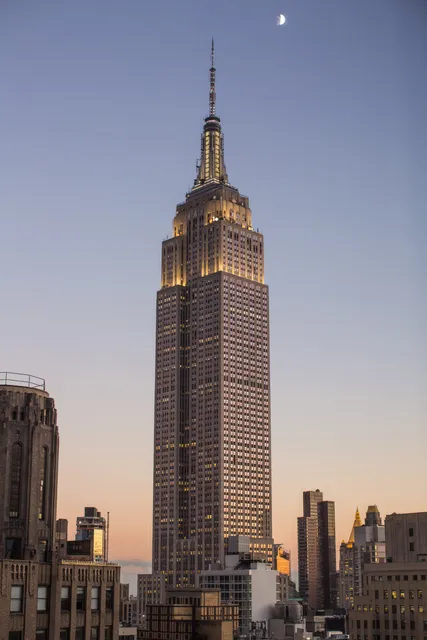
As you enter the dining room, you’re greeted by fascinating architecture. Big logs of wood span across the ceiling, white-accented walls, and windows that face the Empire State Building up close with lo-fi beats in the background. What an ambiance to behold.
On a separate note, I love the touches to the bathroom. The calming music, hand-folded towels, and lotion make a pleasant experience.
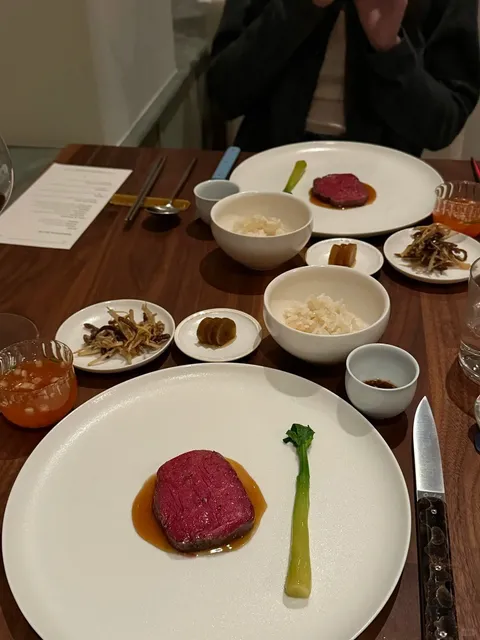
Now for the courses. Everything was amazing and some courses had me wanting more. The chicken and taro appetizer is absolute genius, the squid/scallop/sea urchin dish was super interesting, the king prawn in 4 ways was fun, the eel dish was flat-out delicious, and the wagyu ribeye main dish was the better than any beef dishes I’ve had at Michelin starred restaurants. I liked how the beef wasn’t necessarily the center of the dish. Most fine-dining beef dishes are quite boring and predictable: steak with some form of potato, wine reduction sauce, leafy green, etc. However, the beef came with rice paired with soy sauce, a water kimchi sauce to cut the fattiness of the beef, and burdock japchae which was super special and creative. Overall, there are too many dishes in this course that are the embodiment of perfection.
Now why the 1 point deduction? Big picture: I enjoyed mainly everything at Joo Ok and I am just nit picking at the details. Now, let’s start with the most egregious error - I found 2 bones in my eel dish and I wish that would have been disclosed earlier. Secondly, 11 courses is the perfect number for a very full, well-rounded, and satisfying experience. However, it took almost 4 hours from start to finish, and I believe the dishes should have been served faster. Due to us being seated at 8 PM, by the time 10:30 PM rolled around, both of my parents were yawning continuously at the table. Thirdly, the one and only miss of the entire 11 course meal tonight was the halibut mandu. I seek for every dish to tell a story and the halibut mandu soup just did not do it for me. I think what would be a better soup-based dish here would be some kind of porridge or creamy dish that gives off more of a homey-type vibe. If this dish was meant to tell a story and held some significance, that was not stated to me by the staff. Lastly, due to this being a 4-hour experience, everybody had to wait a while, and inevitably had to use the bathroom. After a while, the hand-towels and toilet paper ran out in the bathroom. This should be accounted for next time. Also, the music in the room I was in (back-right corner) was a bit too loud and I had a hard time hearing my waiter.
However with all of this being said, these mistakes seemed to happen mainly due to the fact that I went to Joo Ok on their second opening night. And all in all, it was a major success. Joo Ok is a restaurant well deserving of a michelin star (or two).
P.S. Several improvements I can think that may improve the overall dining experience are 1. offering a wider selection of (korean) tea available for guests to try and 2. bidets in the bathroom would be...
Read moreNYC needs another overpriced, upscale Korean restaurant like it needs more rats.
At least with some, you get a warm atmosphere and warm hospitality--not to mention, warm takes on K-food--that help you forget the money you're parting with.
Joo Ok was none of those things. Everything was cold: from the service doors we entered, to the freight elevator we rode up, to the warehouse restaurant lobby we sat in to be seated, to the unfriendly and clearly unhappy staff, nothing about our experience made us feel welcome.
We could've forgiven all that if the food itself didn't scream cold sterility, the gastronomic equivalent of LIC's nightmare of luxury hi-rises. All glitter, no soul. It was so bad, that at our fourth dish, we asked the person who served it if the chef was a perfectionist, and they kind of nervously laughed and backed away.
My $0.02:
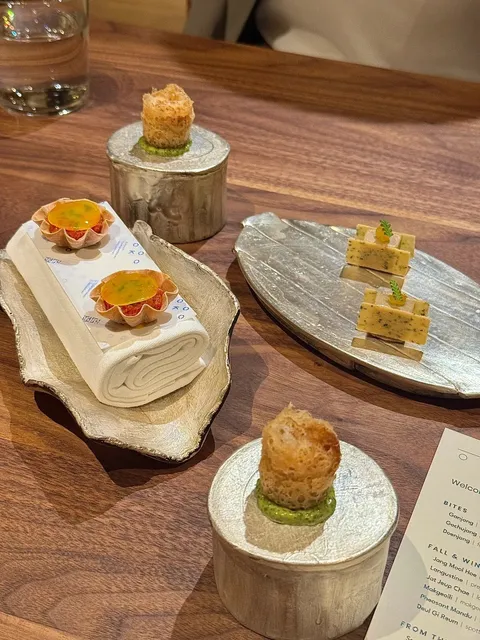
Bites: A well-made trio of mouthfuls made with interesting ingredients, but served to us by a bored busboy and described in a monotone that would've put a hyena to sleep. I couldn't distinguish this course from the dozens of other similar "bite-sized" courses I've had at the world's top restaurants, but I'm sure there was a story buried somewhere in all that monotone.
Jang Mool Hoe: Beautifully plated and creative in both texture and flavor. Unfortunately, this style did not continue
Langoustine: Tiny and uninspired, with uninteresting seasonings and accompaniments. I've had langoustine all over its native Scandinavia, and this minuscule version was an insult by comparison
Jat Jeup Chae: Gorgeously plated and well-cooked but uninteresting. Pine nuts and K-pear with lobster? And what a tiny speck of lobster. Sigh....
Pheasant Mandu: Ah, yes, the very Instagrammable rainbow ravioli. Except, they didn't actually seal the noodle around the filling, so it's not really mandu, is it? Yes, the pheasant was pleasant (haha), but the entire dish was too small and too underwhelming once you get past the initial novelty of the EDM pasta.
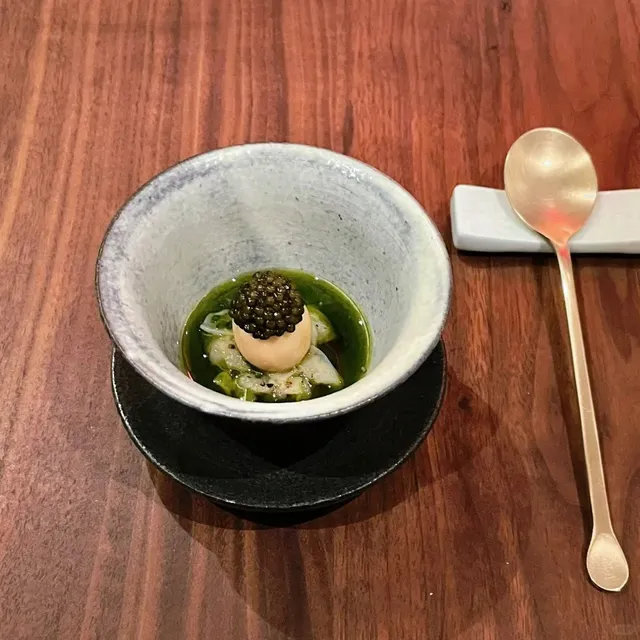
Deul Gi Reum: Nice ingredients (spotted shrimp, geoduck) but not enough perilla oil to make them taste not bland
Saeng Seon: Well-cooked, as always, but the bass was laughably tiny. And foam, really? Are we back to the molecular gastronomy days of the late 2000s?
Gui: Why. Why why why does every tasting menu restaurant feel the need to insert a Wagyu course that consists of nothing more than a tiny medium-rare filet with some pathetic veggie side that'll likely be ignored? In Joo Ok's case, the striploin came with a tiny plate of burdock japchae, a tiny bowl of radish rice, and another tiny plate of mul kimchi. I still laugh at the memory of our server warning us the course would be, "A lot of food". Sure.....If this were a meal for ants.
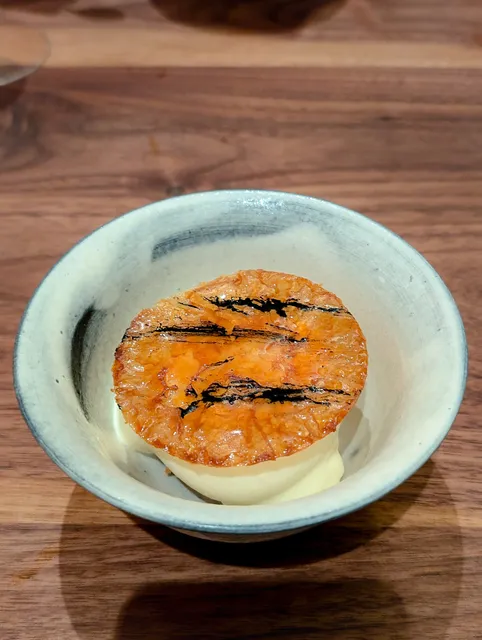
Dessert: This was where Joo Ok was strongest. The first dessert of walnut ice cream, sweet potato mousse and jochung tuile was a slam dunk. The second dessert of handmade Byung Gwa was both tasty and lovely. Hats off to the pastry chef, whose food was NOT tiny and did NOT come across cold or sterile.
Unfortunately, a good dessert finisher couldn't make up for the lackluster--and miniature--lead-up, nor the consistently unfriendly and impersonal service we received throughout most of our meal. For $180+pp, we left hungry and cold--pretty much the opposite of what any proper restaurant would want.
TL;DR: If you're, "ZOMG, Barbie's first Korean Michelin-starred meal!", you might be impressed by Joo Ok (see all the five-star reviews). If you've actually done some Asian fine dining in your life, you'll be underwhelmed by the tiny portions, bland flavors, impersonal service, and generally cold...
Read moreUnique concept, great food and service.
Came here for dinner on my recent NYC trip. Having followed Chef Shin’s career for the past few years, I was thrilled when I heard that he was moving here last year. Along with his team, he also brought his deeply personal and ingredient-driven approach. With a focus on farm-to-table elements (surprisingly uncommon in Korean fine dining spots), Chef Shin’s commitment to quality was appreciable—especially in the greens grown at their own upstate NY farm and their signature Perilla Oil sourced from his in-laws’ farm in Korea. This thoughtful storytelling, woven into both the food and décor, made the experience feel intimate and memorable.
At Joo Ok, dining is less about individual dishes and more about the immersive experience. After ascending to the 16th floor via a freight elevator, you're welcomed into a warm, inviting space where everything begins before you even reach your table. Guests are greeted with an umami-rich shrimp chips and a refreshing licorice tea, which seemed like a thoughtful prelude to the meal. Then into the main dining room. I was fortunate enough to snag a window table, which offered a great view of Midtown.
The meal opened with a trio of amuse-bouche, each crafted with one of Korea's signature fermented "jangs." These bites felt like a playful nod to Chef Shin's close ties with Chef Kang of Mingles in Seoul, known for his acclaimed Jang Trio Dessert. Among the trio, the crispy Ganjang bite was my favorite—taro added a bright tartness that beautifully balanced its rich, savory depth. The Deonjang bite, however, felt somewhat muted, with the foie gras mousse overpowering the fermented complexity. The Gochujang beef yukhoe was solid but a bit underwhelming—even with the addition of macadamia powder, it tasted much like a standard spicy yukhoe.
Until the main dish, the course slowly progressed with 5-6 small dishes. Among these my favorites were the Langoustine, Jat Jeup Chae, and their signature Deul Gi Reum. Langoustine was “cooked” in four different ways, and the delicately poached sections were exceptional—almost sashimi-like, which I preferred. The highlights were the bites topped with herring roe and Kaluga caviar, as the roe’s brininess added just the right depth to complement the langoustine’s sweetness.
Jat Jeup Chae was a lobster dish that didn’t need lobster. The sweet, tangy pine nut purée carried the dish, and it was further enhanced with some refreshing crunch from pickled cucumbers, carrots, and Korean pear. The lobster itself felt secondary, mainly adding a bit of textural contrast.
The iconic Deul Gi Reum. Worth every ounce of hype. The house-made perilla oil—light, creamy, and almost floral (emerald-green finish)—completely transformed what would’ve been a simple seafood-and-vegetable dish. Just a few drops elevated each bite. Having had excellent perilla oil in Seoul, this still stood out as something special.
Similar to most Korean fine dining spots, Joo Ok chose Wagyu as the main course. The wagyu itself was predictably good, but what stood out was how they served it as a complete meal—with rice and inventive banchan like burdock japchae. I personally think this form of serving is one of the elements that defines Korean dining, so this thoughtful nod to tradition gave the dish more personality than the beef alone could provide.
The desserts were solid, but they lacked the impact of the preceding courses. Still, the impeccable service and thoughtfully curated experience made it well...
Read more