Gangaramaya Seema Malakaya: A Spiritual Haven on the Waters
Nestled serenely on the tranquil waters of Beira Lake in Colombo, Sri Lanka, Gangaramaya Seema Malakaya is a harmonious fusion of spiritual sanctity and architectural elegance. This Buddhist temple, often referred to as the Seema Malakaya, presents a unique and captivating blend of ancient traditions and modern design, creating a haven of tranquility and contemplation in the heart of the bustling city.
The Seema Malakaya is part of the larger Gangaramaya Temple complex, which embodies the vision of Ven. Galboda Gnanissara Thero, its founder. Established in the late 19th century, the temple complex has evolved over the years to become a vibrant center of Buddhist practice, cultural preservation, and community engagement. The Seema Malakaya, in particular, stands as an architectural masterpiece that exemplifies the enduring legacy of Sri Lanka's rich spiritual heritage.
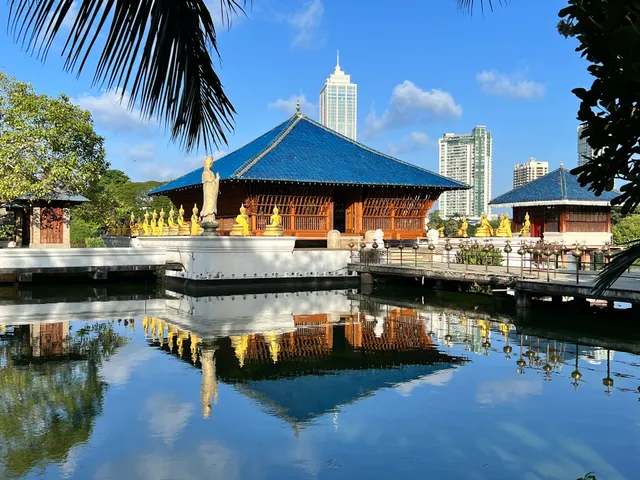
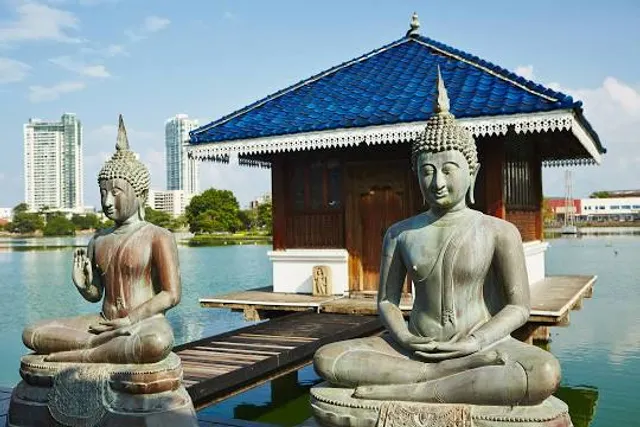
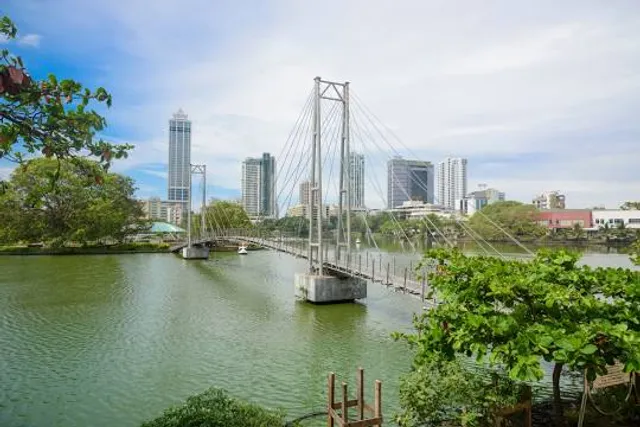
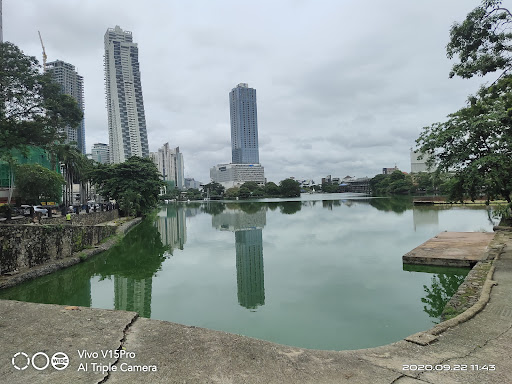
Approaching the Seema Malakaya, one is immediately struck by the tranquil beauty of its surroundings. The temple seems to float gracefully on the waters of Beira Lake, connected to the mainland by a picturesque walkway. This unique location creates an ambiance of serenity and reflection, as the sounds of the city are replaced by the gentle lapping of water and the rustling of leaves.
The architectural design of the Seema Malakaya is a captivating blend of traditional and contemporary elements. Intricate wooden carvings, delicate stonework, and ornate decorations pay homage to the ancient craftsmanship that has defined Sri Lanka's architectural heritage for centuries. At the same time, the temple's open design and modern materials create an atmosphere of openness and connection with the natural world.
The Seema Malakaya serves not only as a place of worship but also as a space for meditation, contemplation, and self-discovery. The soothing sound of chanting monks and the fragrance of incense wafting through the air create an ambiance of spiritual tranquility. Visitors are encouraged to pause, reflect, and immerse themselves in the timeless teachings of Buddhism that are at the core of the temple's existence.
One of the most iconic features of the Seema Malakaya is its central stupa, a gleaming white structure that rises gracefully above the water. The stupa symbolizes enlightenment and serves as a visual focal point that draws the eyes and the spirit upward, inviting contemplation of the deeper mysteries of life. The meticulously crafted statues, intricate murals, and symbolic artifacts that adorn the temple's interior further enrich the spiritual experience.
The Seema Malakaya's significance extends beyond its religious and spiritual dimensions. The temple complex plays an active role in cultural preservation and community service. It hosts art exhibitions, cultural events, and educational programs that celebrate Sri Lanka's artistic heritage and foster a sense of unity and understanding among diverse communities.
A visit to Gangaramaya Seema Malakaya is not only a journey through space but also a journey through the soul. It offers an opportunity to connect with ancient wisdom, experience moments of serenity amidst the chaos of modern life, and reflect on the universal principles that guide humanity on its collective journey.
Gangaramaya Seema Malakaya is a spiritual sanctuary that transcends time and space. Its blend of traditional aesthetics, modern design, and profound spirituality create a space that touches the heart and uplifts the spirit. A visit to this temple is a pilgrimage of the soul, an invitation to embrace inner peace, and a reminder of the enduring power of faith and architecture to inspire and elevate the...
Read moreWithin the heart of Colombo is the Gangarama Buddhist Temple. Built during the late 19th century for the Buddhists who lived in the capital city of Colombo; the temple sprawled over a large area of land and included several outer structures. The Seema Malaka is one of these. Originally, it was built with a foundation within the floor of Beira Lake, and was the image of stolidity. However, it was not able to withstand the marshy ground underneath the lake. By 1970 the Seema Malaka had sunk completely under the waters of of Beira.
And then in 1976, Sir Geoffrey Bawa was hired to do this difficult construction design. He created three floating platforms interlinked by pontoon walkways and anchored to the base of the lake by way of stone pillars.
The light design ensured that the construction would not sink. The entire structure is connected to the shore using another pontoon bridge. He created a design that emulated the ancient monasteries of Anuradhapura, and added his own signature modern twirl to it. Bawa was one of the most influential Asian architects of the mid to late 20th century, and was well known for founding Tropical Modernism. This style is very apparent in the deep blue clay roof tiles of the main temple, the simplistic and yet delicate structure made of a collection of wooden spindles and banisters that lets plenty of air and light in, and the overall design that conforms to nature instead of fighting against it.
Things to See
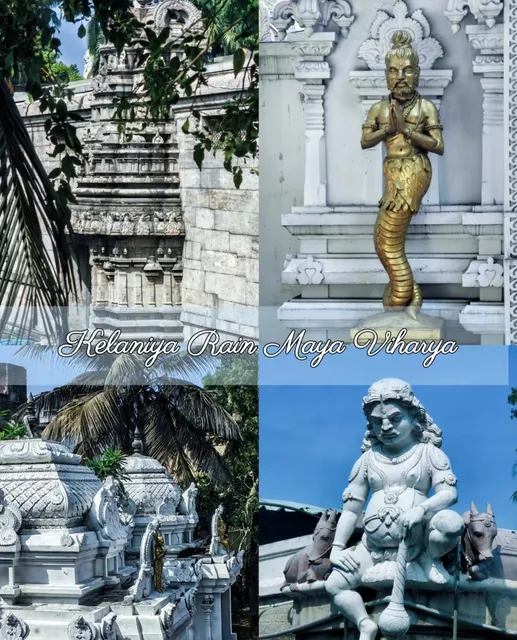
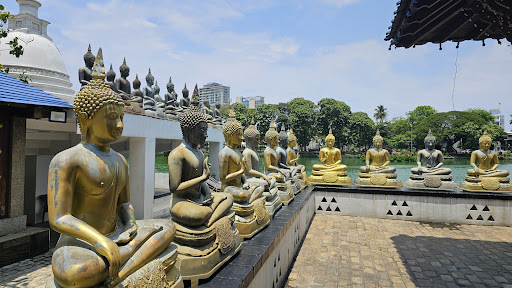
The Central Platform: This platform has a number of Asian seated stone Buddhas along the perimeter of the platform. They are beautifully sculpted and come out well in photos. In the centre is a room with slatted wooden walls. This comfortable place is used for meditation and yoga by visitors and devotees. It provides a relaxing view of the lake and its surroundings. It also has a beautiful large Buddha statue flanked by two giant elephant tusks. Before entering this room, you can take note of the Anuradhapura style dwarf guardian statues at the entrance; which are perfectly formed.
The Northern Platform: This platform is sealed and is said to lead to the Treasury of the Truth. This houses a library of Buddhist texts and is only accessible by monks.
The Courtyard: This is where the main part of Seema Malaka is. To one side of the courtyard, a comparatively small offshoot of the original sacred Bo tree in Anuradhapura grows out of a raised platform draped in prayer flags. It is flanked by Buddha statues of varied sizes – the biggest of which stands magnificently next to a small stupa. The courtyard has small rooms with wooden doors at the four corners. Within these are localized versions of Hindu Gods that the Buddhists worship as Devas. Just behind the main courtyard is a tier of stacked-up Buddha statues from Thailand. Close to this is the temple’s most surprising feature; a collection of vintage cars, presented by well-wishers over the years
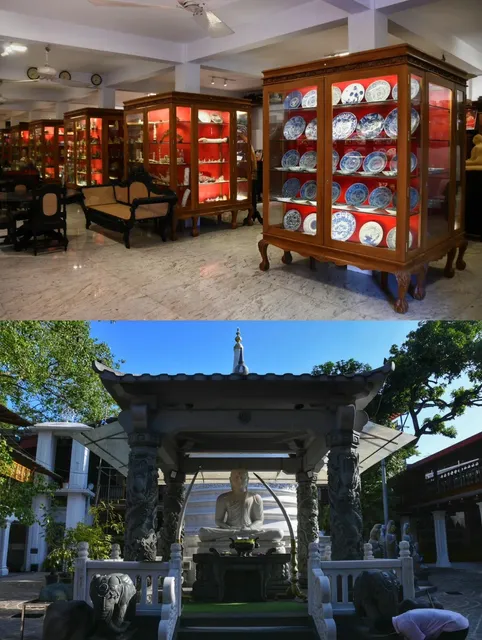
The Museum: On the way out of the entrance you can visit the museum. The temple museum has two big rooms overflowing with a treasure-trove of interesting objects; some collected for their symbolism, some for their artistic and/or financial value, and some just because. These include collections of ancient Sanskrit Ola leaf manuscripts, large sapphires and other precious stones, sandalwood and ivory carvings, brass statuettes of gods, jade & crystal monstrosities, elephant tusks, coins, innumerable Buddha images & statues of other Buddhist & Hindu deities, oil lamps, votive pagodas, old clocks, porcelain, ivory carvings and even old gramophones. Overall they form what feels more like a cave of treasures that is definitely...
Read moreStanding tall along the banks of Beira Lake, Seema Malaka forms a part of the southern region of the Colombo City of Sri Lanka. It lies in conjunction with the Gangaramaya Temple, which is the main shrine there. Residing on three man-made podiums, Seema Malaka Temple stands unrivaled in both its location and architecture. The architectural allure of this temple is highly inspired from the ancient forest monasteries Ritigala and Anuradhapura. The building of the temple is built in the Kandyan style and is characterized by its hanging blue tiled roofs. There is a pontoon boardwalk that links the premises of the Seema Malaka temple with its mainland. The outer boundary wall of this shrine is adorned by numerous Buddha statues representing different sitting postures.
There are three raised platforms which divide the temple and are connected with the walkways. The four-sided blue roof on the central platform of this temple is quite evident. On the very next platform, you have a statue of the Treasury of Truth which has got its own significance. This platform at the Seema Malaka temple is actually a treasure of ancient Buddhist texts, which is usually stored in locked conditions and is accessible only to the monks.
There are beautiful wooden panels embracing the décor of the central building of this shrine - where people reach out for meditation. In case you have any queries, you may approach the caretakers there. The outer area surrounding this room features several Buddha statues. If you keenly observe them – some of them have their hands placed on their lap, while others are portrayed yogic postures.
At the next platform, you have a Bodhi tree in the central portion, which is all over flanked with several Buddha statues. On special occasions, you can mark the presence of numerous Locals here to venerate the Bodhi tree. Apart from all these, the four corners of the Seema Malaka temple, you also have shrines which are entirely dedicated to the Gods of Hindu religions – Ganesha and Shiva.
Seema Malaka is situated at a distance of 34.3 km from the Colombo Airport, and it takes around 27 minutes for you to reach there. Here are some of the travelling options available for you –
By Fly – Board an airplane to Diyawanna Oya from the Colombo Airport. From there, you can hire a cab to drop you to your final destination.
Overall time – 23 minutes Overall expense – 8000 to 16000 INR per head
By Taxi – You can take a direct taxi ride from Colombo Airport to Seema Malaka.
Overall time – 27 minutes Overall expense – 1500 to 2000 INR per head
Apart from these two modes, you also have a public bus service option to plan your visit to the Seema Malaka temple from the Colombo Airport. As there is no website, you need to go to the bus station in person and get the reservation done...
Read more