HTML SitemapExplore
logo
Find Things to DoFind The Best Restaurants

Státní hrad a zámek Český Krumlov — Attraction in okres Český Krumlov

Name
Státní hrad a zámek Český Krumlov
Description
Nearby attractions
Český Krumlov Castle Tower
Latrán 3, 381 01 Český Krumlov 1-Latrán, Czechia
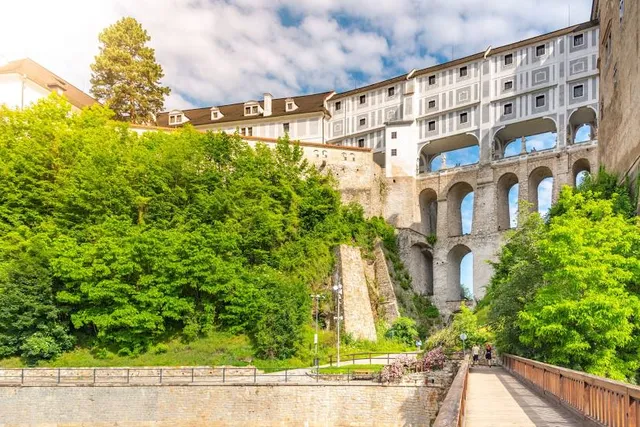
Cloak Bridge
381 01 Český Krumlov 1, Czechia
Lazebnický most
381 01 Český Krumlov 1, Czechia
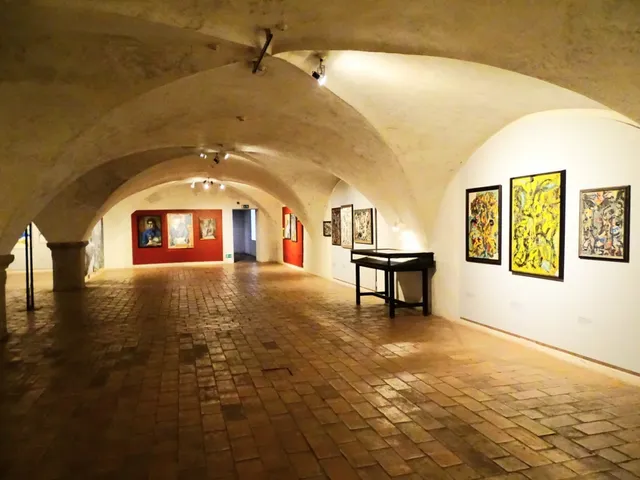
Egon Schiele Art Centrum
Široká 71, 381 01 Český Krumlov 1, Czechia
Vintage motorcycle museum
Široká 80, 381 01 Český Krumlov 1, Czechia
Museum Of Commerce
Radniční 29, 381 01 Český Krumlov 1, Czechia
Fountain and Plague Column
nám. Svornosti 10, 381 01 Český Krumlov 1-Vnitřní Město, Czechia
Kláštery Český Krumlov
Klášterní Dvůr 97, 381 01 Český Krumlov 1, Czechia
Wax Museum
Kájovská 68, 381 01 Český Krumlov 1, Czechia
Church of St. Vitus
Kostelní 381 01, 1 Český Krumlov 1, Czechia
Nearby restaurants
Krumlovský mlýn
Široká 80, 381 01 Český Krumlov 1-Vnitřní Město, Czechia
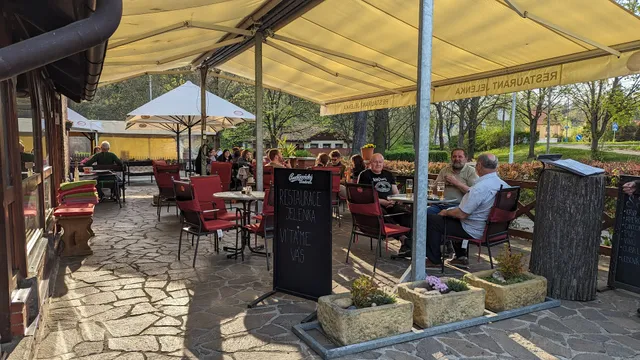
Restaurant Jelenka
Latrán 138, 381 01 Český Krumlov 1, Czechia
Švejk Restaurant
Latrán 12, 381 01 Český Krumlov 1, Czechia
Restaurace ZDROJ
Na Ostrově 86, 381 01 Český Krumlov 1-Vnitřní Město, Czechia
Papa's Living Restaurant
Latrán 13, 381 01 Český Krumlov 1, Czechia
MY SAIGON
Panská 17, 381 01 Český Krumlov 1, Czechia
Travellers restaurant
Soukenická 43, 381 01 Český Krumlov 1-Vnitřní Město, Czechia
Restaurace DEPO
Latrán 74, 381 01 Český Krumlov 1-Latrán, Czechia
Restaurace Lazebna
Latrán 1, 381 01 Český Krumlov 1, Czechia
Tavern of the Two Maries
Parkán 104, 381 01 Český Krumlov 1, Czechia
Nearby hotels
Pension Kristinka
Dlouhá 94, 381 01 Český Krumlov 1-Vnitřní Město, Czechia
Hotel Dvořák Český Krumlov
Radniční 101, 381 01 Český Krumlov 1, Czechia
Garnihotel Castle Bridge
Hradební 174, 381 01 Český Krumlov 1, Czechia
Hotel OLDINN
nám. Svornosti 12, 381 01 Český Krumlov 1, Czechia
Hotel Ebersbach
Široká 77, 381 01 Český Krumlov 1-Vnitřní Město, Czechia
Hotel U Malého Vítka
Radniční 25 -27, 381 01 Český Krumlov 1-Vnitřní Město, Czechia
Restaurace a penzion Pod Radnicí
Radniční 26, 381 01 Český Krumlov 1, Czechia
LARGO Bistro & Cafe Penzion
Široká 76, 381 01 Český Krumlov 1-Vnitřní Město, Czechia
Grand Hotel
nám. Svornosti 3, 381 01 Český Krumlov 1, Czechia
Hotel Edward Kelly
Dlouhá 95, 381 01 Český Krumlov 1, Czechia
Related posts
Keywords
Státní hrad a zámek Český Krumlov tourism.Státní hrad a zámek Český Krumlov hotels.Státní hrad a zámek Český Krumlov bed and breakfast. flights to Státní hrad a zámek Český Krumlov.Státní hrad a zámek Český Krumlov attractions.Státní hrad a zámek Český Krumlov restaurants.Státní hrad a zámek Český Krumlov travel.Státní hrad a zámek Český Krumlov travel guide.Státní hrad a zámek Český Krumlov travel blog.Státní hrad a zámek Český Krumlov pictures.Státní hrad a zámek Český Krumlov photos.Státní hrad a zámek Český Krumlov travel tips.Státní hrad a zámek Český Krumlov maps.Státní hrad a zámek Český Krumlov things to do.
Státní hrad a zámek Český Krumlov things to do, attractions, restaurants, events info and trip planning
Státní hrad a zámek Český Krumlov
CzechiaSouthwestokres Český KrumlovStátní hrad a zámek Český Krumlov

Basic Info

Státní hrad a zámek Český Krumlov

Zámek 59, 381 01 Český Krumlov 1, Czechia
4.8(11K)
Open 24 hours
Save
spot

Ratings & Description

Info

Cultural
Scenic
Family friendly
Accessibility
attractions: Český Krumlov Castle Tower, Cloak Bridge, Lazebnický most, Egon Schiele Art Centrum, Vintage motorcycle museum, Museum Of Commerce, Fountain and Plague Column, Kláštery Český Krumlov, Wax Museum, Church of St. Vitus, restaurants: Krumlovský mlýn, Restaurant Jelenka, Švejk Restaurant, Restaurace ZDROJ, Papa's Living Restaurant, MY SAIGON, Travellers restaurant, Restaurace DEPO, Restaurace Lazebna, Tavern of the Two Maries
logoLearn more insights from Wanderboat AI.
Phone
+420 380 704 721
Website
zamek-ceskykrumlov.cz

Plan your stay

hotel
Pet-friendly Hotels in okres Český Krumlov
Find a cozy hotel nearby and make it a full experience.

hotel
Affordable Hotels in okres Český Krumlov
Find a cozy hotel nearby and make it a full experience.

hotel
The Coolest Hotels You Haven't Heard Of (Yet)
Find a cozy hotel nearby and make it a full experience.

hotel
Trending Stays Worth the Hype in okres Český Krumlov
Find a cozy hotel nearby and make it a full experience.

Reviews

Nearby attractions of Státní hrad a zámek Český Krumlov

Český Krumlov Castle Tower

Cloak Bridge

Lazebnický most

Egon Schiele Art Centrum

Vintage motorcycle museum

Museum Of Commerce

Fountain and Plague Column

Kláštery Český Krumlov

Wax Museum

Church of St. Vitus
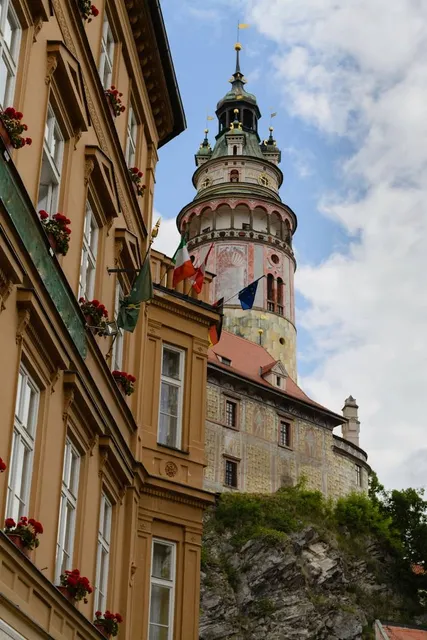
Český Krumlov Castle Tower

Český Krumlov Castle Tower

4.8

(1.9K)

Open 24 hours
Click for details
Cloak Bridge

Cloak Bridge

4.8

(480)

Open 24 hours
Click for details
Lazebnický most

Lazebnický most

4.6

(714)

Open 24 hours
Click for details
Egon Schiele Art Centrum

Egon Schiele Art Centrum

4.4

(409)

Open 24 hours
Click for details

Nearby restaurants of Státní hrad a zámek Český Krumlov

Krumlovský mlýn

Restaurant Jelenka

Švejk Restaurant

Restaurace ZDROJ

Papa's Living Restaurant

MY SAIGON

Travellers restaurant

Restaurace DEPO

Restaurace Lazebna
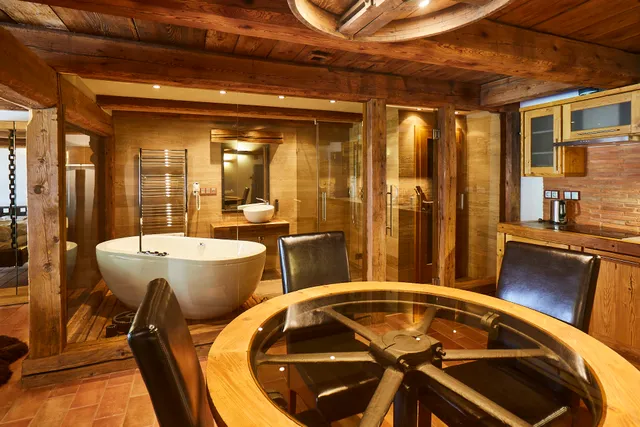
Tavern of the Two Maries

Krumlovský mlýn

Krumlovský mlýn

4.1

(1.0K)

Click for details
Restaurant Jelenka

Restaurant Jelenka

4.5

(1.1K)

Click for details
Švejk Restaurant

Švejk Restaurant

4.5

(1.6K)

$$

Click for details
Restaurace ZDROJ

Restaurace ZDROJ

3.8

(340)

$$

Click for details
Get the Appoverlay
Get the AppOne tap to find yournext favorite spots!
Wanderboat LogoWanderboat

Your everyday Al companion for getaway ideas

CompanyAbout Us
InformationAI Trip PlannerSitemap
SocialXInstagramTiktokLinkedin
LegalTerms of ServicePrivacy Policy

Get the app

© 2025 Wanderboat. All rights reserved.
logo

Reviews of Státní hrad a zámek Český Krumlov

4.8
(10,963)
avatar
1.0
23w

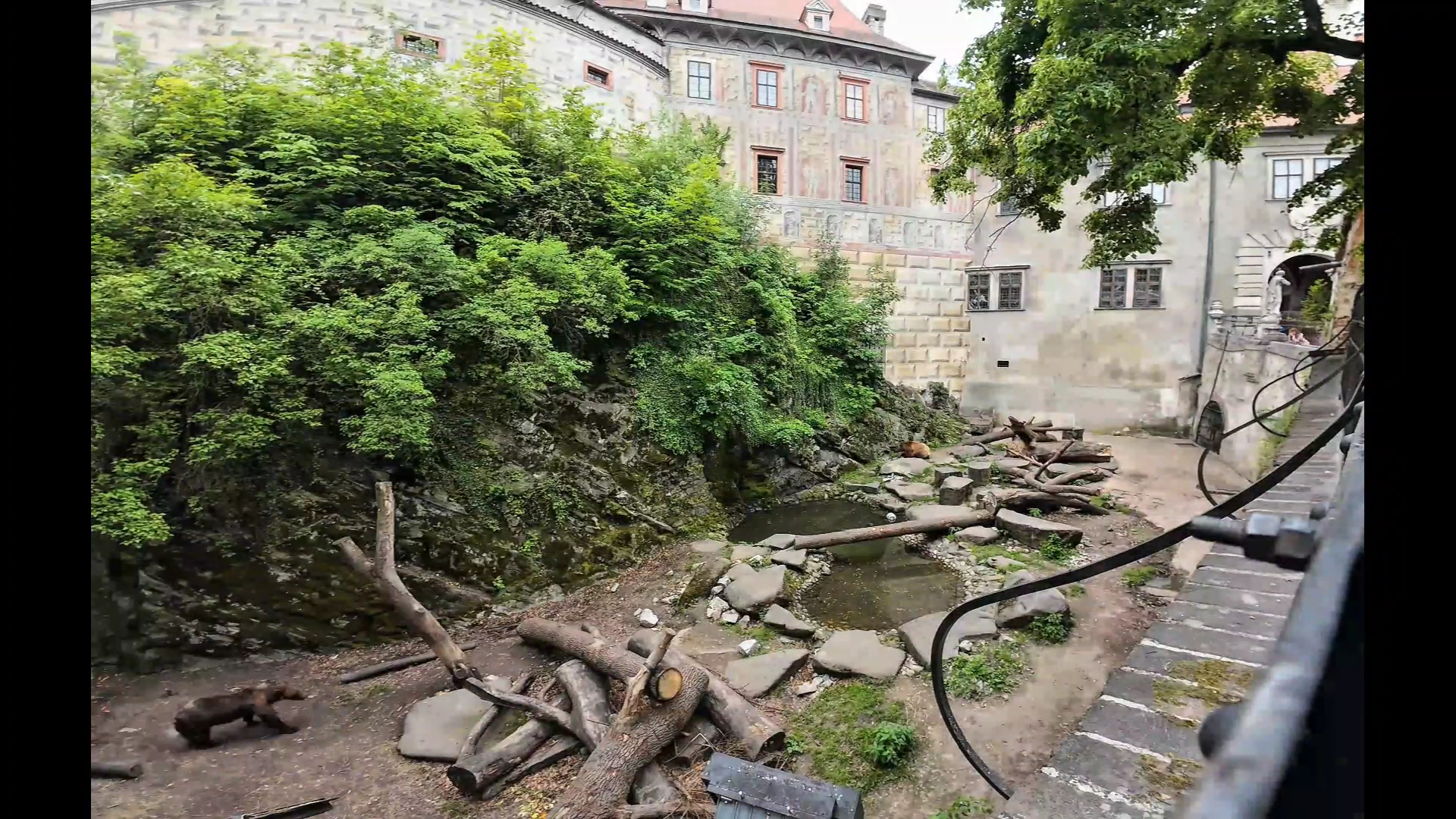
The presence of bears in the moat of Český Krumlov Castle isn’t a tourist attraction, it’s a scar at the heart of the town. These Eurasian brown bears are confined to a historic structure that is, in reality, deeply inadeguate from an ethological, ecological, and ethical standpoint, And it's similar to a medieval prison, With the bears forced to live, sleep and defecate on the concrete floor of the pit and can only see concrete walls and the sky.

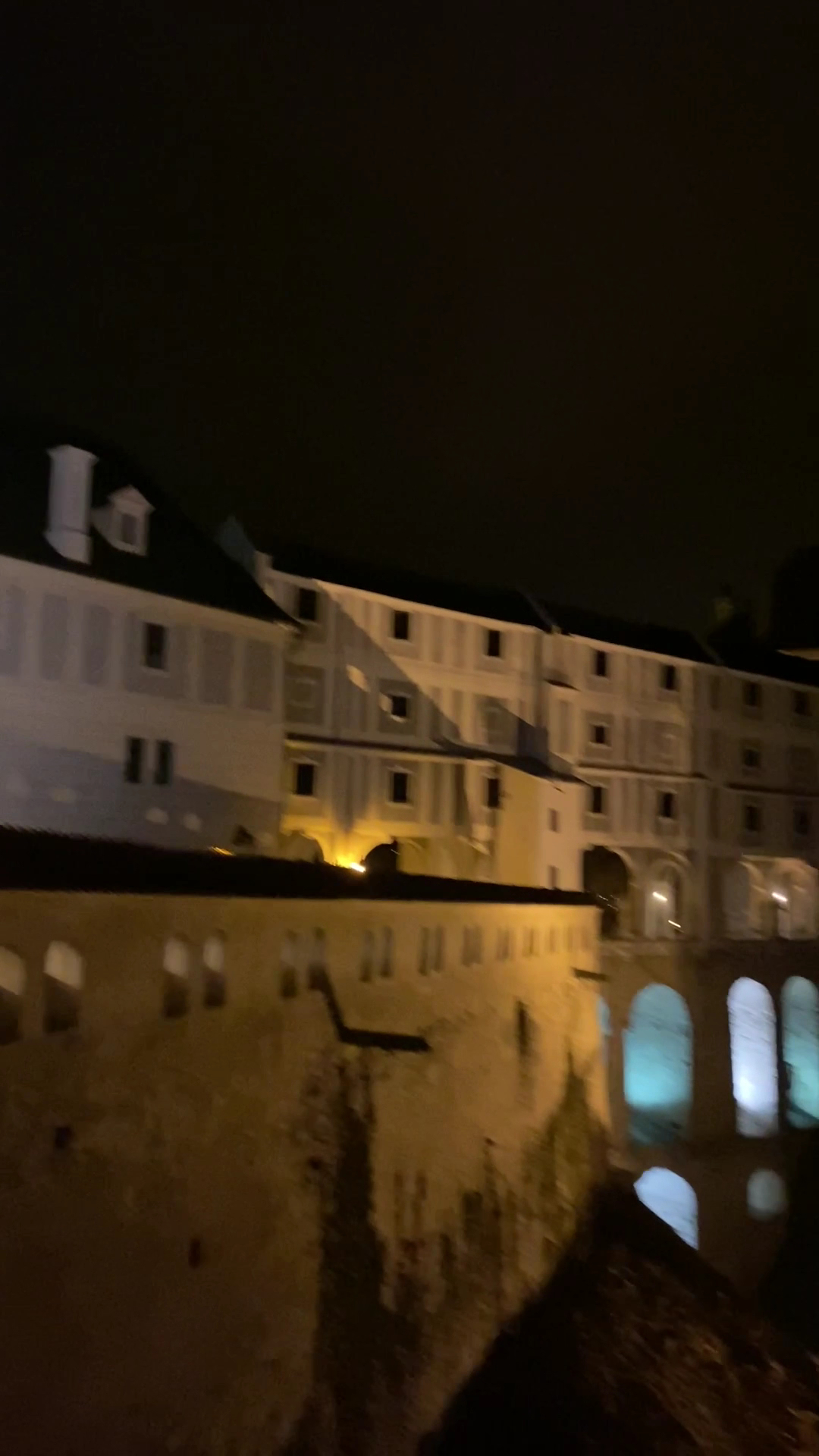
As a brown bear passionate , i spent hours, over multiple days, observing their behavior. What I witnessed is difficult to forget: profoundly bored animals, engaged in monotonous, repetitive movements all day long. The female walks in circles all day, while the male follows the same mechanical cycle: stand up against the wall, shake his head, walk toward the small vaulted cell, enter, exit, and return to the same spot, without any variation, All day, every day. The female, on night (The pit is fully Illuminated at night) often remains curled up in a dark corner, motionless or pacing listlessly, seemingly disengaged from her surroundings. The third bear in the adjacent moat repeatedly approaches the bars or lingers near them, as though waiting for something that will never come. Food is carelessly scattered. bread, apples, carrots, yet the bears barely eat. Occasionally, one lazily picks up a piece, carries it a few steps, then drops it and continues wandering. It’s as if the act of eating has lost all meaning. There’s no enrichment, no engagement, no stimulation. No staff interaction, no attempts at mental stimulation. Just an ongoing, lifeless routine.

Their movements are stiff, uncoordinated as if muscular pain, joint stiffness or physical decline accompany their psychological malaise. This environment suffocates them.

Tourists take quick photos and move on, unaware of the silent despair. But for anyone who stops to look for a while, the stillness and emptiness become painfully obvious. This is not conservation or education. it is a prison, dressed up as history. A place where the life of three living beings was denied for nothing, and one can see the psychological damage caused by this condition that could have been absolutely avoidable..

And finally, I tried to ask the caretaker and the castle management about these bears, but I was rudely sent away. (Even though I was a tourist only guy with Bear passion)

Český Krumlov Castle deserves admiration, but housing bears in this moat under the guise of tradition and showmanship clashes with modern sensibility and knowledge. It's time to reassess the ethics behind keeping living beings here. These bears deserve more like natural habitats, liberty, stimulation, dignity. Not "lives" locked in repetitive, silent loops. This is animal abuse. The thing that hurts the most is to see these bears who have lost their sanity, and only because of man, without any reason.

Nothing to say about the castle and the city, which is a wonderful place to visit at least once...

   Read more
avatar
5.0
4y

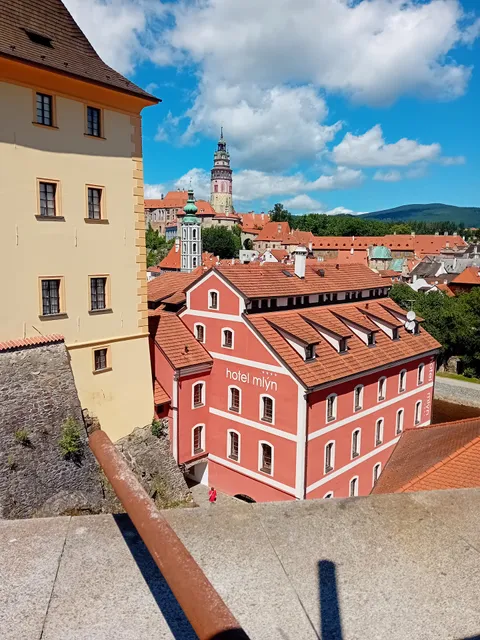
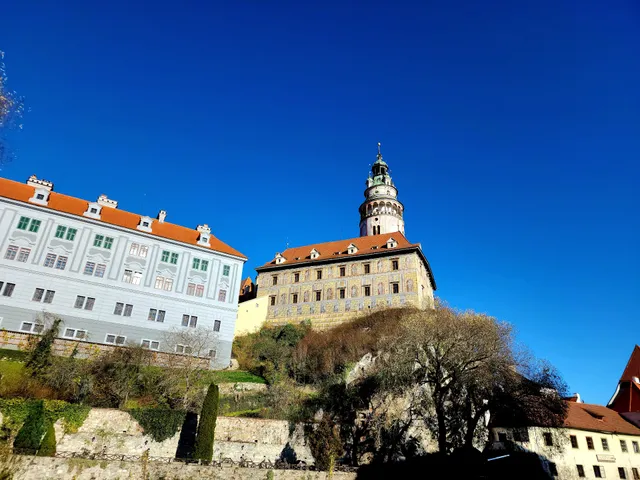
State Castle Český Krumlov The State Castle of Český Krumlov, with its architectural standard, cultural tradition, and expanse, ranks among the most important historic sights in the central European region. Building development from the 14th to 19th centuries is well-preserved in the original groundplan layout, material structure, interior installation and architectural detail.

A worthy assessment of the area by both domestic and foreign experts resulted in the acquisition of historic monument preservation status. In 1963, the town was declared a Municipal Preserve, in 1989 the castle became a National Monument, and in 1992 the entire complex was included onto the list of UNESCO World Cultural Heritage Monuments.

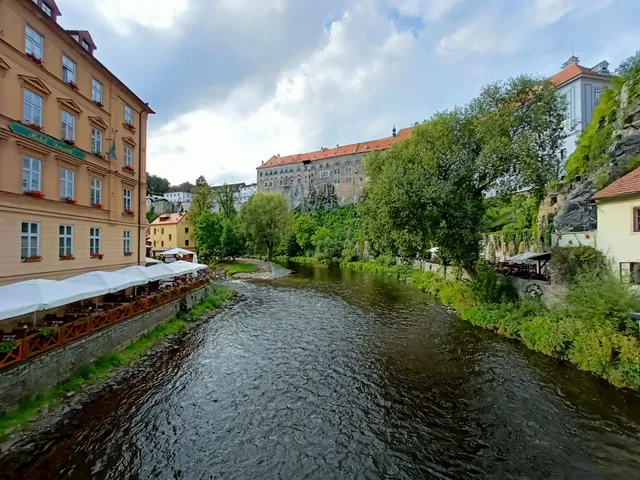
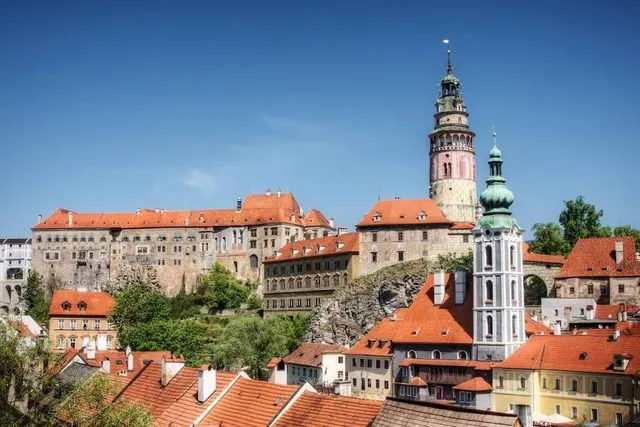
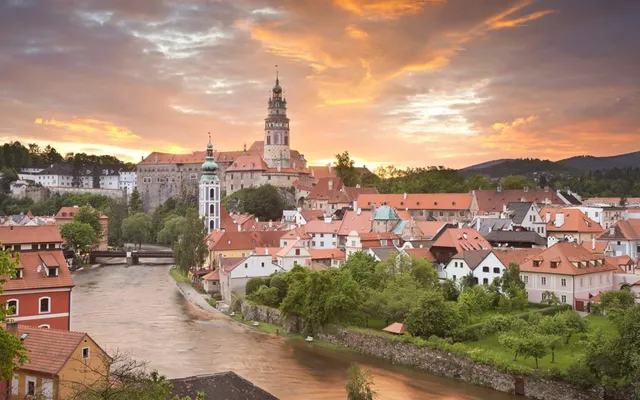
The Administration of Český Krumlov Castle as a functionary of the Heritage Authority in České Budějovice attends to the operation of the structures, especially castle tours, maintenance, construction, and restoration work, and also participates in the arrangement of Cultural and Social Activities at Český Krumlov Castle. Location : The mighty complex of the castle is erected on the rock promontory which has been sculpted by the Vltava river from the southern side and by Polečnice stream from the northern side. The castle towers proudly above the refined Renaissance and Baroque burgher architecture of the town below. The town, together with the magnificent Church of St.Vitus and the complex of the castle, creates an unique feature of the whole region. Like a precious pearl, the town of Český Krumlov is situated in the valley surrounded with the massif of Blansko Forest to the north and the undulating foothills of Šumava to the south and west.

Area : The castle area is one of the largest in central Europe. It is a complex of forty buildings and palaces, situated around five castle courts and a castle park spanning an area of seven hectares. The groundplan layout of Český Krumlov Castle shows the area and location of each court and building.

Name Origin : The name of the castle Krumlov originated from Latin expression castrum Crumnau or ancient German Crumbenowe. It reflects the configuration of the landscape - krumben ouwe means the place on the rugged meadow. The Český Krumlov Castle was mentioned for the first time by an Austrian knight minnesinger Ulrich of Lichtenstein in his poem "Der Frauendienst" which dates back between the years 1240 and 1242.

The first written form of the name of Crumbenowe is included in a document of Austrian and Styrian Duke Otakar from 1253. At that time, Krumlov was the seat of Vítek of Krumlov who belonged to the powerful noble family of Witigonen. The expression "Český" has been used in connection with Krumlov since the middle of the...

   Read more
avatar
5.0
1y

Absolutely breath-takingly beautiful castle complex with it's courtyards and garden! It is as impressive as Prague Castle. The town itself is super charming. It may be over run with tourists 9-5, stick around after they leave and have the town all to yourself!!! I eas here both late spring and early winter. In my opinion the early winter was better with light snow plus hardly much tourists so you can have the castle to yourself.

Český Krumlov Castle is a castle in Český Krumlov in the South Bohemian Region of the Czech Republic. It dates back to 1253 when the first castle was built by the Vítkovci family, the main branch of the powerful Bohemian family Rosenberg. Currently the castle is listed as a national heritage site and thus serves as a major tourist attraction. It is the second most visited castle and the second largest castle and chateau complex in the Czech Republic after Prague Castle. Currently the castle is listed as a national heritage site and thus serves as a major tourist attraction. It is the second most visited castle and the second largest castle and chateau complex in the Czech Republic after Prague Castle.

The earliest documented reference to the castle is from 1253, marking it as the residence of the noble Witiko of Prčice from the Vítkovci family. After the Vítkov lineage of the Krumlov family died out in 1302, the castle came under the Rosenberg family’s control, who initiated a significant Renaissance makeover led by William of Rosenberg.[2]

By the 17th century the Rosenbergs had died out, and Holy Roman Emperor Ferdinand II gave the dominion of Krumau to Hans Ulrich von Eggenberg, naming him Duke of Krumau. After the death of Hans Ulrich's son, Johann Anton I von Eggenberg, the castle was administered for the period between 1649 and 1664 by his widow, Anna Maria.

One of her two sons, Johann Christian I von Eggenberg, was responsible for the Baroque renovations and expansions to the castle, including the castle theatre now called the Eggenberg Theatre. When the male line of the Eggenbergs died out in 1717, the castle and duchy passed into the possession of the Schwarzenbergs. In 1947, the Schwarzenberg property, including Český Krumlov, was transferred to the Czech provincial properties and in 1950 it became the property of the Czechoslovak State.[3] The entire area was declared a national monument in 1989 and in 1992 it was added to the UNESCO World...

   Read more
Page 1 of 7
Previous
Next

Posts

LorenzoLorenzo
The presence of bears in the moat of Český Krumlov Castle isn’t a tourist attraction, it’s a scar at the heart of the town. These Eurasian brown bears are confined to a historic structure that is, in reality, deeply inadeguate from an ethological, ecological, and ethical standpoint, And it's similar to a medieval prison, With the bears forced to live, sleep and defecate on the concrete floor of the pit and can only see concrete walls and the sky. As a brown bear passionate , i spent hours, over multiple days, observing their behavior. What I witnessed is difficult to forget: profoundly bored animals, engaged in monotonous, repetitive movements all day long. The female walks in circles all day, while the male follows the same mechanical cycle: stand up against the wall, shake his head, walk toward the small vaulted cell, enter, exit, and return to the same spot, without any variation, All day, every day. The female, on night (The pit is fully Illuminated at night) often remains curled up in a dark corner, motionless or pacing listlessly, seemingly disengaged from her surroundings. The third bear in the adjacent moat repeatedly approaches the bars or lingers near them, as though waiting for something that will never come. Food is carelessly scattered. bread, apples, carrots, yet the bears barely eat. Occasionally, one lazily picks up a piece, carries it a few steps, then drops it and continues wandering. It’s as if the act of eating has lost all meaning. There’s no enrichment, no engagement, no stimulation. No staff interaction, no attempts at mental stimulation. Just an ongoing, lifeless routine. Their movements are stiff, uncoordinated as if muscular pain, joint stiffness or physical decline accompany their psychological malaise. This environment suffocates them. Tourists take quick photos and move on, unaware of the silent despair. But for anyone who stops to look for a while, the stillness and emptiness become painfully obvious. This is not conservation or education. it is a prison, dressed up as history. A place where the life of three living beings was denied for nothing, and one can see the psychological damage caused by this condition that could have been absolutely avoidable.. And finally, I tried to ask the caretaker and the castle management about these bears, but I was rudely sent away. (Even though I was a tourist only guy with Bear passion) Český Krumlov Castle deserves admiration, but housing bears in this moat under the guise of tradition and showmanship clashes with modern sensibility and knowledge. It's time to reassess the ethics behind keeping living beings here. These bears deserve more like natural habitats, liberty, stimulation, dignity. Not "lives" locked in repetitive, silent loops. This is animal abuse. The thing that hurts the most is to see these bears who have lost their sanity, and only because of man, without any reason. Nothing to say about the castle and the city, which is a wonderful place to visit at least once in your life
Kamil SagalticiKamil Sagaltici
State Castle Český Krumlov The State Castle of Český Krumlov, with its architectural standard, cultural tradition, and expanse, ranks among the most important historic sights in the central European region. Building development from the 14th to 19th centuries is well-preserved in the original groundplan layout, material structure, interior installation and architectural detail. A worthy assessment of the area by both domestic and foreign experts resulted in the acquisition of historic monument preservation status. In 1963, the town was declared a Municipal Preserve, in 1989 the castle became a National Monument, and in 1992 the entire complex was included onto the list of UNESCO World Cultural Heritage Monuments. The Administration of Český Krumlov Castle as a functionary of the Heritage Authority in České Budějovice attends to the operation of the structures, especially castle tours, maintenance, construction, and restoration work, and also participates in the arrangement of Cultural and Social Activities at Český Krumlov Castle. Location : The mighty complex of the castle is erected on the rock promontory which has been sculpted by the Vltava river from the southern side and by Polečnice stream from the northern side. The castle towers proudly above the refined Renaissance and Baroque burgher architecture of the town below. The town, together with the magnificent Church of St.Vitus and the complex of the castle, creates an unique feature of the whole region. Like a precious pearl, the town of Český Krumlov is situated in the valley surrounded with the massif of Blansko Forest to the north and the undulating foothills of Šumava to the south and west. Area : The castle area is one of the largest in central Europe. It is a complex of forty buildings and palaces, situated around five castle courts and a castle park spanning an area of seven hectares. The groundplan layout of Český Krumlov Castle shows the area and location of each court and building. Name Origin : The name of the castle Krumlov originated from Latin expression castrum Crumnau or ancient German Crumbenowe. It reflects the configuration of the landscape - krumben ouwe means the place on the rugged meadow. The Český Krumlov Castle was mentioned for the first time by an Austrian knight minnesinger Ulrich of Lichtenstein in his poem "Der Frauendienst" which dates back between the years 1240 and 1242. The first written form of the name of Crumbenowe is included in a document of Austrian and Styrian Duke Otakar from 1253. At that time, Krumlov was the seat of Vítek of Krumlov who belonged to the powerful noble family of Witigonen. The expression "Český" has been used in connection with Krumlov since the middle of the 15th century.
Buster Got itBuster Got it
Absolutely breath-takingly beautiful castle complex with it's courtyards and garden! It is as impressive as Prague Castle. The town itself is super charming. It may be over run with tourists 9-5, stick around after they leave and have the town all to yourself!!! I eas here both late spring and early winter. In my opinion the early winter was better with light snow plus hardly much tourists so you can have the castle to yourself. Český Krumlov Castle is a castle in Český Krumlov in the South Bohemian Region of the Czech Republic. It dates back to 1253 when the first castle was built by the Vítkovci family, the main branch of the powerful Bohemian family Rosenberg. Currently the castle is listed as a national heritage site and thus serves as a major tourist attraction. It is the second most visited castle and the second largest castle and chateau complex in the Czech Republic after Prague Castle. Currently the castle is listed as a national heritage site and thus serves as a major tourist attraction. It is the second most visited castle and the second largest castle and chateau complex in the Czech Republic after Prague Castle. The earliest documented reference to the castle is from 1253, marking it as the residence of the noble Witiko of Prčice from the Vítkovci family. After the Vítkov lineage of the Krumlov family died out in 1302, the castle came under the Rosenberg family’s control, who initiated a significant Renaissance makeover led by William of Rosenberg.[2] By the 17th century the Rosenbergs had died out, and Holy Roman Emperor Ferdinand II gave the dominion of Krumau to Hans Ulrich von Eggenberg, naming him Duke of Krumau. After the death of Hans Ulrich's son, Johann Anton I von Eggenberg, the castle was administered for the period between 1649 and 1664 by his widow, Anna Maria. One of her two sons, Johann Christian I von Eggenberg, was responsible for the Baroque renovations and expansions to the castle, including the castle theatre now called the Eggenberg Theatre. When the male line of the Eggenbergs died out in 1717, the castle and duchy passed into the possession of the Schwarzenbergs. In 1947, the Schwarzenberg property, including Český Krumlov, was transferred to the Czech provincial properties and in 1950 it became the property of the Czechoslovak State.[3] The entire area was declared a national monument in 1989 and in 1992 it was added to the UNESCO World Heritage List.
See more posts
See more posts
hotel
Find your stay

Pet-friendly Hotels in okres Český Krumlov

Find a cozy hotel nearby and make it a full experience.

The presence of bears in the moat of Český Krumlov Castle isn’t a tourist attraction, it’s a scar at the heart of the town. These Eurasian brown bears are confined to a historic structure that is, in reality, deeply inadeguate from an ethological, ecological, and ethical standpoint, And it's similar to a medieval prison, With the bears forced to live, sleep and defecate on the concrete floor of the pit and can only see concrete walls and the sky. As a brown bear passionate , i spent hours, over multiple days, observing their behavior. What I witnessed is difficult to forget: profoundly bored animals, engaged in monotonous, repetitive movements all day long. The female walks in circles all day, while the male follows the same mechanical cycle: stand up against the wall, shake his head, walk toward the small vaulted cell, enter, exit, and return to the same spot, without any variation, All day, every day. The female, on night (The pit is fully Illuminated at night) often remains curled up in a dark corner, motionless or pacing listlessly, seemingly disengaged from her surroundings. The third bear in the adjacent moat repeatedly approaches the bars or lingers near them, as though waiting for something that will never come. Food is carelessly scattered. bread, apples, carrots, yet the bears barely eat. Occasionally, one lazily picks up a piece, carries it a few steps, then drops it and continues wandering. It’s as if the act of eating has lost all meaning. There’s no enrichment, no engagement, no stimulation. No staff interaction, no attempts at mental stimulation. Just an ongoing, lifeless routine. Their movements are stiff, uncoordinated as if muscular pain, joint stiffness or physical decline accompany their psychological malaise. This environment suffocates them. Tourists take quick photos and move on, unaware of the silent despair. But for anyone who stops to look for a while, the stillness and emptiness become painfully obvious. This is not conservation or education. it is a prison, dressed up as history. A place where the life of three living beings was denied for nothing, and one can see the psychological damage caused by this condition that could have been absolutely avoidable.. And finally, I tried to ask the caretaker and the castle management about these bears, but I was rudely sent away. (Even though I was a tourist only guy with Bear passion) Český Krumlov Castle deserves admiration, but housing bears in this moat under the guise of tradition and showmanship clashes with modern sensibility and knowledge. It's time to reassess the ethics behind keeping living beings here. These bears deserve more like natural habitats, liberty, stimulation, dignity. Not "lives" locked in repetitive, silent loops. This is animal abuse. The thing that hurts the most is to see these bears who have lost their sanity, and only because of man, without any reason. Nothing to say about the castle and the city, which is a wonderful place to visit at least once in your life
Lorenzo

Lorenzo

hotel
Find your stay

Affordable Hotels in okres Český Krumlov

Find a cozy hotel nearby and make it a full experience.

Get the Appoverlay
Get the AppOne tap to find yournext favorite spots!
State Castle Český Krumlov The State Castle of Český Krumlov, with its architectural standard, cultural tradition, and expanse, ranks among the most important historic sights in the central European region. Building development from the 14th to 19th centuries is well-preserved in the original groundplan layout, material structure, interior installation and architectural detail. A worthy assessment of the area by both domestic and foreign experts resulted in the acquisition of historic monument preservation status. In 1963, the town was declared a Municipal Preserve, in 1989 the castle became a National Monument, and in 1992 the entire complex was included onto the list of UNESCO World Cultural Heritage Monuments. The Administration of Český Krumlov Castle as a functionary of the Heritage Authority in České Budějovice attends to the operation of the structures, especially castle tours, maintenance, construction, and restoration work, and also participates in the arrangement of Cultural and Social Activities at Český Krumlov Castle. Location : The mighty complex of the castle is erected on the rock promontory which has been sculpted by the Vltava river from the southern side and by Polečnice stream from the northern side. The castle towers proudly above the refined Renaissance and Baroque burgher architecture of the town below. The town, together with the magnificent Church of St.Vitus and the complex of the castle, creates an unique feature of the whole region. Like a precious pearl, the town of Český Krumlov is situated in the valley surrounded with the massif of Blansko Forest to the north and the undulating foothills of Šumava to the south and west. Area : The castle area is one of the largest in central Europe. It is a complex of forty buildings and palaces, situated around five castle courts and a castle park spanning an area of seven hectares. The groundplan layout of Český Krumlov Castle shows the area and location of each court and building. Name Origin : The name of the castle Krumlov originated from Latin expression castrum Crumnau or ancient German Crumbenowe. It reflects the configuration of the landscape - krumben ouwe means the place on the rugged meadow. The Český Krumlov Castle was mentioned for the first time by an Austrian knight minnesinger Ulrich of Lichtenstein in his poem "Der Frauendienst" which dates back between the years 1240 and 1242. The first written form of the name of Crumbenowe is included in a document of Austrian and Styrian Duke Otakar from 1253. At that time, Krumlov was the seat of Vítek of Krumlov who belonged to the powerful noble family of Witigonen. The expression "Český" has been used in connection with Krumlov since the middle of the 15th century.
Kamil Sagaltici

Kamil Sagaltici

hotel
Find your stay

The Coolest Hotels You Haven't Heard Of (Yet)

Find a cozy hotel nearby and make it a full experience.

hotel
Find your stay

Trending Stays Worth the Hype in okres Český Krumlov

Find a cozy hotel nearby and make it a full experience.

Absolutely breath-takingly beautiful castle complex with it's courtyards and garden! It is as impressive as Prague Castle. The town itself is super charming. It may be over run with tourists 9-5, stick around after they leave and have the town all to yourself!!! I eas here both late spring and early winter. In my opinion the early winter was better with light snow plus hardly much tourists so you can have the castle to yourself. Český Krumlov Castle is a castle in Český Krumlov in the South Bohemian Region of the Czech Republic. It dates back to 1253 when the first castle was built by the Vítkovci family, the main branch of the powerful Bohemian family Rosenberg. Currently the castle is listed as a national heritage site and thus serves as a major tourist attraction. It is the second most visited castle and the second largest castle and chateau complex in the Czech Republic after Prague Castle. Currently the castle is listed as a national heritage site and thus serves as a major tourist attraction. It is the second most visited castle and the second largest castle and chateau complex in the Czech Republic after Prague Castle. The earliest documented reference to the castle is from 1253, marking it as the residence of the noble Witiko of Prčice from the Vítkovci family. After the Vítkov lineage of the Krumlov family died out in 1302, the castle came under the Rosenberg family’s control, who initiated a significant Renaissance makeover led by William of Rosenberg.[2] By the 17th century the Rosenbergs had died out, and Holy Roman Emperor Ferdinand II gave the dominion of Krumau to Hans Ulrich von Eggenberg, naming him Duke of Krumau. After the death of Hans Ulrich's son, Johann Anton I von Eggenberg, the castle was administered for the period between 1649 and 1664 by his widow, Anna Maria. One of her two sons, Johann Christian I von Eggenberg, was responsible for the Baroque renovations and expansions to the castle, including the castle theatre now called the Eggenberg Theatre. When the male line of the Eggenbergs died out in 1717, the castle and duchy passed into the possession of the Schwarzenbergs. In 1947, the Schwarzenberg property, including Český Krumlov, was transferred to the Czech provincial properties and in 1950 it became the property of the Czechoslovak State.[3] The entire area was declared a national monument in 1989 and in 1992 it was added to the UNESCO World Heritage List.
Buster Got it

Buster Got it

See more posts
See more posts