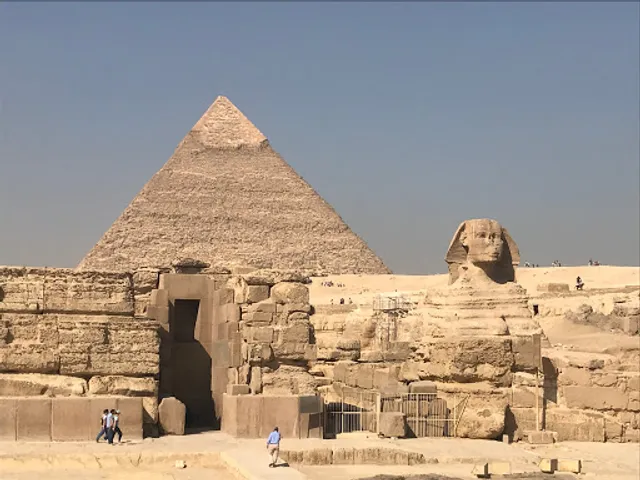
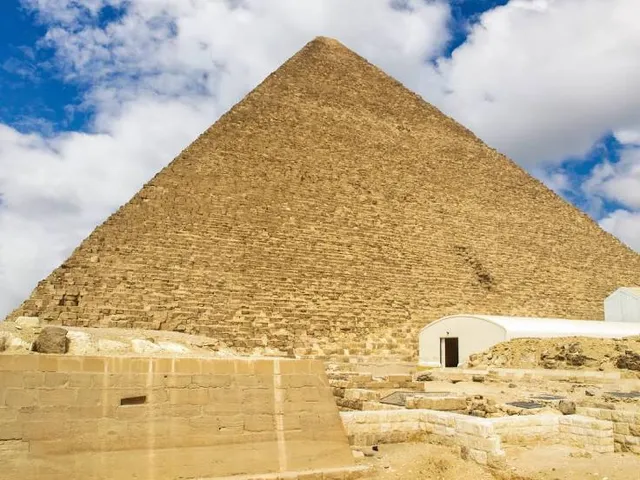
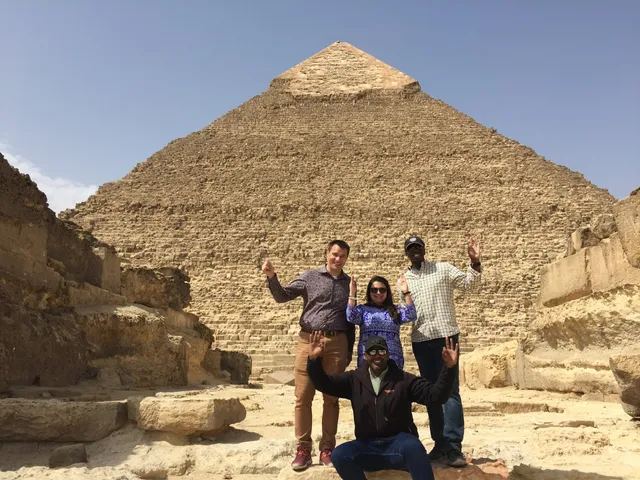
Construction Like the Great Pyramid, a rock outcropping was used in the core. Due to the slope of the plateau, the northwest corner was cut 10 m (33 ft) out of the rock subsoil and the southeast corner is built up.
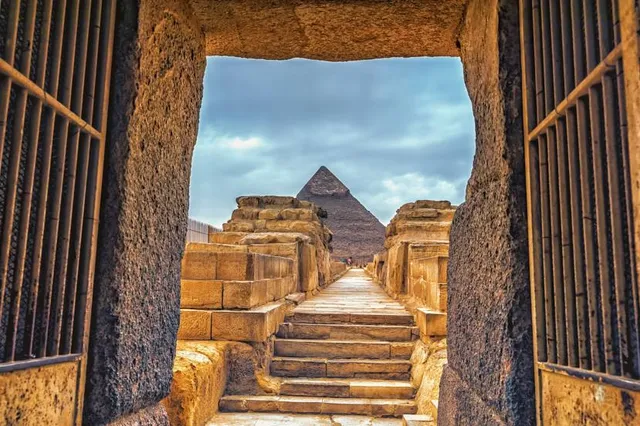
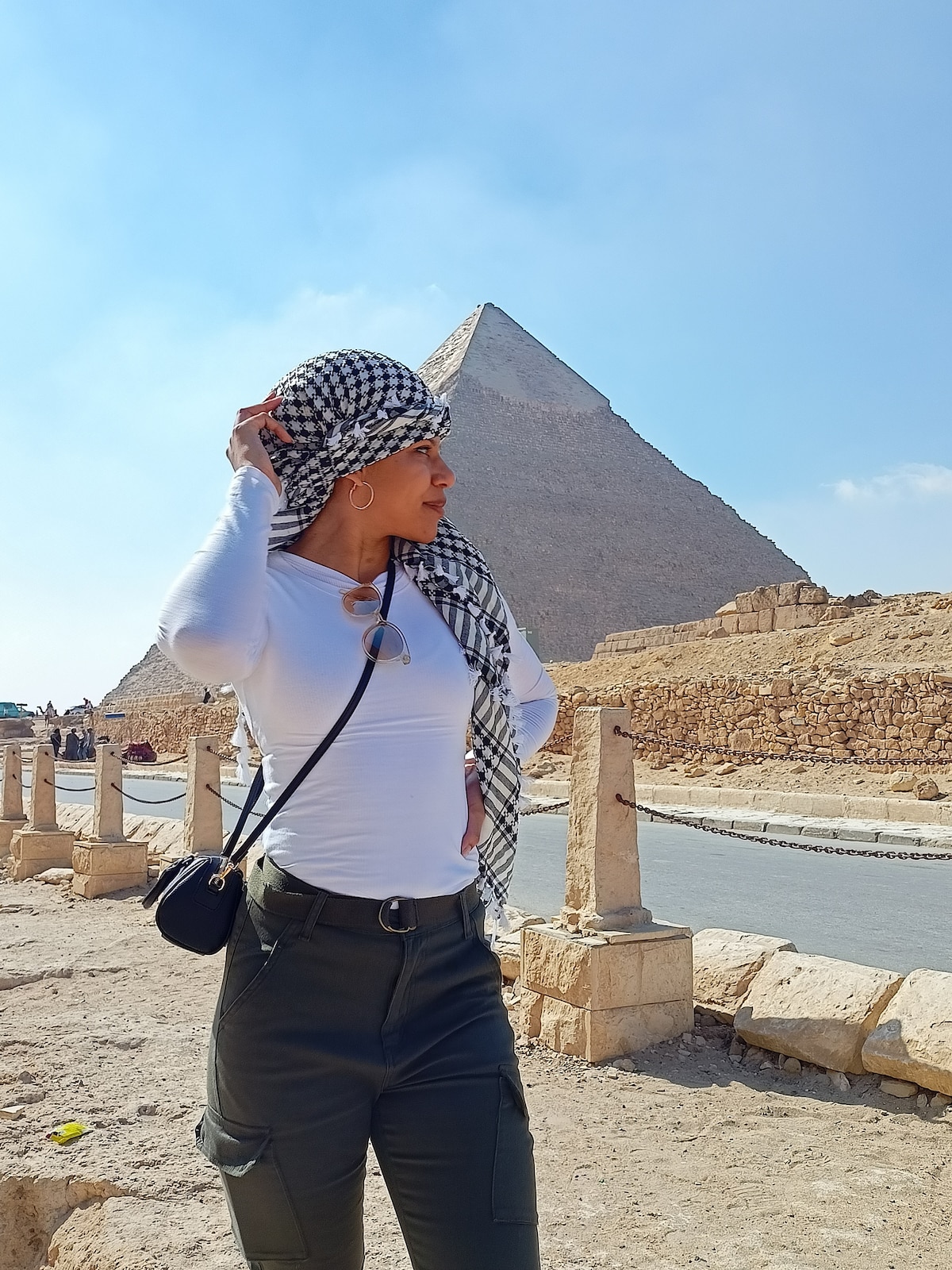
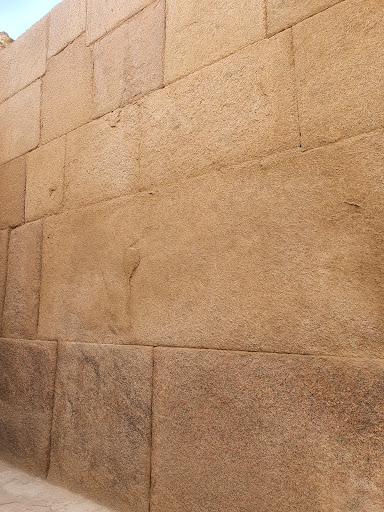
The pyramid is built of horizontal courses. The stones used at the bottom are very large, but as the pyramid rises, the stones become smaller, becoming only 50 cm (20 in) thick at the apex. The courses are rough and irregular for the first half of its height but a narrow band of regular masonry is clear in the midsection of the pyramid. At the northwest corner of the pyramid, the bedrock was fashioned into steps.[7] Casing stones cover the top third of the pyramid, but the pyramidion and part of the apex are missing.
The bottom course of casing stones was made out of pink granite but the remainder of the pyramid was cased in Tura Limestone. Close examination reveals that the corner edges of remaining casing stones are not completely straight, but are staggered by a few millimeters. One theory is that this is due to settling from seismic activity. An alternative theory postulates that the slope on the blocks was cut to shape before being placed due to the limited working space towards the top of the pyramid.[8]
Interior
Passageways and chambers inside the Pyramid of Khafre. Two entrances lead to the burial chamber, one that opens 11.54 m (38 ft) up the face of the pyramid and one that opens at the base of the pyramid. These passageways do not align with the centerline of the pyramid, but are offset to the east by 12 m (39 ft). The lower descending passageway is carved completely out of the bedrock, descending, running horizontal, then ascending to join the horizontal passage leading to the burial chamber.
One theory as to why there are two entrances is that the pyramid was intended to be much larger with the northern base shifted 30 m (98 ft) further to the north which would make Khafre's pyramid much larger than his father's. This would place the entrance to the lower descending passage within the masonry of the pyramid. While the bedrock is cut away farther from the pyramid on the north side than on the west side, it is not clear that there is enough room on the plateau for the enclosure wall and pyramid terrace. An alternative theory is that, as with many earlier pyramids, plans were changed and the entrance was moved midway through construction.
There is a subsidiary chamber, equal in length to the c.412"-long King's Chamber of the Khufu pyramid,[9] that opens to the west of the lower passage, the purpose of which is uncertain. It may be used to store offerings, store burial equipment, or it may be a serdab chamber. The upper descending passage is clad in granite and descends to join with the horizontal passage to the burial chamber.
The burial chamber was carved out of a pit in the bedrock. The roof is constructed of gabled limestone beams. The chamber is rectangular, 14.15 m by 5 m (46.4 ft x 16 ft), and is oriented east-west. Khafre's sarcophagus was carved out of a solid block of granite and sunk partially in the floor, in it, Belzoni found bones of an animal, possibly a bull. Another pit in the floor likely contained the canopic chest, its lid would have been one of the...
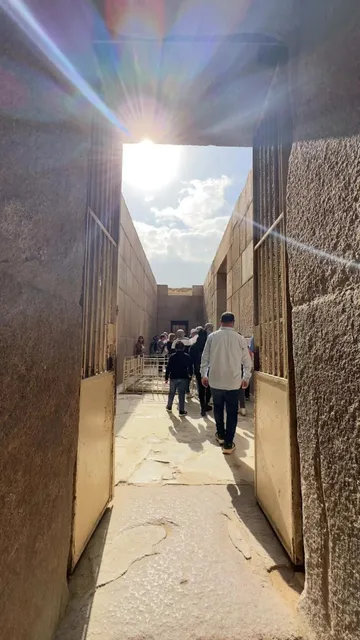
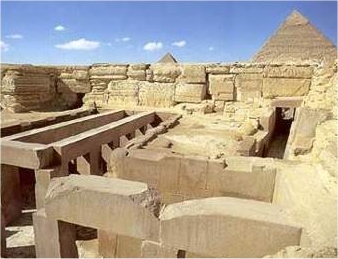
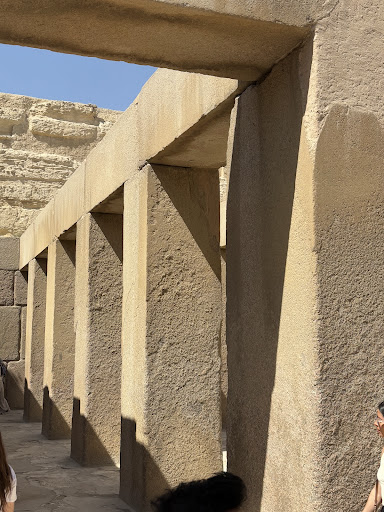
Read moreThe temple of the valley is a temple that the ancient Marianites built on the Nile coast near the pyramids and connected by a road called "the procession road". After Pharaoh's death, his body was mummified and his mummies were mowed down in the valley temple, and then carried on a large planet to a temple just next to the pyramid, called the funerary temple. After performing the religious services on the deceased, he entered the coffin room and was placed in the coffin.
The temple of the valley first appeared in the reign of the pharaoh Sinfrew, and continued until the end of the twelfth Dynasty. It was built at the confluence of the desert with green soil and was sometimes built with water channels.
The Valley Temples were built on a platform on the Nile coast or the artificial canal shore and belong to a port and marine installations. These facilities were used to load vessels and large vessels. The temple contained niches in which statues of the deceased were placed. The temple also had ramps to climb over and complete some religious rites.
During the reign of Sanfero, a complete structure was built around the pyramid. At that time, the priests of ancient Egyptians transferred the performance of the religious rituals and the movement of the dead in his meeting with the gods from the Pyramid to the Valley. The religious ceremonies were held in the Pyramid area of the gods [A 1] The area is adorned with the Horus pears.
And most probably belonged to the boats and it is most likely that Pharaoh was accepting the celebrations and statues in the Valley Temple. This was inherited from the era of early Egyptian families. . [A 2]
This is evidenced by the papyrus papyrus of the fifth Egyptian family and the sixth family, and from the lists of celebrations, as well as the presence of many statues of Munkra in Maalbdwadi of his pyramid. A drawing showing the location of the Valley Temple of Khafra, next to the Sphinx. The funerary temple is located just below the pyramid of Khafra.
From the temples of the valley, which until now remained the temple of Khafre. This temple was built next to the Sphinx and connected to a paved road for the processions of its pyramid on the Giza plateau. Archaeologists also found other temples for the kings of Minkra, Sahorea, Nis User Ra, Onas, Bibi II, Senusert II and Amenemhat III. There were also other valley temples on fertile ground near the Nile but...
Read moreمصر القديمه تاريخ وحضاره 10.004
١٠ - اهم ملوك الدوله القديمه
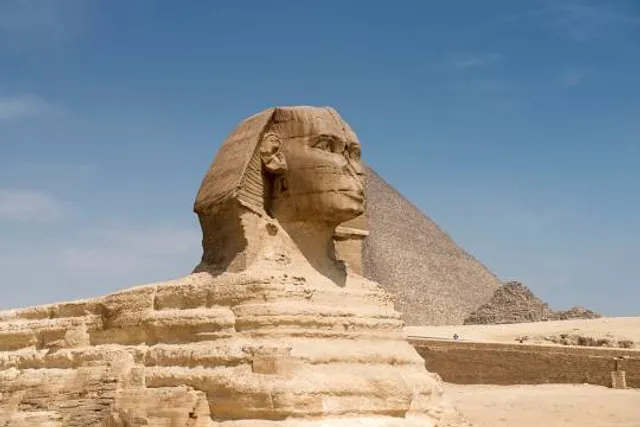
٤ - الملك خفرع الملك خفرع (خف رع ) بالهيروغليفية خفرع أو خفران فرعون من الأسرة الرابعة. وهو رابع فرعون بالأسرة الرابعة بالمملكة القديمة حكم بين سنتي 2559 و2535 ق م هو من شيد الهرم الثاني بالجيزة. هو على الأغلب إبن الملك خوفو من زوجة ثانوية تولى الحكم بعد الملك جدف رع الذي كان قد إستولى على الحكم . هرم خفرع يشابه في عظمته هرم خوفو . ملامح خوفو نتعرف عليها من خلال أبو الهول الموجود بجانب هرمه والمتمثل في صورة أسد برأس إنسان. كما تم العثور على صورة منحوتة بمعبده بوادي الملوك و تمثال للملك جالس موجود بالمتحف المصري. لايعرف الكثير عن فترة حكمه ولا توجد شواهد تؤكد رواية الرحالة اليوناني هيرودوت التي تصف خوفو وخفرع كطغاة .
تزوج من الأميرة (مراس عنخ) الثالثة يذكر المؤرخون أنه حكمة ست وعشرين سنه وينسب له الهرم الثاني من أهرام الجيزة وهو أقل إرتفاعا من هرم أبيه الملك خوفو . كان إرتفاعه في الأصل مائة وثلاثة وأربعين مترا ونصف وأصبح الآن مائة و ستةوثلاثين مترا ونصف أقيم على مساحة تبلغ مئتين وخمس عشر مترآ مربعا ونصف المتر المربع وللهرم مدخلان في الجهة الشمالية ومازال الهرم يحتفظ بجزء من كسائه عند القمة عثر في معبد الوادي الخاص بمجموعته الهرمية على تماثيل من حجر الشست بينهم تمثال يعتبر من أجمل ما أنتجه فن النحت المصري وهو موجود بالمتحف المصري والدة الملك خفرع هي الملكه ميريت إيتس وهى كانت أيضاً زوجة للملك خوفو ويستدل بذلك من النقش الهيروغليفى الموجود على العرش المتوفاه إبنه الملك جد فرع من جسده والدة خفرع وزوجة خوفو سيد الأرضين هرم خفرع بتصميمه وأشرف على بناءه المهندس المصري الأمير عنخ خاف . ويقع هرم خفرع جنوب هرم الملك خوفو . بنى خفرع هرمه من نوعيه جديده من الطوب الجرانيت وهى أقرب جوده من تلك التي بني بها الهرم الأكبر وكان مغطى بطبقه من الجير التى تآكلت بفعل العوامل الجويه ولم يتبق منها إلا الطبقه الموجوده على قمه الهرم والناظر لهرم خفرع في أول وهله يعتقد أنه أكبر من هرم خوفو وذلك لأنه شيد فوق مرتفع يعلو حوالي عشرة أمتار عن الأرض يبلغ إرتفاع هرم خفرع 143,5 متراً وطول كل ضلع 215,5 متراً وزاوية ميله 53,10ْ، يقع في مستوى سطح الأرض والمدخل يؤدي إلى ممر هابط، سقفه من الجرانيت وزاوية إنحداره 22ْ ينتهي عند متراس ندخل منه إلى ممر أفقي، ثم ممر منحدر يؤدي إلى حجيرة يطلق عليها حجيرة الدفن وهي فارغة منحوتة في الصخر، ويستمر الدهليز إلى متراس آخر نجده يرتفع إلى أعلى بممر أفقي ينتهي بحجره الدفن وهذه الحجرة سقفها جمالوني مشيد بالحجر الجيري، وتكاد تكون منتصف الهرم، أطلق خفرع على هرمه إسم(العظيم).
هرم خفرع من الداخل : البوابه الأولى المعرفه ببوابه ( بلزوني ) ترتفع عن سطح الارض حوالي 16 سنتيمتر (الممرالاول المرتبط ببوابه بلزوني )
الممرالثاني المرتبط بالبوابه الشماليه وهذا الممر يهبط تحت مستوى سطح الارض بزاويه قدرها 22 درجه ويؤدي الى حجره أطلق عليها حجيره الدفن وعند إكتشاف الحجره كانت خاويه حجيرة الدفن ووجدت فارغه ويعتقد أنها كانت تستخدم للأثاث الجنائزي مخرج لحجيره الدفن من الجهه المقابله وينتهي هذا المخرج بممر يصعد الى اعلى ويلتقي مع ممر بلزوني ومن ثم يتجه الى غرفه الدفن الرئيسيه حجره الدفن الرئيسيه التي يوجد بها تابوت الملك خفرع الذي كان مصنوعا من الجرانيت الرمادي ونصفه مغطى بالماده السميكه التي كانت تغطي ارضيه الغرفه .
المجموعه الهرميه للمك خفرع : كانت الأهرام تشيد عادة داخل مجموعة جنائزية تضم عدة منشآت. وكان الجدار المحيط يشيد عادة من الطوب اللبن ويحتضن المجموعة بكاملها. وكان معبد الوادي يعد المدخل الرئيسي للمجموعة وساحة استقبال للملك الحي عند حضوره لتفقد الأعمال، كما كانت تؤدى به الطقوس الجنائزية للملك المتوفى؛ وربما يجرى له التحنيط أيضا.
وكان الطريق الصاعد يصل بين معبد الوادي والمعبد الجنائزي، وكان سقف هذا الطريق مفتوحا في المجموعات الهرمية المبكرة ثم كان كثيرا ما يغطى في الأزمنة اللاحقة بسقف به فتحة مستطيلة فى وسطه تسمح بدخول قليل من الضوء.
وكانت الشعائر الدينية الختامية للملك المتوفى تؤدى في المعبد الجنائزي والمقاصير الدينية؛ قبل أن ينقل جثمانه إلى مدفنه داخل الهرم. وقد خصصت حفر في الأرض لكي تضم المراكب التي كانت تستخدم في نقل الجثمان الملكي والأثاث الجنائزي؛ بعد أن تفك وترص بداخل الحفر، لكي يستخدمها الملك بالدار الآخرة ولتجواله في عالم الموتى: أو مصاحبا لرب الشمس.وكان الملك المتوفى يدفن بالهرم - أى المقبرة الملكية؛ إما في داخله أو تحته. وكان الهرم يشيد كمقبرة ملكية أو كأثر، ولم يكن له أي استخدام آخر
معبد الوادي للملك خفرع : يقع معبد الوادي للملك خفرع على حافة الوادي القريب من قرية نزلة...
Read more