The Palais Garnier, an opulent edifice located in the heart of Paris, stands as a resplendent testament to the grandeur of 19th-century French architecture and the artistic fervor of the era. Commissioned by Emperor Napoleon III as part of his ambitious urban redevelopment plan, the opera house was designed by the illustrious architect Charles Garnier and inaugurated in 1875. Often referred to as the Opéra Garnier, this architectural marvel is emblematic of the Beaux-Arts style, characterized by its extravagant ornamentation, harmonious proportions, and meticulous attention to detail.
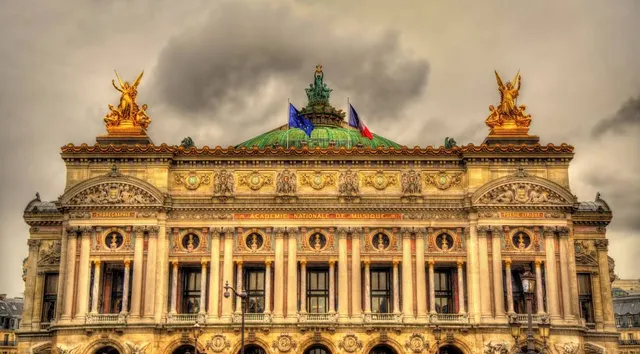
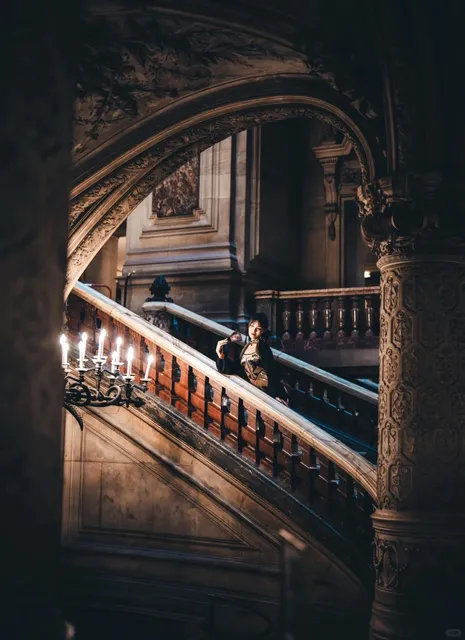
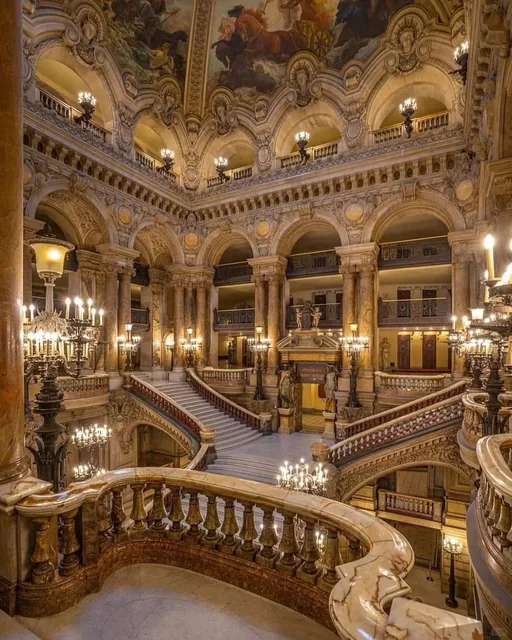
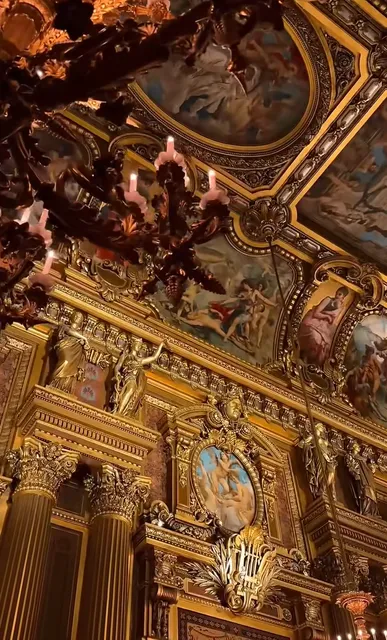
The façade of the Palais Garnier is a veritable feast for the senses, adorned with intricately sculpted figures and allegorical motifs that celebrate the various art forms. The grand staircase, a focal point of the interior, is a magnificent display of marble and gilt, evoking a sense of theatricality even before one enters the auditorium. This sweeping staircase, with its opulent balustrades and sumptuous decor, leads to a grand foyer, where gilded mirrors and frescoed ceilings envelop visitors in an atmosphere of lavish splendor.
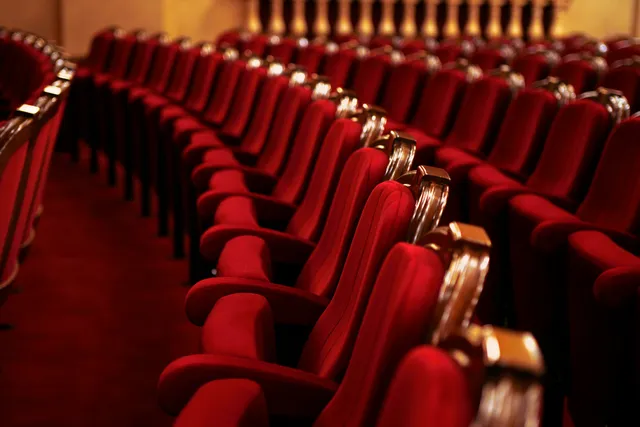
The auditorium itself is a breathtaking spectacle, featuring a capacity of approximately 1,900 seats arranged in a traditional horseshoe configuration, which enhances acoustics and sightlines. The ceiling, adorned with a stunning mural by Marc Chagall, juxtaposes classical themes with modern interpretations, creating a dynamic visual narrative that captures the essence of opera. This unique artistic collaboration, completed in 1964, serves as a testament to the evolving nature of the performing arts while paying homage to the historical significance of the venue.
One of the lesser-known features of the Palais Garnier is its remarkable stage, which is one of the largest in the world. Spanning an impressive 1,600 square meters, it is equipped with advanced rigging systems and state-of-the-art technical facilities, allowing for the most ambitious productions to be realized. The stage’s versatility enables it to accommodate a diverse range of performances, from grand operas to contemporary ballets, thus affirming its status as a cultural epicenter.
Moreover, the Palais Garnier houses a wealth of historical artifacts and artworks that reflect its storied past. The library-museum, accessible to the public, contains an extensive collection of costumes, set designs, and historical documents that chronicle the evolution of opera and ballet in France. This treasure trove of artistic heritage provides invaluable insights into the creative processes and cultural significance of the performances that have graced its stage.
The acoustics of the Palais Garnier are also a subject of considerable acclaim. The combination of its ornate design and carefully calculated materials creates an acoustical environment that enhances the auditory experience, allowing even the softest of whispers to resonate throughout the auditorium. This exceptional sound quality has made it a favored venue for renowned opera companies and soloists from around the globe, further solidifying its reputation as a bastion of musical excellence.
Despite its grandeur, the Palais Garnier faces contemporary challenges, particularly in the realm of accessibility and modernization. Efforts have been made to ensure that the historical integrity of the building is preserved while accommodating the needs of a diverse audience. Initiatives such as guided tours and educational programs aim to engage the public and foster a deeper appreciation for the arts, thereby ensuring the Palais Garnier remains relevant in today’s cultural landscape.
In conclusion, the Palais Garnier is not merely an opera house; it is a monumental celebration of artistic expression and architectural brilliance. Its sumptuous design, historical significance, and cultural contributions render it an enduring symbol of Parisian heritage. For those fortunate enough to experience a performance within its hallowed walls, the Palais Garnier offers a transcendent journey into the...
Read moreAn Opulent Dream Sustained: The Enduring Grandeur of Palais Garnier PARIS — In a city renowned for its architectural marvels, the Palais Garnier asserts its singular claim with an unapologetic flourish. More than simply an opera house, it is a magnificent testament to Second Empire opulence, a gilded and marbled dream rendered in stone that continues to captivate visitors and patrons alike. To step inside Charles Garnier's masterpiece is to embark on a journey not merely through corridors and loges, but through time itself.
From the moment one approaches its monumental façade, adorned with allegorical figures and busts of great composers, the sense of occasion is palpable. But it is within that the true spectacle unfolds. The Grand Staircase, a swirling vortex of white marble and onyx, serves as a dramatic overture, its theatricality inviting one to become part of the unfolding drama. Here, one can easily imagine the rustle of silks and the murmur of anticipation that accompanied Parisian society in its gilded age.
The sheer sensory overload, in the most exquisite sense, is what defines the Palais Garnier experience. The Grand Foyer, ablaze with chandeliers and adorned with paintings that evoke the sun-drenched galleries of Versailles, is a testament to the era's unbridled pursuit of beauty. Every detail, from the intricate mosaics to the delicate gold leaf, contributes to an overwhelming sense of luxury that feels both historical and timeless.
And then, of course, there is the auditorium itself. Here, under Marc Chagall's vibrant ceiling, the famous chandelier hangs like a colossal jewel, casting its light upon velvet seats and ornate balconies. It is a space designed not just for performance, but for being seen, a grand salon where art and society converge. Even when empty, the stage whispers of a thousand past triumphs, and the very air seems charged with the echoes of soaring arias and thunderous applause.
Beyond the aesthetic splendor, the Palais Garnier functions as a living monument to the performing arts. While its grand stage often hosts ballet and a select number of operas, the building itself offers a profound appreciation for artistic patronage and the enduring human desire for beauty and spectacle.
In an age of digital ephemeral, the Palais Garnier stands as a formidable and deeply satisfying anachronism. It is a reminder that some experiences demand more than a screen – they demand presence, grandeur, and the very air of history. A visit here is not just a cultural outing; it is an immersion in a uniquely Parisian form of magnificent artistry, a powerful and enduring...
Read moreThe Opéra Garnier, or Palais Garnier, is undoubtedly one of the most imposing buildings in Paris. Historically, it was officially the main opera house in Paris, but also home to the Paris Opera Ballet, until the Opera Bastille opened its doors in 1989. With a capacity of 2,700 spectators, it has hosted some of the most important works worldwide.
This historic building consists of a total of 17 floors with the main hall occupying only 1/5 of its total area! Its oval amphitheater can accommodate up to 1,979 guests at the same time, while the source of light is the huge chandelier with its own weight of 6 tons! In earlier times, the chandelier was powered by gas lamps, which gradually completely destroyed the ceiling of the Opera House.
King Napoleon III was the one who decided to build a new Opera House, while the site was chosen by Baron Osman and the project itself was awarded to the architect Charles Garnier after a competition. The then young Garnier has just returned from a long trip to Athens and Rome, and enchanted by the beauty, grace and complex architecture of the Parthenon temple, he wanted to do something influenced by it, introducing many architectural characters into one building. The project officially began in 1861 but there were constant work interruptions due to insufficient funding, as well as the Franco-Prussian War of 1870 and the revolutionary workers' government, the Paris Commune of 1871. The Opera was finally inaugurated and opened on January 5, 1875.
The Opera Garnier is also the ""home"" of the famous Phantom of the Opera! It is said that the sound of water running through the foundation of the building created the legend of the ghost, which later fueled the imagination of writer Gaston Leroux, who maintained throughout his life that the ghost is not a myth but real!
The facade features classical columns and eight sculptures representing allegorical figures: Poetry, Music, Idyll, Recitation, Song, Drama and Dance. Most of the building's space is dedicated to the grand foyer with the magnificent Grand Escalier, a marble entrance staircase, adorned with ornate gilded light...
Read more