Dam Square lies in the historical center of Amsterdam, approximately 750 metres (2,500 ft) south of the main transportation hub, Centraal Station, at the original location of the dam in the river Amstel. It is roughly rectangular in shape, stretching about 200 metres (650 ft) from west to east and about 100 metres (350 ft) from north to south. It links the streets Damrak and Rokin, which run along the original course of the Amstel River from Centraal Station to Muntplein (Mint Square) and the Munttoren (Mint Tower). The Dam also marks the endpoint of the other well-traveled streets Nieuwendijk, Kalverstraat and Damstraat. A short distance beyond the northeast corner lies the main red-light district: De Wallen.
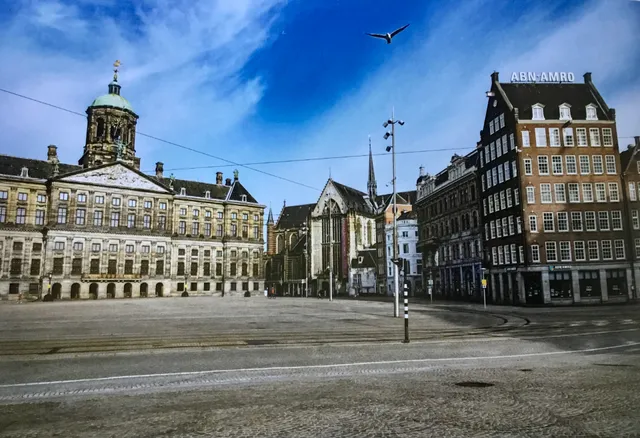
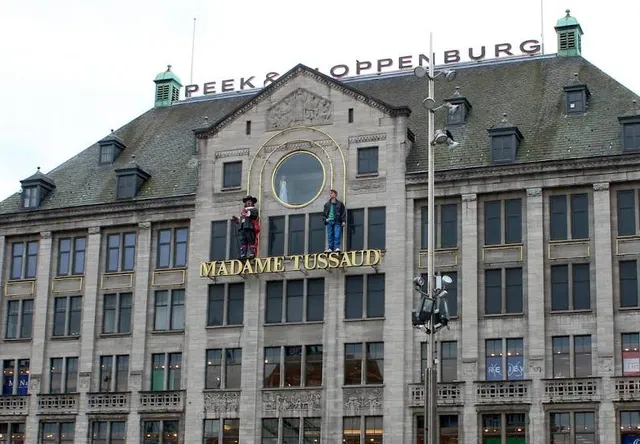
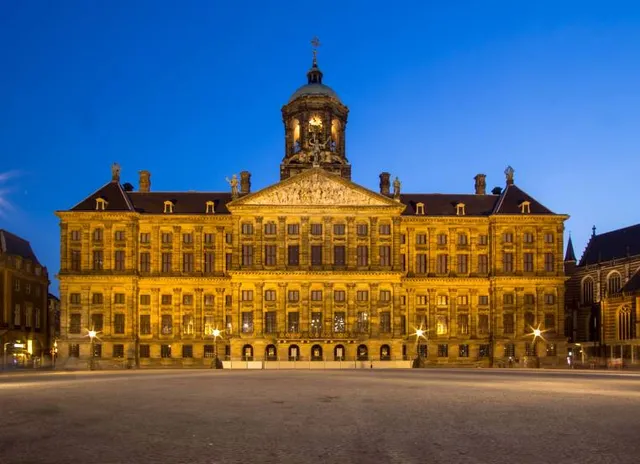
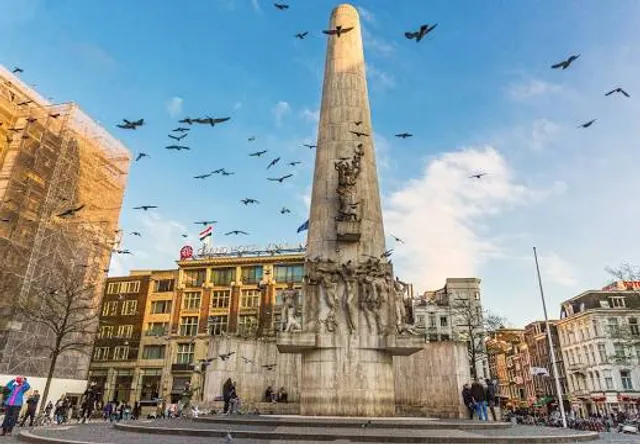
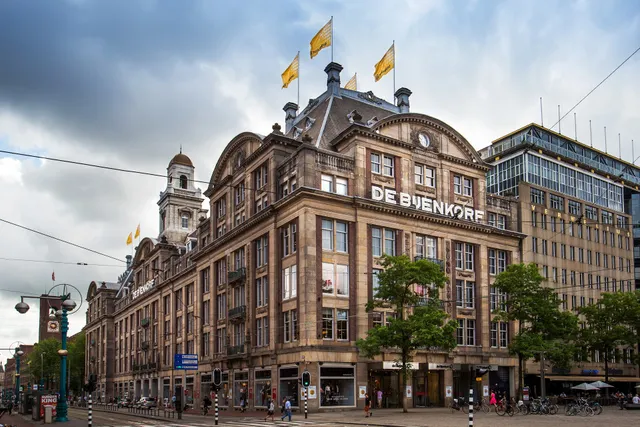
On the west end of the square is the neoclassical Royal Palace, which served as the city hall from 1655 until its conversion to a royal residence in 1808. Beside it are the 15th-century Gothic Nieuwe Kerk (New Church) and the Madame Tussauds Amsterdam Wax Museum. The National Monument, a white stone pillar designed by J.J.P. Oud and erected in 1956 to memorialize the victims of World War II, dominates the opposite side of the square. Also overlooking the plaza are the NH Grand Hotel Krasnapolsky and the upscale department store De Bijenkorf. These various attractions have turned the Dam into a tourist zone. The Dam derives its name from its original function: a dam on the Amstel River, hence also the name of the city of Amsterdam.[1] Built in approximately 1270, the dam formed the first connection between the settlements on the sides of the river. The dam was originally built with a discharge sluice to allow control of the water level of the newly dammed river, but would soon be rebuilt with locks which also permitted navigation between the dammed river and the new harbor, the Damrak.[2] The settlement first appeared in a document from 1275, concerning a road toll granted by the count of Holland Floris V to the residents apud Amestelledamme 'at the dam in the Amstel' or 'at the dam of Amstelland'.[3]
As the dam was gradually built up it became wide enough for a town square, which remained the core of the town developing around it. Dam Square as it exists today grew out of what was originally two squares: the actual dam, called Middeldam, on which was located a large fish market (vismarkt) where ships moored at the dam to load and unload goods; and Plaetse, an adjacent plaza to the west.[2] The area became a centre not only of commercial activity but also of the government, as the site of Amsterdam's town hall.
As a market square, the Dam had a weigh house that can be seen in some old paintings. It was demolished in 1808 by order of Louis Bonaparte who, upon taking up residence in the newly converted Royal Palace, complained that his view was obstructed.
The Damrak, or the former mouth of the Amstel River, was partially filled in the 19th century; since then, the Dam square has been surrounded by land on all sides. The new land made room for the Beurs van Zocher, a stock exchange that was built in 1837. After the stock trade moved to the Beurs van Berlage in 1903, the Zocher building was demolished. In its place, De Bijenkorf department store has stood since 1914.
In 1856, a war memorial named De Eendracht (The Unity) was unveiled inside the square before King William III. A stone column with a female statue on top, the monument acquired the nickname "Naatje of the Dam". It was taken down in 1914 During World War II, the Netherlands were occupied by Nazi Germany. On 7 May 1945, two days after German capitulation, thousands of Dutch people were waiting for Canadian troops to arrive on the Dam square in Amsterdam. In the Grote Club, on the corner of Kalverstraat and Paleisstraat, members of the German Kriegsmarine watched as the crowd below their balcony grew and people danced and cheered. The Germans then placed a machine gun on the balcony and started shooting into the crowds. The motives behind the shooting have remained unclear; the Germans were drunk and possibly angered because contrary to...
Read moreDam Square is a historic and bustling square located in the heart of Amsterdam, the capital city of the Netherlands. As one of the city's most popular tourist destinations, it offers a vibrant atmosphere and a rich cultural experience. Here is a review of Dam Square.
First and foremost, the square is dominated by the magnificent Royal Palace, which was originally built in the 17th century as a city hall. The architecture is stunning, showcasing a grandiose facade and lavish interior. The palace is occasionally open to the public, allowing visitors to explore its regal halls and learn about the Dutch royal history.
Another notable landmark on Dam Square is the National Monument, a tall obelisk erected to commemorate the victims of World War II. This monument holds significant historical and emotional value to the Dutch people and serves as a symbol of remembrance.
The square itself is a vibrant hub of activity, with a constant flow of people from all walks of life. It is a popular gathering spot for locals and tourists alike, offering a range of attractions and entertainment. You can find numerous street performers showcasing their talents, creating a lively and dynamic atmosphere.
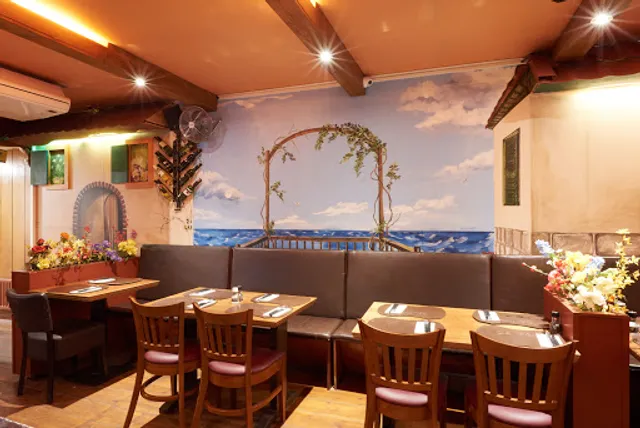
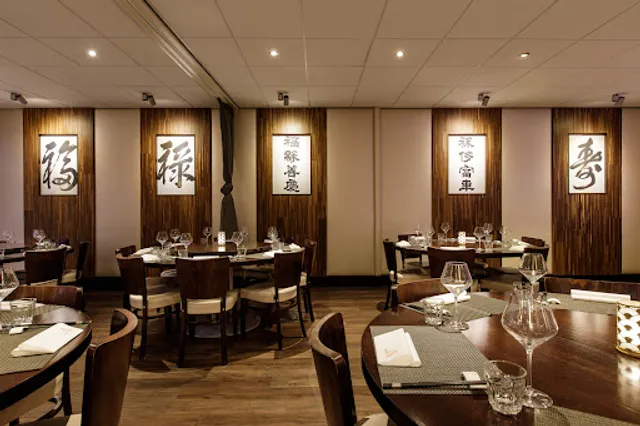
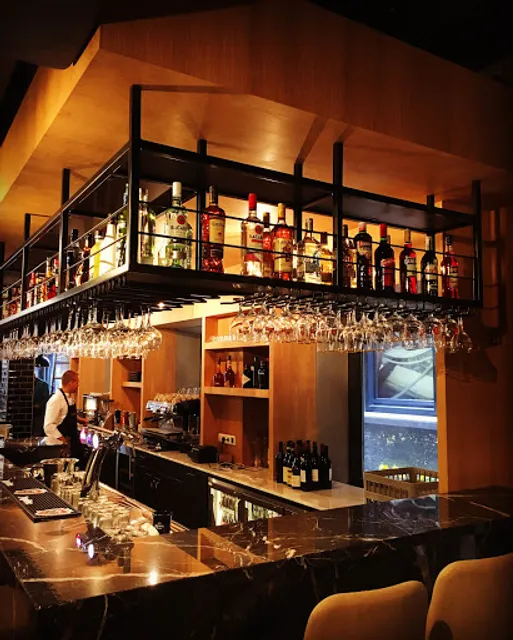
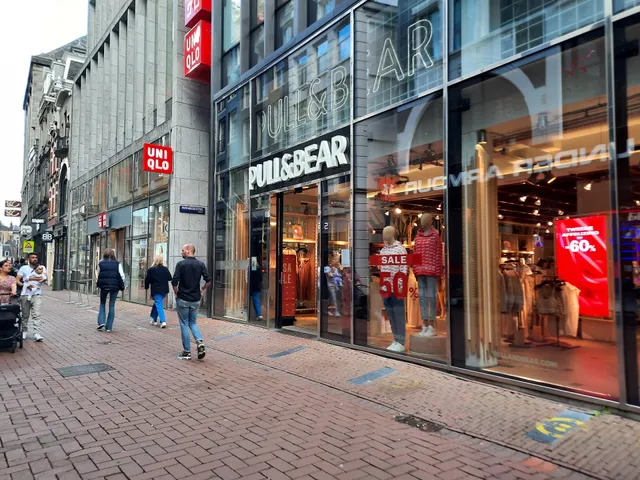
There are also several cafes, restaurants, and shops surrounding the square, providing opportunities to relax, dine, and indulge in some retail therapy. From international brands to local boutiques, you can find a variety of options for shopping.
One thing to note is that due to its popularity, Dam Square can get quite crowded, especially during peak tourist seasons. It's advisable to visit early in the morning or later in the evening to avoid the largest crowds.
Overall, Dam Square is a must-visit destination for anyone exploring Amsterdam. Its historical significance, architectural beauty, and vibrant atmosphere make it a fascinating place to experience Dutch culture and history. Whether you're interested in sightseeing, shopping, or simply soaking in the energetic ambiance, Dam Square offers something...
Read moreDam Square – Amsterdam’s Grand Stage for… Whatever Happens to Show Up
If city squares were like fashion runways, Dam Square would be the model who forgot to put on any accessories. Smack in the middle of Amsterdam, it’s a vast open space that could have been spectacular with a few art installations, some imaginative landscaping, maybe even a quirky sculpture or two. Instead, it’s just… open. And empty. Well, not empty-empty—during my stay, it was generously decorated with garbage, strange smells (some unmistakably herbal), and a rotating cast of loiterers who clearly weren’t there to admire Dutch history. More than once, I got the same uneasy feeling other reviewers have mentioned. The city council might want to give this prime real estate a little TLC before it ends up as the cautionary tale in every travel guide.
To be fair, there were street performers—some genuinely talented, others clearly using the term “performer” in the loosest possible sense—and they managed to draw in decent crowds. Just remember that “crowd” in any major European square is also shorthand for “pickpocket opportunity,” so keep your wits (and your wallet) about you.
Then came Pride week, and the whole square transformed into a high-security fortress. Access was controlled by stern-looking guards who, in my personal experience, were a little too eager with their hands when inspecting bags. Let’s just say that in most professional events, a scanner or detector would suffice, rather than an unsolicited archaeological dig through every zipper and compartment. Not the square’s fault, of course—but a reminder that this central spot could benefit from better, more thoughtful management year-round.
Dam Square has potential. It could be iconic. Instead, it’s mostly a blank canvas that, too often, paints itself with the...
Read more