I came here for English Mass on Sunday (22 OT-C) and there were both positive and negative things of note. It was wonderful to see devotion but not so wonderful to witness a few liturgical disasters.
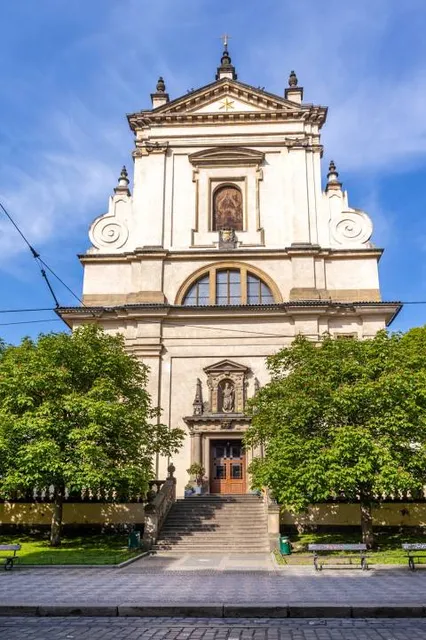
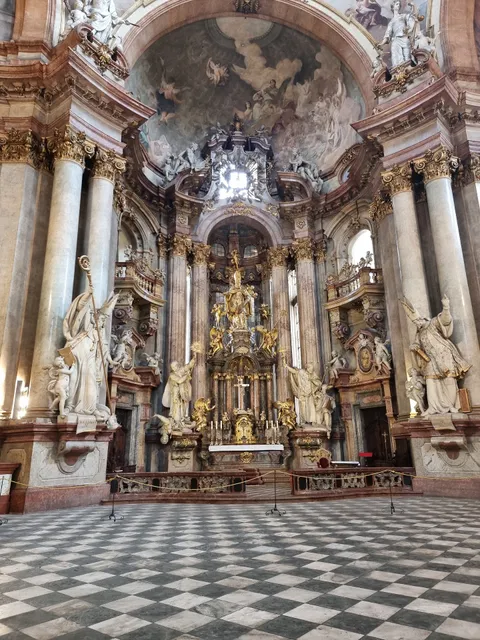
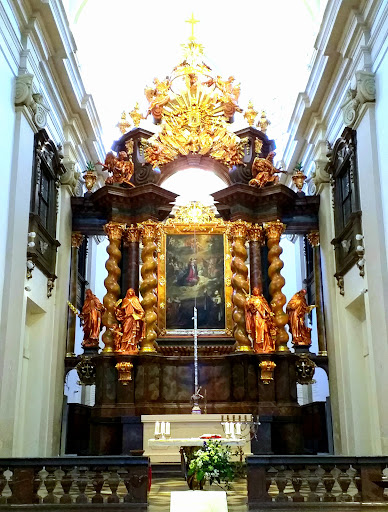
An ugly metal cross stands on the high altar. Why is there not a beautiful wooden Crucifix with the Corpus Christi instead? The Lectern is in front of the Sanctuary, at a lower level than the congregation's seating. I was shocked to be standing at a higher level than the Gospel - especially when there is a most stunning raised pulpit that ought to have been used for the proclamation of the Gospel and homily! Also, lectors need to be dressed appropriately as a reverence to this ministry... have sleveless tops and legwear above the knee ever been appropriate for Mass, no matter the weather? In 2010, the translation of the Roman Missal in English (English translation of the Mass) was renewed. It is now 2025 and the singers are still singing the (now) old translation. There is no excuse for this... music is always at the service of the Liturgy and not the other way around. The singing itself was beautiful, but my ears were ringing at the sound of what was either obstinacy or ignorance. Neither of these produces Saints (nor Vocations). All involved in music ministry for Masses can get valuable formation by reading Musicam Sacram and/or Sacrosanctum Concillium. The Tabernacle was located half way down the Nave, at the altar of the Infant Jesus of Prague. During the Liturgy of the Eucharist, the priest had to leave the Sanctuary to collect the ciborium from the Tabernacle and return to the Sanctuary, leaving the Tabernacle door open. Whatever Sacred Contents may be in there are left extremely vulnerable as there were no altar servers to stand guard. Would it be better for the priest to distribute Holy Communion in front of the Tabernacle, where communicants can also make use of the railing to receive Holy Communion? No opportunity for community after Mass? It was still summer holiday so perhaps it would normally happen otherwise but there wasn't any announcement stating any opportunity for refreshments and fraternity as such. It would have been nice to meet the parish.
Despite these issues, I absolutely appreciated the following plus points:
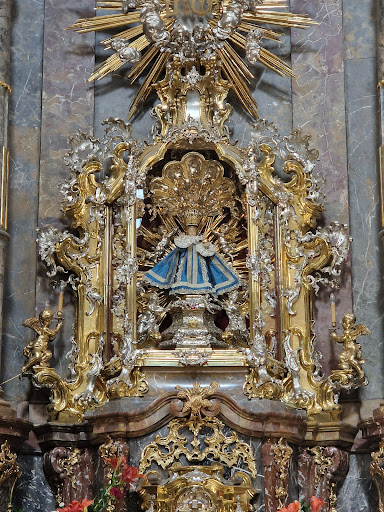
Infant Jesus of Prague. Being Filipina myself, I grew up with daily rosary and prayers to the Infant Jesus of Prague. I still hold this devotion close to my heart. So I loved the fact there is a museum, and I loved seeing the many people kneeling in prayer before this miraculous statue after the Mass (and throughout the day). Musuem & shop. Beautifully constructed glass displays housing the gorgeous clothing of the Infant in the museum, which enabled us to see the love and devotion that people have had to the Infant God-Man throughout the centuries from all over the world. The shop was also a great way to support the venture, and I was happy to make a purchase. I didn't find a donations stand for the museum but would have put into in thanksgiving that it was free! Homily. I enjoyed the homily and appreciated how the homilist referenced C.S. Lewis, Fulton Sheen and St Teresa of Avila. Personally I prefer it when a homily isn't scripted, but I can understand if it needs to be. I'd have loved to hear much more reference to Carmelite spirituality. The clearest theme of the readings was humility... and there is a wealth of formation that Carmelite spirituality offers us all on this kenotic theme. The OCDs should not be afraid to share their wealth of mystical wisdom in order to lead us to the depths and heights of...
Read moreThe Infant Jesus of Prague is a wooden statue of the Child Jesus, appx. 19 inches tall, which dates to the mid 1550s. “The Little King” wears a crown and in the left hand holds an orb and cross. Two fingers of the right hand are raised in blessing. The Infant is clothed in a simple white garment covered by a dalmatic made of silk or velvet, over which is worn a mantle. The statue once belonged to St. Teresa of Ávila. In 1556, a young Spanish noblewoman, Maria Maximiliana Manrique de Lara y Mendoza brought the statue with her to Bohemia upon her marriage to a Czech nobleman. Maria received the statue as a wedding gift from her mother, Doña Isabella, who in turn had received it from St. Teresa herself. Years later, Maria would pass the family heirloom on to her own daughter, Polyxena. In 1628, Polyxena donated the statue to the Discalced Carmelite friars of the monastery of Our Lady of Victory Church in Prague, telling them, “Honor this image and you shall never want.” During the Thirty Years War (1618-1648), in November 1631, when the army of Sweden’s King Gustavus Adolphus occupied Prague, the Carmelite monastery was pillaged and the statue of the Infant was thrown onto a pile of rubbish, where it lay for seven years, forgotten. When the friars returned to their church in 1637, the statue was discovered by Father Cyrillus. Sadly, the hands of the statue had broken off. Nonetheless, Father Cyrillus fixed up a small shrine in the monastery chapel. While praying in the chapel, Father Cyrillus heard a voice coming from the direction of the statue, “Have pity on me, and I will have pity on you. Give me my hands, and I will give you peace. The more you honor me, the more I will bless you.” Funds to repair the statue came in the way of an unexpected donation from a wealthy benefactor. An shrine in the Church of Our Lady of Victory was built to house the statue, where it can still be seen today. Over the centuries, the Infant of Prague has been a source of many miracles and blessings, such as the healing of the terminally ill and paralyzed, restoration of hearing and sight, and countless more who in humble sincerity entreat the intercession of the Divine...
Read moreThere are some very nice church visits that you can make in Prague and The Church of Our Lady Victorious is certainly one of the more interesting and memorable ones to see.
The church is famous for housing the 400 year old Jesus Child statue, also referred to as the 'Infant of Prague'. Thousands visit this church each year as a form of pilgrimage to pay homage to the statue, and it was certainly busy at the time we visited during our recent trip to Prague. Visitors come from the world over and have included four recorded papel visits - the last being Pope Benedict XVI in September 2009.
While the nave was very busy with worshippers and student groups who were occupying the pews at the time of our visit, it seemed visitors were welcome to get fairly close to the image, and photo-taking of the Jesus Child was allowed. However the statue is small, located high up and encased in glass so there is a bit glare when you taking photos.
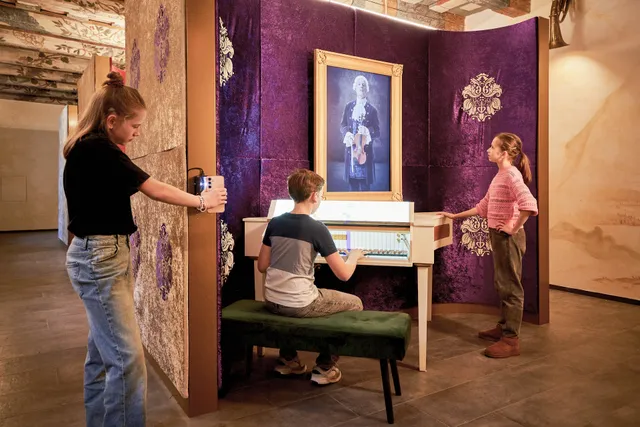
Further, in addition to seeing the Baroque decor of the church and the iconic Jesus Child statue, you can also see the many Jesus Child outfits, which have been gifted to the church from various nations around the world. These are on display in the upstairs museum, which is open from 9.30am to 9.00pm and is free to visit. Of interesting note, the nuns of the church change the outfit of the Child Jesus statue according to a religious calendar. As such, the appearance of the statue will be different throughout the year.
There is also a gift shop at the back of the main church nave for those interested in purchasing a rosary or religious souvenir of their visit to The Church of Our Lady Victorious.
Overall, we very much enjoyed our visit to The Church of Our Lady Victorious and would gladly return to see the Jesus Child statue and see what outfit it is wearing when next in Prague. In the end, this seemed to a worthy inclusion on visitor 'must-see' list of...
Read more