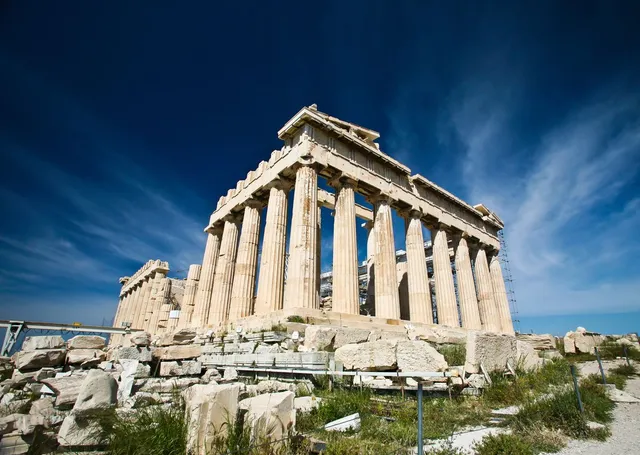
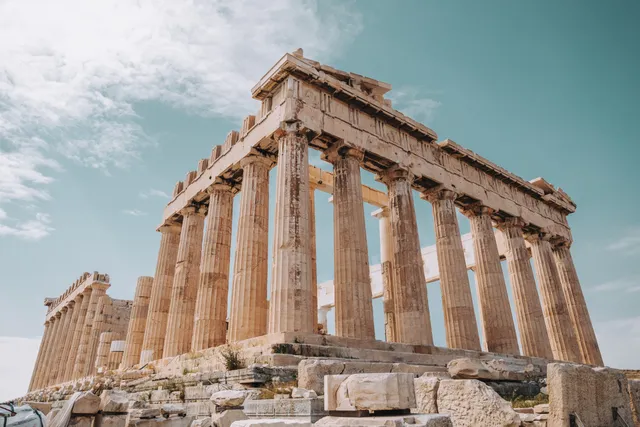
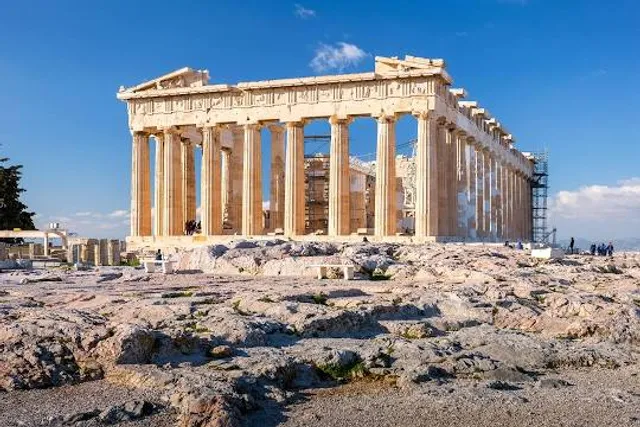
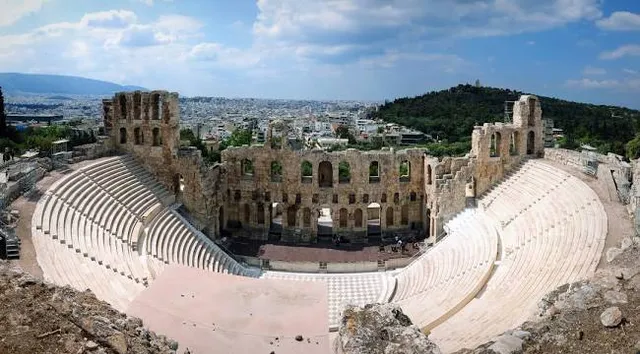
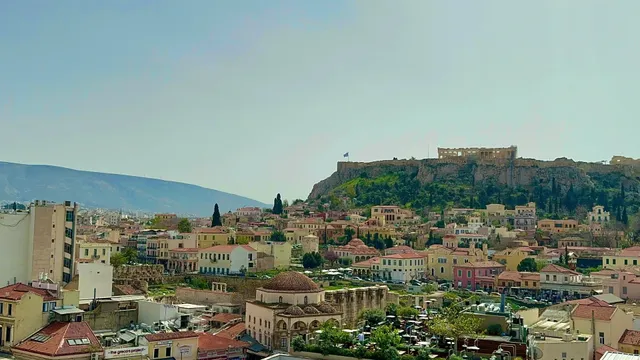
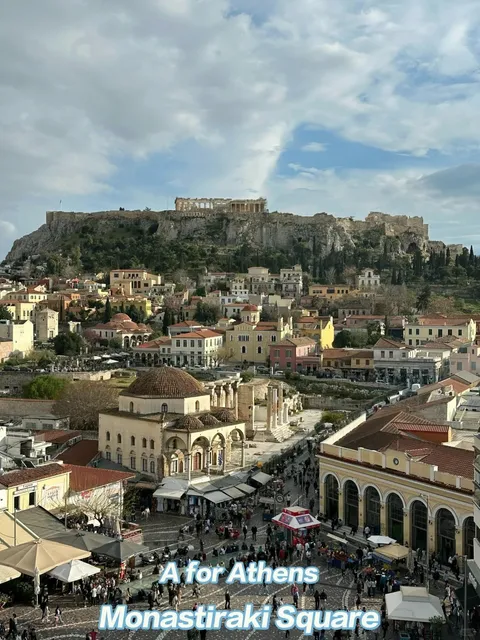
Acropolis of Athens Article Talk Language Download PDF Watch Edit For the neighbourhood of Athens, see Makrygianni, Athens. The Acropolis of Athens (Ancient Greek: ἡ Ἀκρόπολις τῶν Ἀθηνῶν, romanized: hē Akropolis tōn Athēnōn; Modern Greek: Ακρόπολη Αθηνών, romanized: Akrópoli Athinón) is an ancient citadel located on a rocky outcrop above the city of Athens, Greece, and contains the remains of several ancient buildings of great architectural and historical significance, the most famous being the Parthenon. The word Acropolis is from the Greek words ἄκρον (akron, "highest point, extremity") and πόλις (polis, "city").1] The term acropolis is generic and there are many other acropoleis in Greece. During ancient times the Acropolis of Athens was also more properly known as Cecropia, after the legendary serpent-man Cecrops, the supposed first Athenian king.
Acropolis, Athens UNESCO World Heritage Site
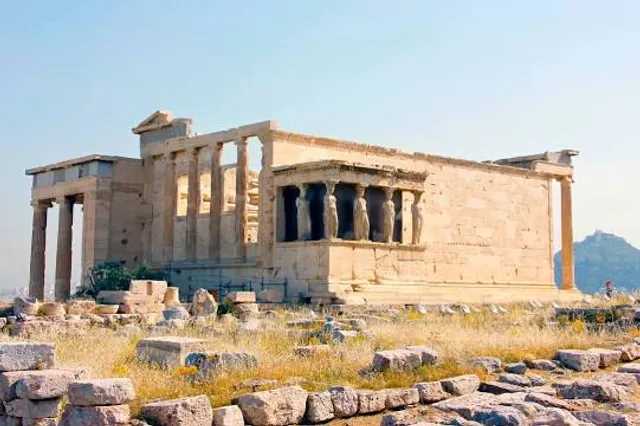
The Acropolis of Athens, seen from the Hill of the Muses Location Athens, Attica, Greece Criteria Cultural: i, ii, iii, iv, vi Reference 404 Area 3.04 ha Buffer zone 116.71 ha Coordinates 37°58′18″N 23°43′34″E Acropolis of Athens is located in GreeceAcropolis of Athens Location in Greece While there is evidence that the hill was inhabited as early as the fourth millennium BC, it was Pericles (c. 495–429 BC) in the fifth century BC who coordinated the construction of the buildings whose present remains are the site's most important ones, including the Parthenon, the Propylaea, the Erechtheion and the Temple of Athena Nike.[2 The Parthenon and the other buildings were seriously damaged during the 1687 siege by the Venetians during the Morean War when gunpowder being stored by the then Turkish rulers in the Parthenon was hit by a Venetian bombardment and exploded.[4]
History edit
The Acropolis of Athens as seen from Mount Lycabettus The wooded Hill of the Nymphs is half-visible on its right, and Philopappos Hill on the left, immediately behind. The Philopappos Monument is seen here where, in the distant background, the coast of Peloponnese meets the waters of the Saronic Gulf. Early settlement edit The Acropolis is located on a flattish-topped rock that rises 150 m (490 ft) above sea level in the city of Athens, with a surface area of about 3 ha (7.4 acres). While the earliest artifacts date to the Middle Neolithic era, there have been documented habitations in Attica from the Early Neolithic period (6th millennium BC).
There is little doubt that a Mycenaean megaron palace stood upon the hill during the late Bronze Age. Nothing of this megaron survives except, probably, a single limestone column base and pieces of several sandstone steps.[5] Soon after the palace was constructed, a Cyclopean massive circuit wall was built, 760 meters long, up to 10 meters high, and ranging from 3.5 to 6 meters thick. From the end of the Helladic IIIB (1300–1200 BC) on,[6] this wall would serve as the main defense for the acropolis until the 5th century.[7] The wall consisted of two parapets built with large stone blocks and cemented with an earth mortar called emplekton (Greek: ἔμπλεκτον).[8] The wall uses typical Mycenaean conventions in that it followed the natural contour of the terrain and its gate, which was towards the south, was arranged obliquely, with a parapet and tower overhanging the incomers' right-hand side, thus facilitating defense. There were two lesser approaches up the hill on its north side, consisting of steep, narrow flights of steps cut in the rock. Homer is assumed to refer to this fortification when he mentions the "strong-built house of Erechtheus" (Odyssey 7.81). At some time before the 13th century BC, an earthquake caused a fissure near the northeastern edge of the Acropolis. This fissure extended some 35 meters to a bed of soft marl in which a well was dug.[9] An elaborate set of stairs was built and the well served as an invaluable, protected source of drinking water during times of siege for some portion of the Mycenaean period.[10]
Archaic Acropolis edit "Temple of Athena Polias" redirects...
Read moreFive stars for the mighy Parthenon but only 3 for the experience! As a Neolithic and bronze age enthusiast (I'm Irish and we are steeped in this history our own selves) visiting the Acropolis has always been on the bucket list (why it took so long I don't know) and I was amazed to be up close and personal. The structures like the mighty Parthenon came after the Bronze Age, during classical Greek times but the history of the earlier eras is still rooted in the ground. After visiting the Acropolis museum the day before it gave me more insight and vision of the whole site - which I recommend to do in that order! However it was the amount of people and quing that takes away from the experience. As a person myself, I do appreciate the irony 🤦 It was intense. I visited in June and it was already 31 degrees when I arrived at 8.45 am and there was easily 1,000 people there, they only open at 8 and apparently early morning and late evening are the quiet times. Now what I didn't know when I booked my trip is I was slap bang in the middle of a bank holiday weekend and went on Whit Sunday so there was an extra deluge of Greek visitors on top of all us foreigners.
I didn't opt for a guided tour and downloaded the Rick Steves audio guide, which was brilliant. He and his co-host easily walk through the site and give clear direction and information. To be fair at times I found myself eves dropping on the tour guides as they imparted their wisdom also 😉 Like I said doing the museum first was the best order because I could get a clear indication of how things looked and the history of what is not standing anymore.
If like me you're a history and archeological fan, it's a must do when in Athens. If ancient sites bore you or you're only thinking of doing this for photo opportunities, well I doubt you will get anything from the place.
I had an open pass and booked my visit through that. Pre-booking is essential and considering the crowds that early in the morning be sure to come prepared so not to be disappointed.
The walk up the hill is grand, even in the heat. I brought plenty of water. While there are vending machines (and a first aid section) on top you cannot be guaranteed that the machines will work or have sufficient supplies. Use the bathroom before makeing the assent also, even if you don't have to shake it out 😉
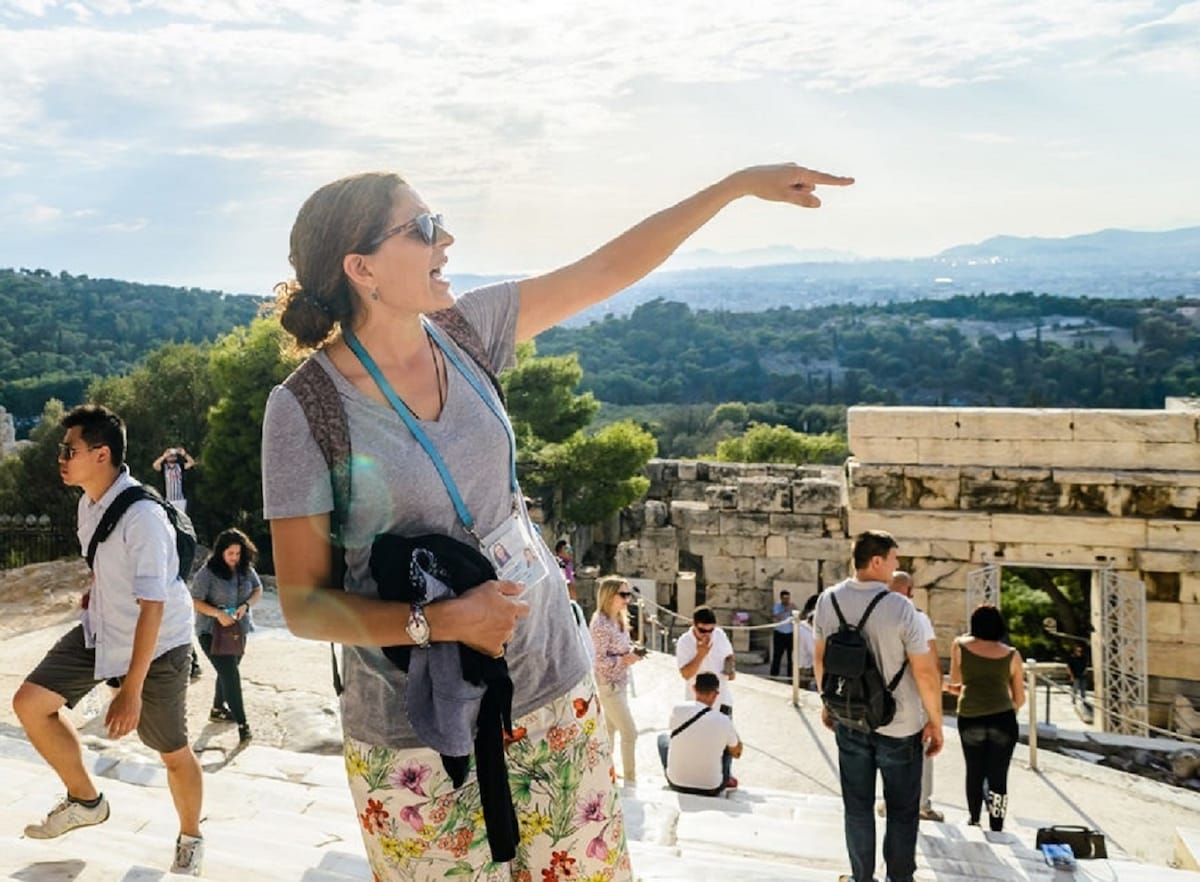
If you are reading this and contemplating what time of the year to visit, forget about the summer months and go off peak. I added the many photos of people for context.
Am I glad I went, for sure I am. Will I go...
Read moreMy visit to the Acropolis in Athens was a time-traveling experience that left a profound impact on me. This gem of ancient Greece is not just a testament to incredible architectural feats, but also a place where history comes alive.
As I ascended to the Acropolis, I was enveloped by the beauty of the surrounding nature and the city of Athens. The view from the top is truly breathtaking - one can see the modern city of Athens sprawling around this ancient fortress, with the sea in the distance. This contrast between the old and the new is fascinating and lends a very special atmosphere to the place.
The structures on the Acropolis, especially the Parthenon, are a real highlight in their majestic grandeur. The columns and sculptures tell stories from a different time and let you feel the significance of this place. It’s moving to see how these ancient ruins have withstood the millennia and still command such awe.
Beyond history, the Acropolis is also a place of tranquility and contemplation. The gentle breeze and the view over the city and the sea offer a moment of silence and reflection, rare in today's fast-paced world.
The preservation and presentation of the Acropolis are outstanding. The paths are well-maintained, and the information provided at various points is very enlightening. An audio guide or a guided tour can deepen the experience and provide insights into the rich history of this place.
In conclusion, the Acropolis is a magical place that combines the fascination of the ancient world with the beauty and serenity of nature. An absolute must-visit for anyone traveling to Athens - a place that needs to be not just seen, but experienced. Unforgettable and...
Read more