The New York Stock Exchange (sometimes referred to as "theย Big Board") provides a means for buyers and sellers toย tradeย sharesย ofย stockย in companies registered for public trading. The NYSE is open for trading Monday through Friday from 9:30ย am โ 4:00ย pmย ET, with the exception of holidays declared by the Exchange in advance.
The NYSE trades in a continuous auction format, where traders can execute stock transactions on behalf of investors. They will gather around the appropriate post where a specialist broker, who is employed by a NYSE member firm (that is, he/she is not an employee of the New York Stock Exchange), acts as an auctioneer in anย open outcryย auction market environment to bring buyers and sellers together and to manage the actual auction. They do on occasion (approximately 10% of the time) facilitate the trades by committing their own capital and as a matter of course disseminate information to the crowd that helps to bring buyers and sellers together. The auction process moved toward automation in 1995 through the use of wireless hand held computers (HHC). The system enabled traders to receive and execute orders electronically via wireless transmission. On September 25, 1995, NYSE member Michael Einersen, who designed and developed this system, executed 1000 shares of IBM through this HHC ending a 203-year process of paper transactions and ushering in an era of automated trading.
As of January 24, 2007, all NYSE stocks can be traded via its electronicย hybrid marketย (except for a small group of very high-priced stocks). Customers can now send orders for immediate electronic execution, or route orders to the floor for trade in the auction market. In the first three months of 2007, in excess of 82% of all order volume was delivered to the floor electronically.[35]ย NYSE works with US regulators such as theย SECย andย CFTCย to coordinate risk management measures in the electronic trading environment through the implementation of mechanisms like circuit breakers and liquidity replenishment points.[36]
Until 2005, the right to directly trade shares on the exchange was conferred upon owners of the 1,366 "seats". The term comes from the fact that up until the 1870s NYSE members sat in chairs to trade. In 1868, the number of seats was fixed at 533, and this number was increased several times over the years. In 1953, the number of seats was set at 1,366. These seats were a sought-after commodity as they conferred the ability to directly trade stock on the NYSE, and seat holders were commonly referred to as members of the NYSE. The Barnes family is the only known lineage to have five generations of NYSE members: Winthrop H. Barnes (admitted 1894), Richard W.P. Barnes (admitted 1926), Richard S. Barnes (admitted 1951), Robert H. Barnes (admitted 1972), Derek J. Barnes (admitted 2003). Seat prices varied widely over the years, generally falling during recessions and rising during economic expansions. The most expensive inflation-adjusted seat was sold in 1929 for $625,000, which, today, would be over six million dollars. In recent times, seats have sold for as high as $4ย million in the late 1990s and as low as $1ย million in 2001. In 2005, seat prices shot up to $3.25ย million as the exchange entered into an agreement to merge with Archipelago and became a for-profit, publicly traded company. Seat owners received $500,000 in cash per seat and 77,000 shares of the newly formed corporation. The NYSE now sells one-year licenses to trade directly on the exchange. Licenses for floor trading are available for $40,000 and a license for bond trading is available for as little as $1,000 as of 2010.[37]ย Neither are resell-able, but may be transferable during a change of ownership of a corporation holding a...
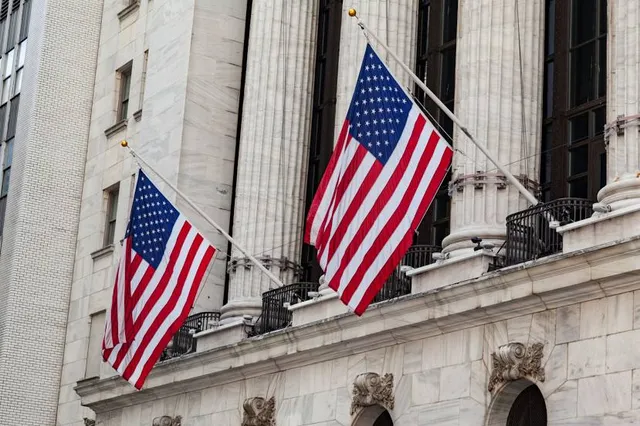
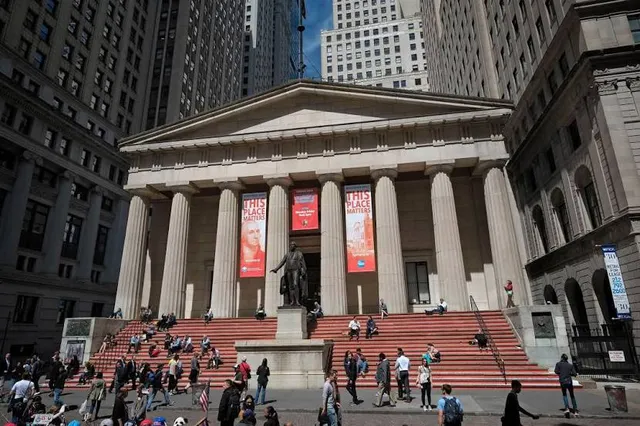
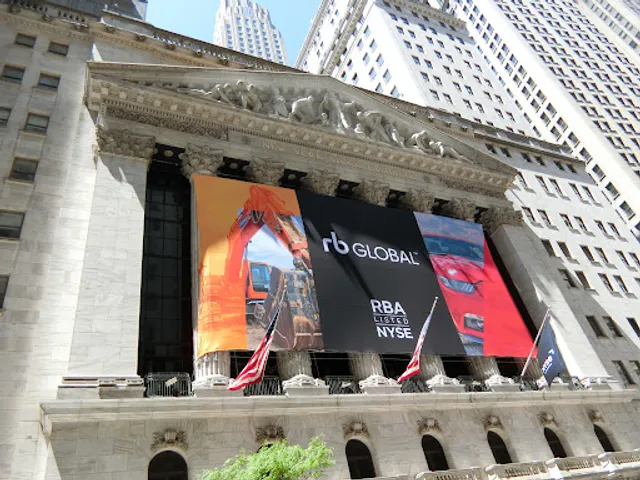
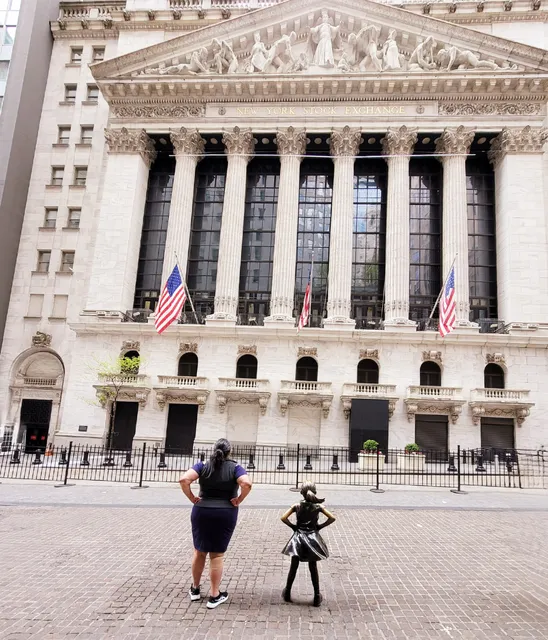
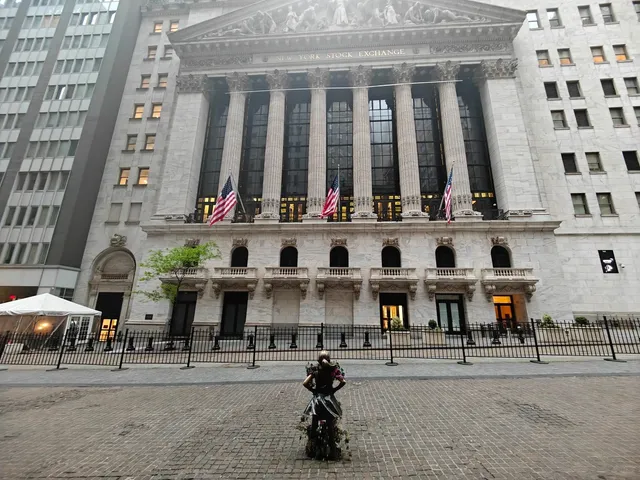
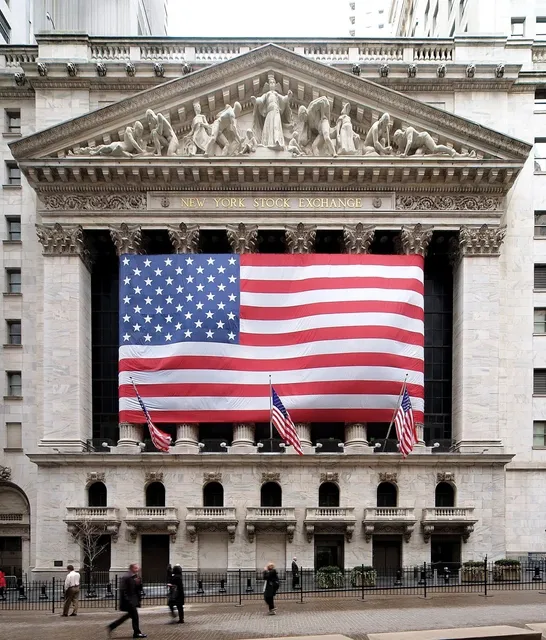
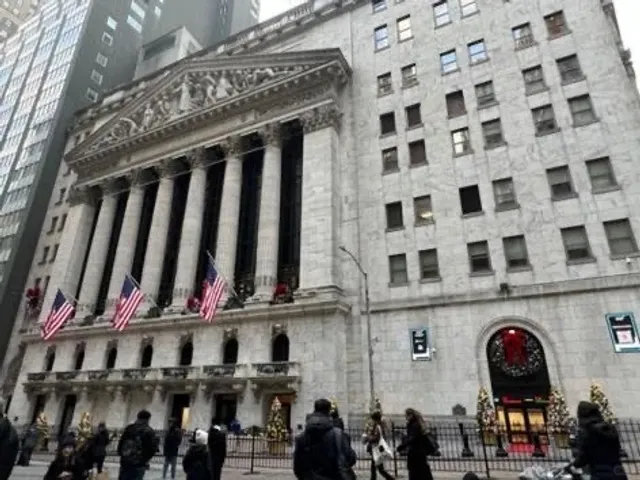
ย ย ย Read moreTheย New York Stock Exchangeย (NYSE, nicknamed "The Big Board")ย is an Americanย stock exchangeย located at 11ย Wall Street,ย Lower Manhattan,ย New York City,ย New York. It is by farย theย world's largest stock exchangeย byย market capitalizationย of its listed companies at US$21.3ย trillion as of June 2017.ย The average daily trading value was approximatelyย US$169ย billion in 2013. The NYSEย trading floorย is located at 11ย Wall Streetย and is composed of 21 rooms used for the facilitation of trading. A fifth trading room, located atย 30ย Broad Street, was closed in February 2007. The main building and the 11 Wall Street building were designatedย National Historic Landmarksย in 1978.
The NYSE is owned byย Intercontinental Exchange, an American holding company that it also lists (NYSE:ย ICE). Previously, it was part of NYSE Euronext (NYX), which was formed by the NYSE's 2007 merger withย Euronext.
The NYSE has been the subject of several lawsuits regarding fraud or breach of dutyย and in 2004 was sued by its former CEO for breach of contract and defamation.
Wall Street is the leading US money center for international financial activities and the foremost US location for the conduct of wholesale financial services. "It comprises a matrix of wholesale financial sectors, financial markets, financial institutions, and financial industry firms" (Robert, 2002). The principal sectors are securities industry, commercial banking, asset management, and insurance.
Prior to the acquisition of NYSE Euronext by the ICE in 2013, Marsh Carter was the Chairman of the NYSE and the CEO wasย Duncan Niederauer. Presently, the chairman is Jeffrey Sprecher.ย In 2016, NYSE owner Intercontinental Exchange Inc. earned $419 million in...
ย ย ย Read moreThe New York Stock Exchange is where icons and disruptors come to build on their success and shape the future. Weโve created the worldโs largest and most trusted equities exchange, the leading ETF exchange and the worldโs most deterministic trading technology. Our data, technology and expertise help todayโs leaders and tomorrowโs visionaries capitalize on opportunity in the public markets.
ICEย was founded in 2000 to digitize the energy markets and provide greater price transparency. Weโve been transforming markets, products and processes ever since. By combining our world class technology with our leading data services and operating expertise, we add transparency and enable customer efficiency gains that advance both our networks and solutions for our customers. It is this consistent and strategic approach that has propelled our expansion from a small technology network serving the U.S. power industry just over two decades ago, into a global enterprise that operates networks across the major asset classes.
As our electronic markets and demand for clearing grew, access to new sources of information became central to our customers and data has increasingly become the lifeblood of markets. We saw this evolution and consistently we advanced our capabilities, building a data business which is complementary to every part of...
ย ย ย Read more