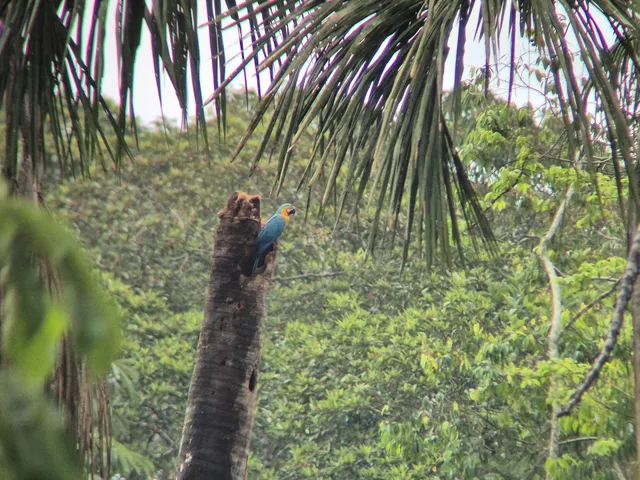
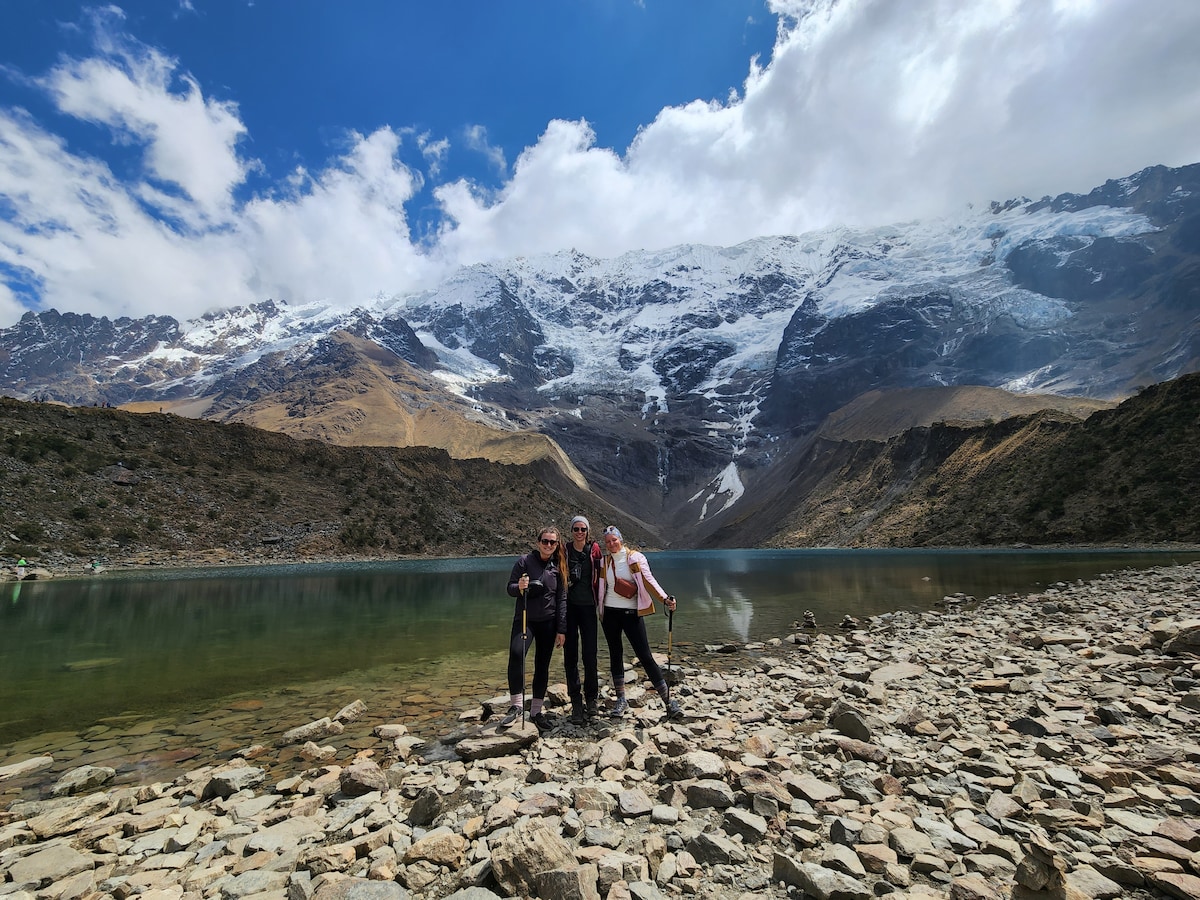
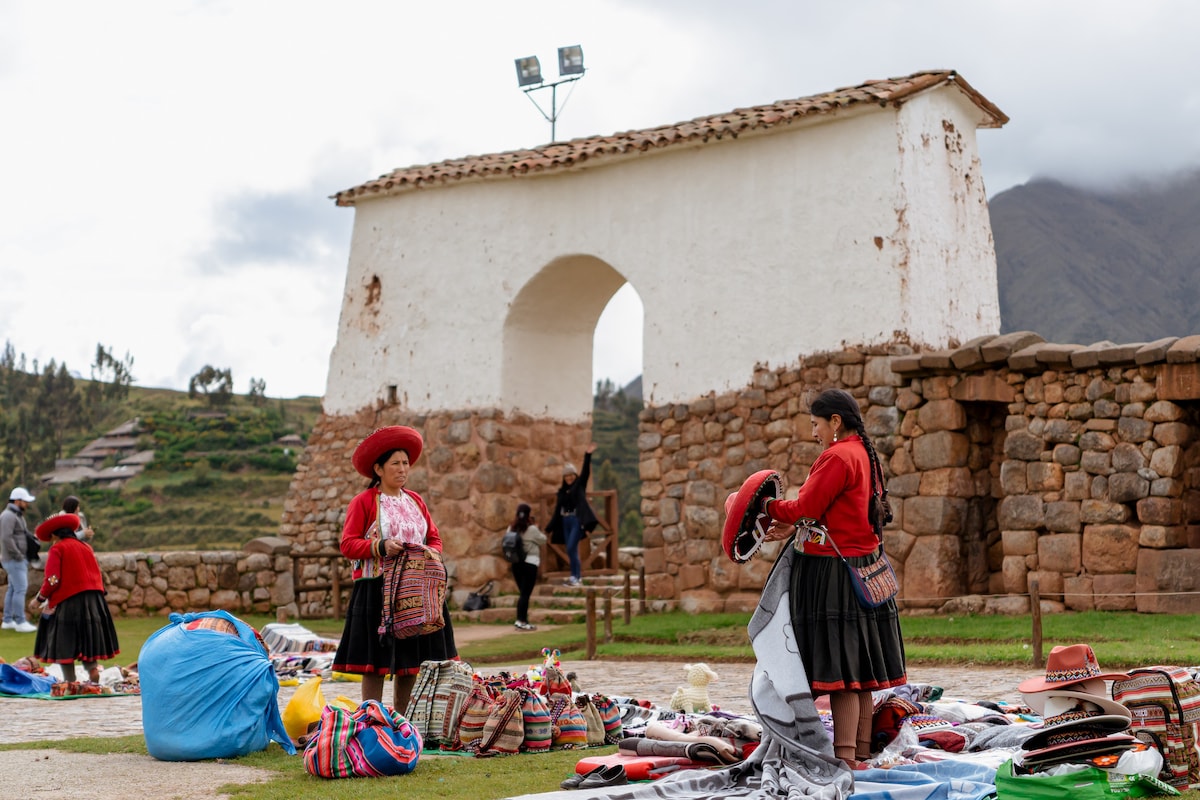
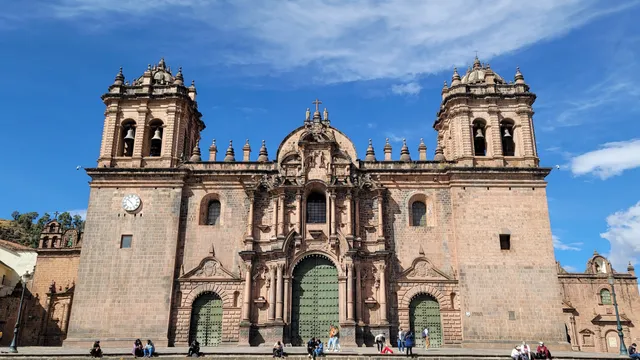
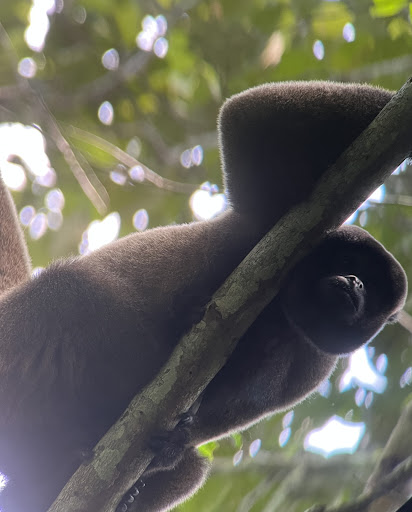
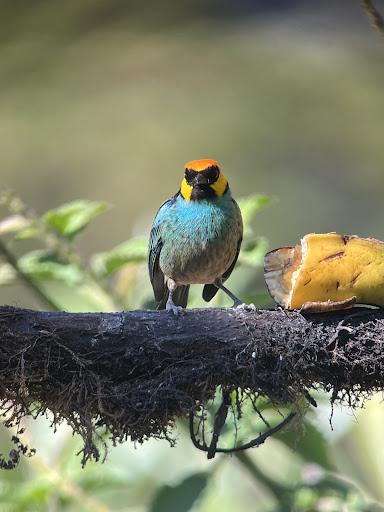
You’re not going to be disappointed with Amazon Wildlife Peru; they’re a fantastic company. I went on their 6D5N tour, and everything was delivered as advertised. One thing they do that I like is that they work with the other tour groups to ensure that you do not run into each other, meaning that sometimes the itinerary is a bit switched around. Manu National Park isn’t crowded at all (17,000 sq km and 1500 visitors a year). However, there are only a few lodges and so all the groups must stay together. This means that in the mornings and evenings you’ll see another group. Our tour guide and the other tour guides would coordinate the schedules. If you read the itinerary, you’ll see that on Day 2 you’re supposed to go to a natural hot spring. We went on the last day because on Day 2 the other groups were going. I loved how they did this coordination so that you still got to do everything, but you weren’t crowded in with other groups. Jose (our guide) has worked in the park for over 25 years. Armed with his degree in Biology (from the university in Cusco) and his background doing research science at the science center in the park, he was able to teach us about every animal, plant, tree, etc. that we saw. He even taught us about the soil. Jose has a lot of love for the park, and you can see it in his delivery. It was such a delight to go on walks in the jungle with Jose and learn about the trees, plants, and animals. His knowledge is so in-depth that he taught us about soil composition and why macaws and parrots prefer some clay licks but avoid others. Jose is very in-tune with the sounds of the jungle. He can listen to the sounds of the birds and monkeys and know what is around and sometimes even find it! He put in an A+ effort and we saw so much wildlife – including a jaguar! Amazon Wildlife Peru is a 5-star company and I feel 100% confident in that assessment. Manu National Park – Amazing. 4.5 stars. Manu is an example of conservation done right and of tourism done right. It’s a massive park of about 17,000 sq km and only gets 1500 visitors a year. So, it’s massive, empty (of people), pristine, protected, etc. When you first get into the park, you’ll drive through the cloud forest. The cloud forest is amazing, but unfortunately, there is something here that makes me not able to give Manu National Park 5 stars, and that is garbage (on road). When I first arrived, I was very worried this would be the entire park, but it isn’t! The issue with the cloud forest is that there is a major road, and it heads towards towns. Therefore, many people not conservation minded are using this road and not everyone has this culture of not littering. On the way out, I saw multiple people throwing garbage out of their window. Jose said that the government has been working really hard at training people not to litter, but it’s one step at a time and you cannot train everyone! After you get through the cloud forest, you reach the end of the road and get on the boat. You ride through sections of forest that are a mixture of pristine and a mixture of farms. Don’t worry, though, these are old farms that have been there for decades. They’re not cutting down additional forest. Once you get to the end of Madre de Rios River and to the Manu River, everything is pristine. It’s then miles and miles of virgin rainforest and is so clean (no garbage in the river at all). You must check in at the ranger station and they even check your boat on the way out to make sure you’re bringing out your garbage. They work very, very hard at keeping the park clean, and since this section is only occupied by the local indigenous people (who have an interest in protecting the park since this is where they’ve lived for centuries), tourists (who are paying to see a nice park), and the guides (who love the park),...
Read moreWe did the 7-day Manu Reserve Zone tour with Amazon Wildlife Peru and it was one of the best experienced we had during our 5 month trip with a touroperator.
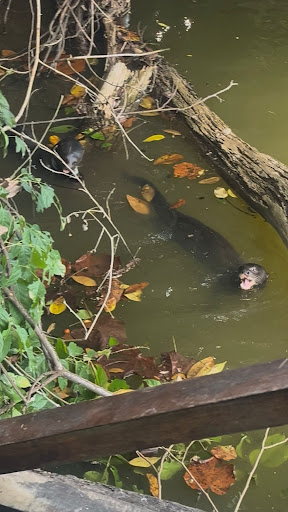
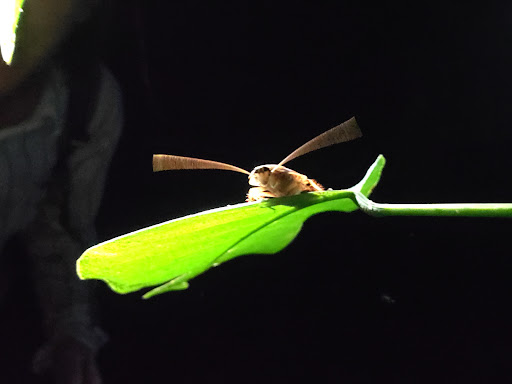
The entire trip was well organised. Our guide Alex and the other crew members were very good in spotting animals and we saw jaguars, giant otters, 5 species of monkeys, a group of 15 macaws at a clay lick, capibara's, caymans and lots of birds, spiders and several snakes. Alex was very knowledgeable about the Amazon forest as he was raised there. Sometimes the program was adjusted to give us an even better experience. The food was good and accommodation was basic, but fine and clean. On night 1 and 6, you stay in cabanas with private bathroom (cold shower) in the high rainforest, next to a small town. On night 2 and 4 you stay in cabanas without bathroom (but upgrade to ensuite is possible, when available) surrounded by primary and secondary rainforest, but outside the reserve. Here you will also stay at the tapir clay lick on one of the nights. You sleep on a mattress with mosquito net on an elevated observation platform and every hour, one person in the group keeps watch on a rotation schedule. In the very early morning you return to the camp for breakfast and shower. This is on private property, so is only offered by Amazon Wildlife and their sister company Bonanza. On night 3 and 4 you stay at the Matsiguenka Lodge inside the reserve.
Good to know when booking a trip: For the 7 day trip, operators offer more or less a similar schedule. All stay at the Matsiguenka Lodge on night 3 and 4. So the main difference is the activity and lodge on the other days. It pays to compare prices and to join an already confirmed group. Near Matsinguenka Lodge is a parrot clay lick. It was not on the official programme, but our guide added it on request. It was a great experience, but you need to be there in the right season and it also took time and patience and you need to be very silent. It make sense to manage your expectations when doing a trip like this to the Amazon with regards to wildlife viewing. The area is huge and the jungle is dense. Moreover, because there are not lots of tourist visiting the reserve, the animals are shy (which is natural behaviour). The opportunity to see specific animals also depends on the season. This means that for the majority of the time, you do not see (any) animals and if you see them, it's from quite a distance. You can spend hours on the boat or do a walk in the jungle without seeing anything interesting, maybe except for a few birds. But if you see an animal, the excitement is even greater, because it takes some luck en effort. Of you set your expectation realistically, you will have a great experience visiting this beautiful, very special corner...
Read more"This guy is amazing!"
That was the shout that jolted me awake at dawn. We had been picked up from our hotel by Will, our driver, who was taking us halfway to the jungle. Along the way, Will, a birding enthusiast himself, pulled the van over for an impromptu birdwatching stop. He wanted us to see the rare rock toucan—and spotted it almost immediately. “If you want to see the rarest animals, you must start before the crack of dawn,” he told us. That turned out to be the guiding principle of our entire jungle tour.
Half-asleep, I got back into the van to try and doze off again. Suddenly the van screeched to a halt, the sliding door flew open, and in jumped a tourist—wild-eyed and almost shouting with excitement: “This man is amazing! Take good care of him!” Behind him stood a small Peruvian man with binoculars around his neck. This was Alex, our guide. Beside him was Bernadino, our cook for the trip.
From that moment on, we were in the best possible hands. On the way to the port where we would board our boat, Alex kept spotting birds and animals with uncanny precision. The van stopped six times before we even reached the river. Monkeys, rare birds, even a perfectly camouflaged owl—nothing escaped him. His enthusiasm never dimmed. Other wildlife tours quickly caught on: every time our van stopped, theirs did too. Soon it became obvious that the other guides weren’t even trying to find animals themselves. They were simply following Alex.
During our six-day tour, Alex seemed like a genie in a bottle. Whatever you wished to see—tapirs, capybaras, giant otters, rare birds—Alex would somehow find it. He was always working, even when the rest of us were asleep.
Meanwhile, Bernadino worked his own kind of magic. Every meal was creative, fresh, and delicious. Breakfast on the boat was unforgettable: watching the sunrise over the Amazon while sipping good coffee and eating fresh pancakes, as the jungle slowly came alive around us.
The entire operation ran smoothly. Everyone we met in the lodges and on the boats was kind and welcoming. But don’t expect much rest: if you want to see animals, you wake early—sometimes in the middle of the night. It’s worth every lost hour of sleep.
5 out of 5. Alex...
Read more