Our family of four attended the hands-on sushi making class by Sushi Making Japan at their location in Asakusa, Tokyo, in July 2025. The classroom was located at one of the higher floor, accessible through the elevator in the building. A sign on the elevator door at the ground floor explains that class attendants should only enter the place about five minutes before the class start, in order to avoid having too much people crowded in the room.
When we used the elevator to reach the classroom, we were warmly greeted by the three organizers. Maho, one of the organizers, was particularly helpful as she patiently guided our youngest child when the sushi rice became too difficult to handle. The other attendants in the group were a group of people from Europe and two groups of people from the USA. The total number of attendants were twelve persons.
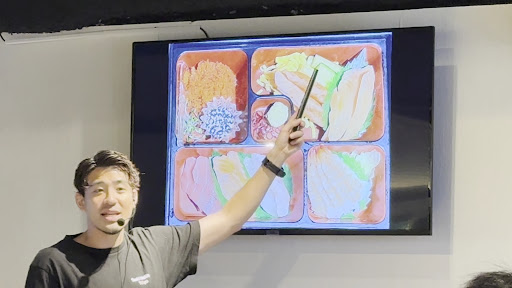
Several tables have been prepared with ingredients to work with. As we chose the halal option in this class, the alcohol immersed cod roe was substituted with non alcoholic reddish seeds. We were provided with big wooden pans filled with sticky rice, cups of rice vinegar, and bento boxes filled with the raw fish slices. The organizers provided fun quiz during the class and frequently reminded us, "Do not forget to smile. No sushi stress please."
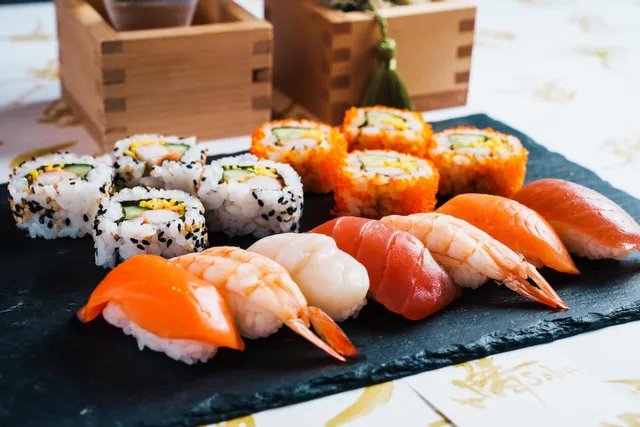
We were taught two ways of making sushi. The first way was how to make maki sushi, the rolled type of sushi. This type was not the Japanese original type and it became popular because foreigners prefer the gorgeous look of this type. Meanwhile, the second was was how to make nigiri sushi, the original type of sushi where the fish is put directly on top of the rice.
The first step of the lesson was to pour the rice vinegar to the rice to make the rice warm and workable. To prevent the rice from sticking to our fingers, bowls of water were available for us to wet our fingertips. To make a maki sushi, we can use the tools provided: a rollable plastic mat and a plastic sheet of cling wrap. We begin by putting the cling wrap on the plastic mat and covered it with a thin sheet of rice. Afterwards we covered the rice in two areas, the left area with the reddish seeds and the right area with sesame seeds.
The next step was to fold the cling wrap to cover the two seeded areas. A sheet of Nori seaweed was then put on top of it, before various types of fish are stacked on it. When all ingredients are ready, we had to patiently roll the plastic mat repeatedly, slided the cling wrap accordingly, while trying our best to maintain the sushi cross section circular. After the rolling part was done, we were given scissors to cut the roll into eight pieces.
Finished with making the maki sushi, we then proceeded to work on the simple-looking nigiri sushi, which turns out to be deceivingly difficult to make. Basically, we had to prepare a small roll of rice with the palm of our dominant hand, couple it with the slice of fish using the palm of the non dominant hand, shaped the sushi carefully, and then kind of softly yank it three times with the wrist of the dominant hand while yelling "Yoi" three times in rhythm with the yanking motion. Using the available ingredients, we made eight pieces of nigiri sushi.
After we finished making the sushi, we ate them with chop sticks. The organizers offered several typea of paid drinks and we chose four unique Japanese green lime soda bottles to enjoy. As a note, the organizers do not accept cash payment, but fortunately we have our credit cards ready.
The total duration of the class is two hours. While we ate our sushi, the organizers had to start tidying up so that the next batch of class can be prepared on time. By the time we finished eating, the time is up and some of the next batch of attendants have started arriving. We really enjoyed the experience, as now we not only knew how to make maki and nigiri sushi but our stomach were also full with the delicious...
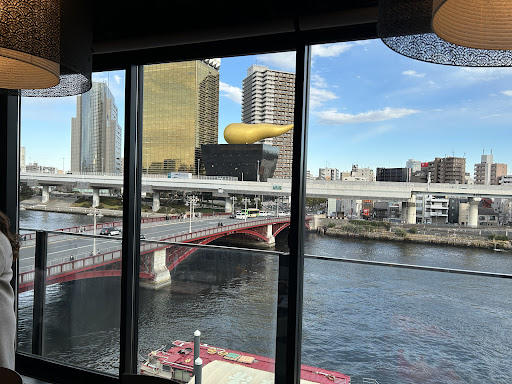
Read moreLots of fun! We had a really great time! This was a great change of pace from sightseeing temples while heavily jet lagged. We did have a little trouble finding the location. The big sign near the Asakusa Station helped. It’s down a small street with a multi-store sign then up a small elevator. Once we finally arrived, the staff warmly greeted us and seated us. Most of the tables are lined up against the huge windows providing a great view of Sumida River. After introducing themselves – our emcee was Kazuki, there was a short and fun PowerPoint presentation (maybe 5 slides) on a large tv that we could all easily see. Everything was laid out on the table ready for us to get started. We first made our maki roll – inside out with crabsticks, cucumber, cooked egg ribbons and half covered roe and other half covered with sesame seeds. We all did great until we cut our rolls with scissors (you can request a knife) – one of our party did not listen when they said to cut your roll in half and then again in half on each side so you end up with 8 pieces – instead they cut it into 11 pieces. Still ok until we moved the pieces onto one side of our rectangular plate to decoratively stagger them. By the end, it was a big mess (see photos) and it made for a lot of laughter. Then we made our nigiri sushi with whatever fish you wanted: tuna, salmon, scallop and cooked shrimp. And finally we ate our creations! The ingredients were fresh and tasted delicious. The staff was really attentive and supportive – we had Rino looking after us and coaching us. We really liked that it wasn’t a huge group – 5 other couples or families. Other patrons in our group used vegetarian and Halal ingredients. Drinks are available for an extra price. The only negative thing I have to say is that the rolls were inside out and on the larger side – I had specifically booked this class vs others because I wanted to learn to make small maki rolls with the seaweed on the outside but in hindsight the photo did show an inside out roll. This wasn’t a big deal because we truly enjoyed ourselves and still learned to make rolls that stuck together – ok 3 of the 4 of us did! We would recommend booking the 2pm class as it’s...
Read moreLearning how to make sushi in Japan was an unforgettable experience. From the moment I stepped into the bustling kitchen, I knew I was in for something special. The atmosphere was warm and inviting, and our chef-instructor was not just knowledgeable but passionate about sharing the traditions and techniques that have been passed down through generations.
The class began with a brief introduction to the history of sushi and its cultural significance. I was fascinated by the intricate details behind every ingredient and every step of the process. We learned to prepare sushi rice – a skill I never thought would be so technical – and how essential it is to get the seasoning just right. From there, we moved on to selecting and preparing fresh fish, a crucial part of the sushi-making experience. The fish was incredibly fresh, and we learned how to handle it with care to preserve its delicate flavor and texture.
What stood out the most was the emphasis on precision and simplicity. Sushi isn’t just about assembling rice and fish; it’s about understanding the balance of flavors, textures, and the respect for each ingredient. My instructor, with decades of experience, patiently guided each of us through every step, ensuring we mastered the art of creating perfectly formed sushi rolls, nigiri, and even sashimi.
The hands-on experience was incredibly rewarding, and there’s something so satisfying about preparing your own sushi from start to finish. By the end of the class, not only had I learned a new skill, but I also gained a deeper appreciation for sushi as a true art form.
If you’re ever in Japan and have the chance to take a sushi-making class, I highly recommend it. It’s an immersive way to connect with the culture and traditions of Japan while mastering a craft that is both simple and sophisticated. It’s an experience that will stay with me for...
Read more