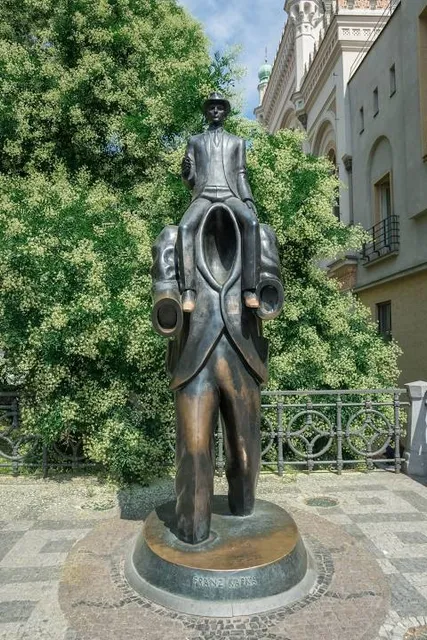
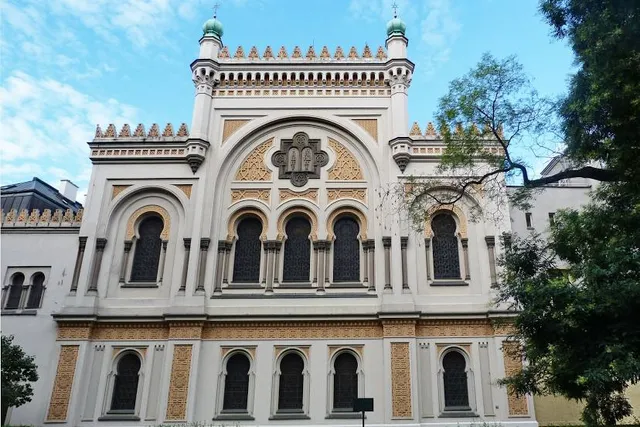
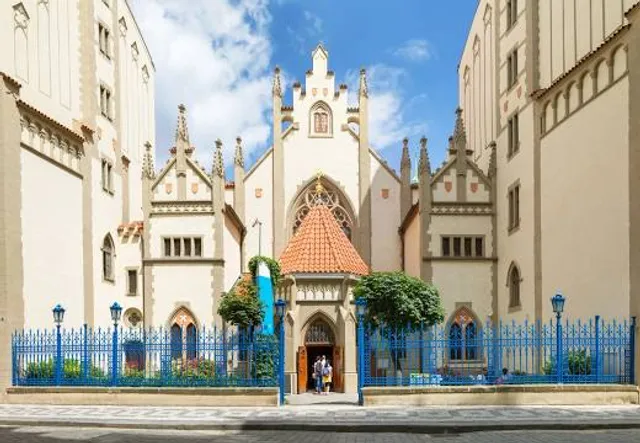
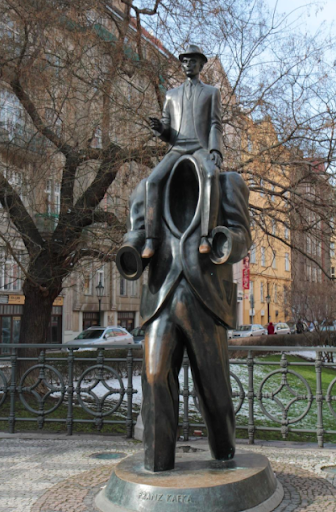
Nestled in the historic Jewish Quarter of Prague, near the stunning Spanish Synagogue, stands a sculpture that feels as though it has stepped straight out of Franz Kafka's surreal imagination. Jaroslav Róna's Franz Kafka statue is not just a tribute to the literary giant but a profound visual interpretation of his enigmatic world. As an artist, writer, and social worker deeply inspired by Kafka's work, I found this sculpture to be an essential stop on my journey through Prague—a city that shaped Kafka as much as he shaped its contemporary cultural identity.
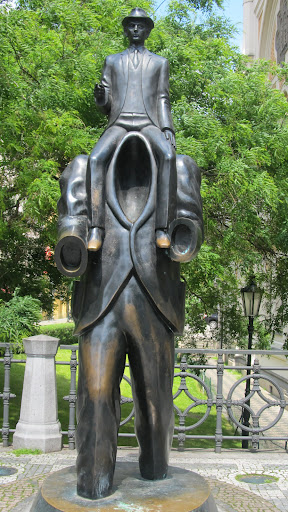
The statue, inspired by Kafka's short story "Description of a Struggle," depicts a striking and surreal scene: Kafka riding on the shoulders of a headless, oversized figure. This imagery, drawn from a playful moment in the story is both whimsical and deeply symbolic. The headless figure evokes Kafka's themes of identity, alienation, and the absurdity of existence, while the act of riding suggests a playful yet uneasy relationship with power, identity, and control. It’s a visual paradox—lighthearted yet haunting, much like Kafka’s prose.
What makes this sculpture particularly remarkable is its ability to capture the essence of Kafka’s work in a single, frozen moment. The polished bronze surface gleams in the sunlight, creating an almost otherworldly presence that feels alive, as if it might shift or dissolve into the ether at any moment. The scale of the piece—Kafka perched atop a towering, faceless figure—invites viewers to reflect on the weight of his ideas and the towering legacy he left behind in this city.
For Kafka enthusiasts, this statue is more than just a photo opportunity; it’s a pilgrimage. It’s a chance to stand in the shadow of Kafka’s imagination, to feel the weight of his existential musings, and to connect with the city that inspired so much of his work. As part of a self-guided walking tour through Prague, it offers a moment of pause and reflection—a chance to step into Kafka’s world and see the city through his eyes. Also, as a fun aside, if you look down, you will see a beetle formed with the stone base of the statue as a nod to "The Metamorphosis" as well.
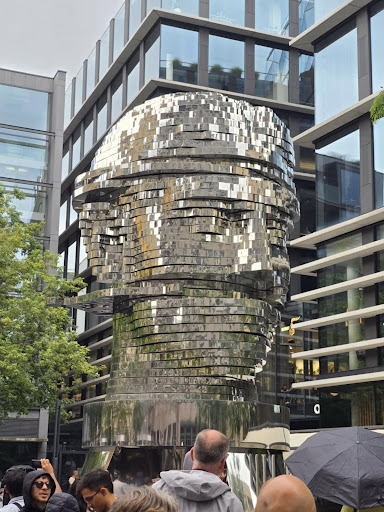
Whether you’re a lifelong admirer of Kafka or a curious traveler seeking to understand his influence, this sculpture is a must-see as is David Černý's moving sculpture of Kafka. It’s a reminder of the power of art to transcend time, to capture the intangible, and to invite us into a dialogue with the past. For me, as someone who has spent years exploring Kafka’s themes through my own art and writing, visiting works like this felt like a homecoming—a moment of connection with a kindred spirit who continues to challenge and...
Read moreAs of my last update in September 2021, there isn't a specific monument dedicated solely to Franz Kafka in Prague. However, there are several Kafka-related landmarks and sculptures in the city that pay homage to the famous writer. One such landmark is the "Metamorphosis" monument, which I'll describe in detail:
Metamorphosis Monument:
Location: The "Metamorphosis" monument is located in Prague's Jewish Quarter, near the Spanish Synagogue, on the street known as Dušní Street.
Design: The monument is a kinetic sculpture that represents a headless figure of Franz Kafka. The statue is composed of 42 independently rotating layers, and it stands about 11 meters tall. The layers can be rotated manually by visitors, allowing them to alter the appearance of the sculpture.
Symbolism: The monument is inspired by Kafka's famous novella "The Metamorphosis," where the protagonist wakes up one morning transformed into a giant insect. The rotating layers of the sculpture symbolize the transformation and instability that Kafka often explored in his works.
Material: The monument is made of stainless steel, and its reflective surface creates a dynamic interaction with the surroundings. As the layers rotate, they create intriguing visual effects, reflecting light and movement.
Interaction: One of the unique aspects of the monument is its interactive nature. Visitors can participate by manually turning the layers of the sculpture, altering its appearance and engaging with the artwork.
Inscription: The base of the monument features an inscription in both Czech and English, paying tribute to Franz Kafka and his literary legacy.
Impact: The "Metamorphosis" monument has become a popular spot for tourists and Kafka enthusiasts. It serves as a thought-provoking representation of Kafka's themes and ideas, inviting visitors to contemplate the complexities of his work.
Please note that information might have changed or new monuments related to Franz Kafka might have been introduced since my last update. To get the most accurate and current information, I recommend checking with local sources or visiting the...
Read moreThe monument is cast from bronze, it is 3.75 meters high and weighs 800 kg. It´s shape is inspired by Kafka's "One Match Description". The short story is probably the oldest surviving text by Franz Kafka - a fragment from 1904-1905, when Kafka was in his early twenties, was found. It is a sculpture made up of two bodies, one of which is a male figure in a suit, but hands do not come out of the sleeves and the statue has no head, and a smaller figure is sitting behind the neck, which is complete and is to represent Franz Kafka himself. The monument created by Jaroslav Róna was unveiled in 2003, two years after the author won a competition to create it. The work is placed here thematically, because Franz Kafka lived in a no longer existing house in Dušní Street no. V/187.
Pomník je odlit z bronzu, je vysoký 3,75 m a váží 800 kg. Jeho podoba je inspirována Kafkovým dílem "Popis jednoho zápasu". Povídka je pravděpodobně nejstarším dochovaným textem Franze Kafky - byl nalezen její fragment datovaný do let 1904-1905, kdy bylo Kafkovi krátce po dvacítce. Jde o sousoší tvořené dvěma těly, jedno z nich je mužská postava v obleku, které ovšem z rukávů nevycházejí ruce a nemá hlavu, za krkem jí sedí menší postava, která je kompletní a má představovat samotného Franze Kafku. Pomník vytvořený Jaroslavem Rónou byl odhalen v roce 2003, dva roky poté, co tento autor vyhrál soutěž na jeho vytvoření. Dílo je zde umístěno tematicky, protože v již neexistujícím domě v Dušní ulici čp. V/187 Franz...
Read more